Risk #4: Missing your budget

The fourth risk listed in the Six Key Risks a CIO Must Avoid post is
A CIO who can’t operate within the budget he submits is in real danger.

While you may not have budgeting responsibility as a young IT manager, budgeting must become a core competency for a CIO. The executive management team expects (and rightfully so) the IT department to develop a budget and operate within it so the company can achieve its financial numbers.

If the CIO spends more than he budgeted, , , well, the CEO and CFO have to make up that deficiency somewhere else for the company to achieve its financial plan. If they don’t, their jobs can literally be at risk.

What this says is that CIO’s have to be able to budget and budget in a way that is going to be predictable in achieving their plan.

I’ve developed hundreds of IT support budgets and can’t remember when I failed to achieve the plan. Here are a couple of tips that can help you reduce this risk:

  • Understand that surprises happen and when they do they almost always require more cost.
  • Don’t forget the special projects or events that will occur in the new year, , , they will have costs.
  • Include buffer in larger expense accounts, such as:
    • Salary and employee related expenses
    • Travel
    • Maintenance
    • Telecommunications
    • Training and education
  • Be certain to understand other department manager plans for the new year that have IT support implications.
  • Having an IT strategy so you know what you will be working on is critical.
  • Review past year Profit and Loss reports to identify spending trends, , , be sure you can justify material spending trend changes in the new budget.
  • Review past year Profit and Loss reports for spending spikes, , , these are often annual or semi-annual vendor expenses.
  • Confirm you have all employee related expenses like travel and training associated with any new hires planned.

And finally, do a quick risk assessment on each expense category after budgeting to insure you have taken everything into consideration that might affect spending in this area. Consider things like special projects, events, other department manager plans, etc.

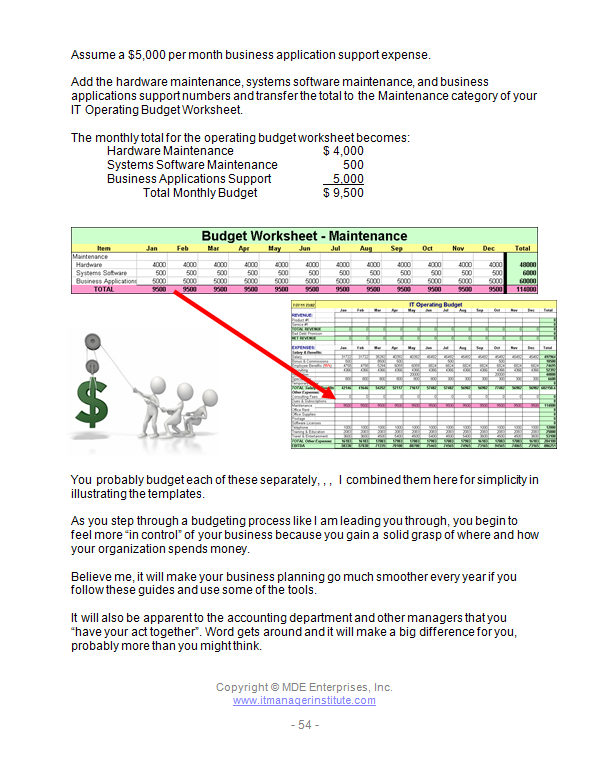
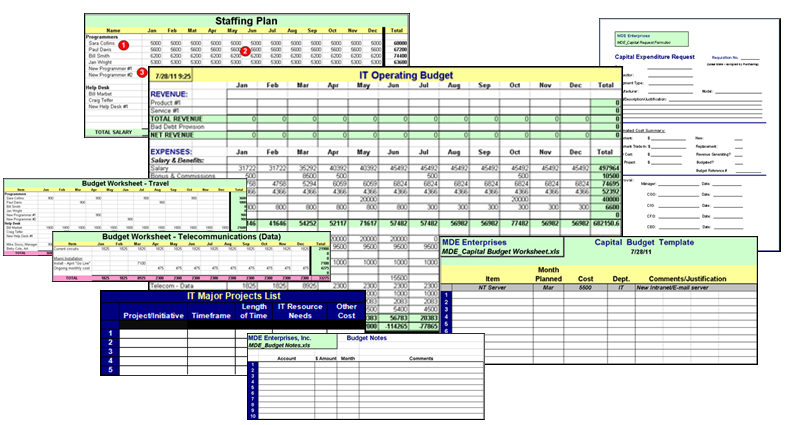
If you need a straightforward process and simple tools to help you budget, take a look at, IT Budgeting: operational and capital budgets made easy
Risk #3: Losing people

The third risk listed in the Six Key Risks a CIO Must Avoid post is

Losing key people can create a lot of risk for an organization, especially when these people are in mission critical support roles or where you have minimal depth for key skills.

Keeping your good people is not all about money. Leaving a company for more money always ranks around 7th to 9th in the studies I’ve seen. There is usually something else that causes an employee to start looking for another employer.

However, when an employee gives you a resignation letter, they usually tell you they are leaving for more money. Don’t believe it, , , that’s typically not the real reason.

In a competitive market where companies are competing for quality employees, the challenge is to find ways that will help you keep your good employees.

Which employees are the most vulnerable for you to lose?

Your best people are the ones who will probably leave you if you aren’t doing things to keep them with you. That’s right, , , your best people.

The average ones are fairly content and the poor performers will stay with you forever if you allow them to. The best people will be the ones to walk into your office and hand you a resignation letter.

A few keys to help you retain your good employees include:

  • Challenge them
  • Being part of a winning team
  • Investing in them with training and education
  • Strong communication
  • Recognition and appreciation
  • Empowering them with real responsibility
  • Motivating events that keep it interesting
  • Having some fun

Training and education are powerful motivators
One of the top motivators in every survey I’ve seen that identifies reasons IT employees stay with their company is training and education. It is always in the top one or two positions.

What this says is that you need a training program that focuses the development of each employee on your staff, , , believe me, it will pay dividends. Not only will the staff become more capable, you will find people understand and appreciate the fact that their manager is investing in them.

Don’t underestimate how important showing appreciation for a job well done is. IT people are not the most appreciated work group around, , , much of what we work on is either a problem, fixing something, or changing something. We don’t get lots of accolades from our client. It’s up to the IT manager to ensure his team receives appreciation and a “pat on the back” for their hard work and accomplishments.

What I’ve seen is that keeping your good employees is a lot about paying attention to them and doing things that show you appreciate them. It does not take a lot of money to do this, , , it simply requires you to pay attention and do things every now and then that appreciates your employees’ hard work.

Need help motivating your employees? Take a look at IT Staff Motivation and Development: build a world class team

Risk #2: Project failure

The second risk listed in the Six Key Risks a CIO Must Avoid post is

Project failure occupies a very high place in my list of risks, , , right alongside the IT – Business disconnect. The reason is that an IT organization builds credibility by delivering projects successfully.

If you can’t “do what you say you will do”, , , in other words, deliver projects successfully, , , then you won’t be credible.

This means you have to complete projects on time, within budget, and meet the clients expectations of what you deliver (also known as delivering the expected value or benefits), , , three key ingredients for success.

Studies and surveys point out every year that IT projects have a high level of failure in most companies. It’s time to fix this problem and start building a track record that shows your clients you, “do what you say you will do”.

There are many reasons a project can fail, but I believe most project failures are caused by a few things we do, , , or fail to do, , , such as:

  • Fail to define clear goals and objectives
  • Fail to quantify the specific deliverables
  • Fail to gain agreement from the Project Sponsor on the defined objectives and deliverables

I call these three bullet points the “front end” work. Most IT employees (both managers and technical staff) have two personality traits that works against them in this area.

The first is that over 70% of us are shy and introverted. What this means is that we don’t really like communicating outside our inner circle, , , and clients are definitely outside that circle as you can see in the graphic below.

We may be “the life of the party” with our inner circle groups, but most IT employees tend to be much more reserved and shy in social situations with people outside that circle, , , we don’t communicate as well with groups outside our inner circle.

The second part that causes us to fail to clearly define the project is that 85% of us have a high sense of urgency so we want to start the work as quickly as possible, complete it, and then move on to the next project.

These two personality combinations can be “hazardous to your health” because what happens is that all too often we start working on projects before we have established specifics of what the project should achieve and what we have to deliver to be successful. Here is a key point to keep in mind, , ,

If you don’t identify the goal and quantify the specific deliverable
then there is no way you can complete a project successfully.

There are other contributors to project failure. Conquer the bullet points below and the odds of a successful project go way up:

  • Failing to put buffer into your scheduled completion of project tasks
  • Failing to put buffer into your project budget

 Projects tend to take longer and cost more
than you think they will

  • Failing to identify bottlenecks and eliminating them early
  • Failing to start working on tasks early enough to complete them on time

IT employees tend to procrastinate

  • Failing to prevent “scope creep”

Scope creep is where a project task was estimated to take 8 hours, but discussions with the client and others identify additional things that can be done to make the project “even better”. Before we know it, our 8-hour task is now 20 hours.

The biggest culprit in creating scope creep is our own IT people, , , not the client like you might want to think. Our people are smart, creative, and conscientious, , , they want to do a good job. So, they work with the client on an issue to complete their task and come up with great ideas to make things even better, , ,  before you know it the client wants more than what we originally committed to.

Coach your employees to prevent scope creep

With today’s project management methodologies, tools, and training there is every reason any IT organization should be able to improve upon its project success track record. When you do, your credibility improves and that leads to success as a CIO.

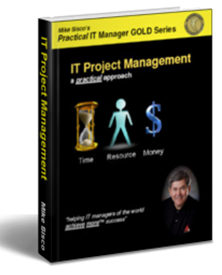
Need help? Take a look at IT Project Management: a practical approach

Risk #1: IT – Business disconnect

The first risk listed in the Six Key Risks a CIO Must Avoid post is, , ,

There is a reason why I listed this one first. I believe the biggest risk of all is when the IT organization is focused on “X, Y, and Z” and your company needs you to focus on “A,B and C”.

Studies have suggested for many years that over 50% of all IT organizations are out of sync with their company, , , i.e., the “business”. I’ve seen this firsthand in many situations and the interesting thing about it is that, , , the CIO doesn’t realize or think he or she is out of sync when it occurs.

It’s such a big deal that you see in most CEO and CIO surveys that this issue is almost always in the Top 3 of their List of Concerns.

It only takes an hour or two in an IT assessment to discover if the IT organization is “in sync” or “out of sync” with the business, , , not a lot of time.

So, why do CIO’s who are out of sync with their business clients not realize this?

There could be several reasons but I think it usually comes down to, , , they aren’t communicating with and listening to their client (senior managers and department managers of the company).

Let’s take a quick look at what you hear in an IT assessment when the IT organization is not aligned with the business, , , the “IT – Business disconnect” exists:

Senior managers say:

  • “We spend a lot of money in IT, but not always sure what it is for or why.”
  • “We aren’t always aware of what IT is working on.”

If your senior management team says these things, , , you are out of sync with the business.

Here is why, , , if you develop an IT strategy and communicate it with your senior management team and gain their agreement and commitment (meaning they will fund and support it), , , then there is no way for them to say the things I listed above.

Senior management becomes an integral part of your IT strategy. In fact, if you handle it properly, it becomes a “company strategy”, , , not an IT strategy. When other department managers learn about these plans, it comes across less confrontational when it is delivered as a “company plan” versus a set of “IT initiatives”.

So, the key to staying in sync with the business and avoiding an IT – Business disconnect is to:

  1. Conduct an IT assessment to determine the business needs and issues your IT organization should address.
  2. Develop an IT strategy based upon these needs and issues.
  3. Communicate your strategy to the senior management team in order to:
    1. Create awareness
    2. Gain agreement that it is an appropriate set of initiatives for IT to focus on
    3. Gain senior management’s commitment, , , they will fund and support the initiatives you recommend the IT organization should focus on

Do these things and there is no way for you to have an IT – Business disconnect in your company.

Where CIO’s get in trouble is that they don’t take time to conduct a thorough IT assessment and to develop an IT strategy based upon the business needs and issues they would discover. Often, this is because they are focusing on technology, , , and not the business.

It’s all about the business, , , it’s not about the technology.

Technology is only something that’s needed to achieve the ultimate goal of a company, , , technology is usually not the core competency of the company.

Technology is important certainly, , , even critical in most companies, , , but it is not the real focus of the company to achieve its goals and objectives.

Because most of us in IT are shy and introverted, we tend to skip the communication parts. We would prefer to just be able to go work on the projects and not have to communicate where we are going, why we need to do things, , , we would just like to have our teams go do the work.

Unfortunately, this won’t work.

Successful CIO’s know how important effective communication is in their success so they implement communication processes that forces their organization to communicate.

So, develop your recommended initiatives from the business needs and issues, communicate and gain agreement from senior management, , , and then, and only then invest time, resources and money on these projects.

Do this and your IT organization will always be aligned with the business.

Six key risks a CIO must avoid

Challenges are everywhere for a CIO, , , around every corner, creeping up from behind you, , , even right in front of you. These challenges create risk for you and your company, , , risks that can cause tremendous loss of productivity, wasted resources, and frustration.

There are literally dozens of bullets and arrows flying at a CIO every day.

In my travels in managing IT organizations for more than 20 years, I’ve found there are 6 key risks a CIO needs to learn how to avoid. In this article, I’ll identify them for you, and I’ll follow-up with a short post on each risk with insight on how to prevent it in your organization.

The 6 key risks a CIO must avoid include:

  1. IT – Business disconnect – Many studies suggest the over 50% of IT organizations are out of sync with their company’s needs and issues. When this occurs, the company loses significantly in wasted expense and lost productivity. This issue is a key concern of CIO’s and CEO’s alike in surveys every year.
  2. Project failure – Delivering what you say you will do, when you say it will be delivered and within the cost you say it will cost is paramount, , , it is how you achieve credibility. Several studies find each year that the failure rate in IT projects is quite high causing loss of productivity and money in company after company around the world.
  3. Losing people – Losing key staff can cause significant challenges for an IT organization. CIO’s need to be able to keep their best people in order to make progress.
  4. Missing your budget – When the IT department fails to achieve its budget for the year, the CEO and CFO must make it somewhere else. CIO’s need to be very astute about budgeting so they can achieve their financial plan and earn trust from the other executives of the company.
  5. Downtime – Nothing will get a CIO fired faster than an environment with lots of systems or network downtime. Developing a stable infrastructure is key.
  6. Security – Technology plays an important role in creating a secure environment for people in the company and for the hardware and software environment created to support the business.

Read more about each risk and tips to prevent them in the posts that follow.

IT organizations offer tremendous leverage

Do your senior managers understand the leverage your IT operation offers your company?

In most situations, especially in small companies, the answer is unfortunately and sadly, “No!”.

As a CIO, one of your responsibilities is to ensure the senior management team realizes the opportunities available to them in the leverage the IT operation can provide.

The IT organization is the only department in a company that can reduce the cost or improve the productivity of all other departments in the company. No other organization in a company offers this level of leverage.

The sad thing is that far too often senior managers aren’t aware of the potential sitting right under their noses.

CIO’s and IT managers need to do a few things:

  1. Establish a positive track record of delivering projects successfully so IT has credibility and senior managers will listen when you have something to say.
  2. Communicate the successes and business value the IT organization is achieving.
  3. Educate senior managers on the leverage opportunities you discover as you identify the company’s business needs and issues.

Effective IT support is about delivering business value. Do this consistently and you will discover your senior management team is much more interested in the initiatives you recommend and where you want to spend money.

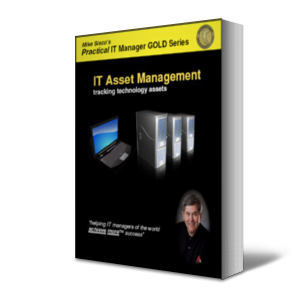
IT Asset Management: tracking technology assets

IT Asset Management: tracking technology assets
Managing the technology assets of a company has never been more important than it is today. With change taking place more frequently and exposure to risk increasing, it is a requirement of every CIO to keep track of the technical assets of the company.

Tracking your technology assets is important so you need a few tools and a simple process to manage this part of your business effectively. This helps you be more organized and will give you a head start in budgeting and other management requirements.

This book tells you what to track and provides several tools to help you do it.

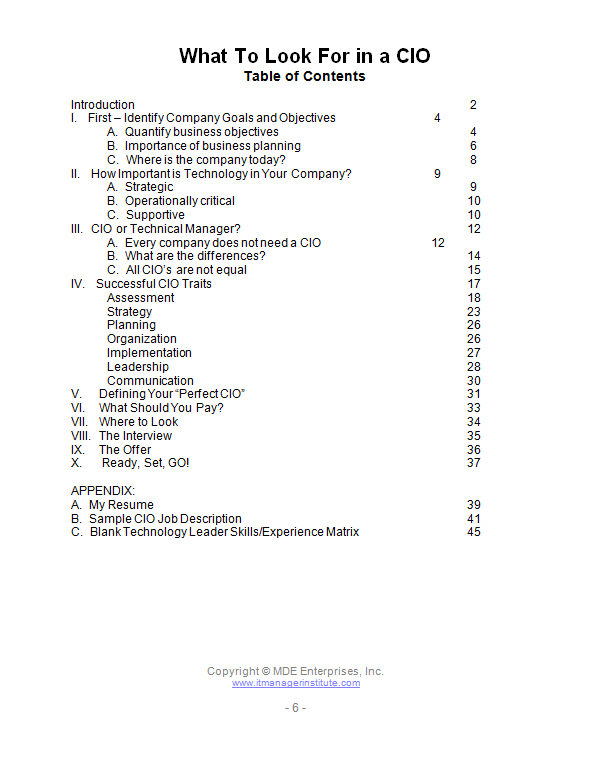
Table of Contents

Book excerpts

Tools

————————————————————

Buy the entire
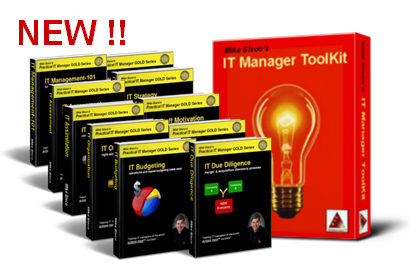
Practical IT Manager GOLD Series

$279.00

What To Look For in a CIO: get more value from your IT investment

What To Look For in a CIO: get more value from your IT investment
This was my first book targeted to company executives because there tends to be a lack of understanding IT and not knowing what they should expect from their IT organization, , , and CIO.

Key attributes are outlined that are necessary for CIO’s to be effective for their company. The document “nets out” traits that lead to success and helps a company’s senior management quickly understand what they should expect from their CIO and how to work effectively with a CIO.

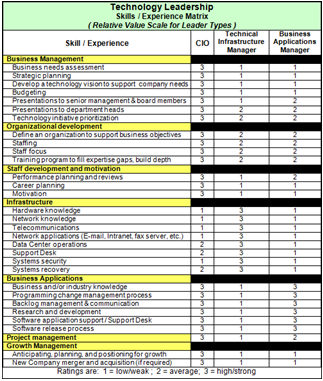
The material is useful for technical managers of all levels to better understand the role and requirements necessary to become an effective CIO and provides tools that help you gauge your own capabilities with those that are needed for a CIO position.

Table of Contents

Book excerpts

Tools

————————————————————

Buy the entire
Practical IT Manager GOLD Series

$279.00

IT Budgeting: operational and capital budgets made easy

IT Budgeting: operational and capital budgeting made easy
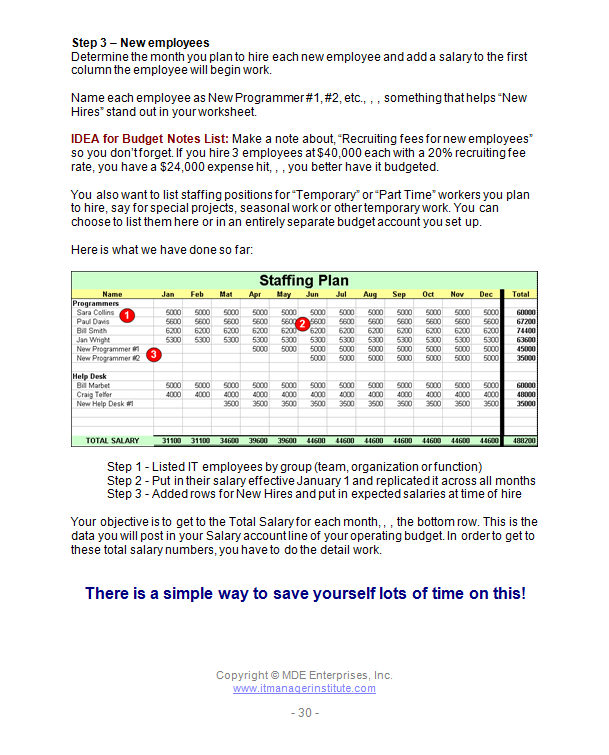
Budgeting is not as difficult as many make it, , , all you need is a practical process and a few tools, , , plus insight from someone who has developed dozens of successful IT budgets. A few tips you will receive in this book will save you lots of time and frustration.
Sooner or later you have to learn how to budget and build a plan that is aggressive but achievable. This publication takes you through the process of building a reasonable business plan and focuses on key areas with CIO level insight that are most important to ensure you will meet your budget plans.

My own personal tips and techniques are included that served me well for twenty years of managing dozens of IT budgets.

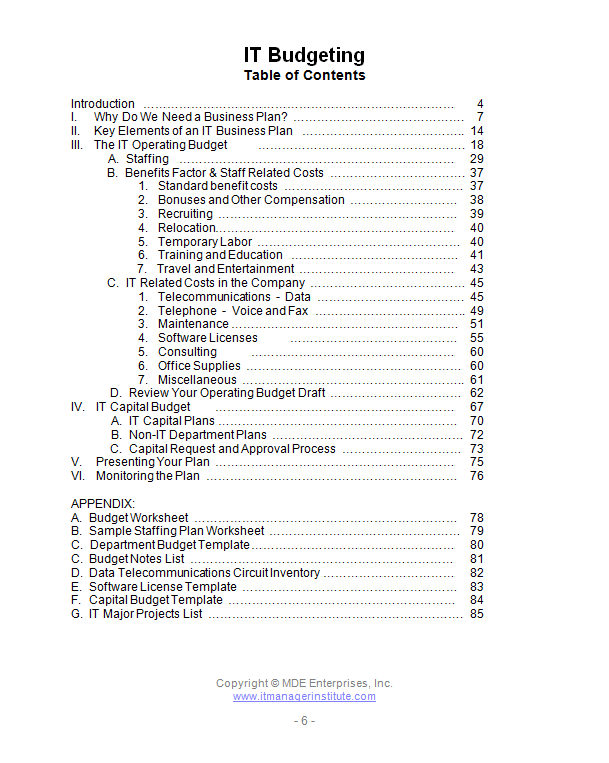
Table of Contents

Book excerpts

Tools

————————————————————

Buy the entire
Practical IT Manager GOLD Series

$279.00

IT Assimilation: consolidating redundant technologies

IT Assimilation: consolidating redundant technologies
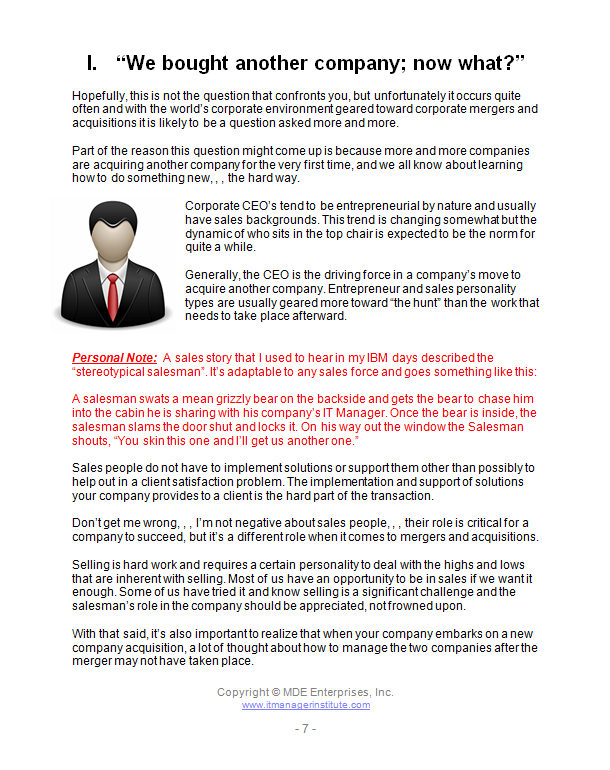
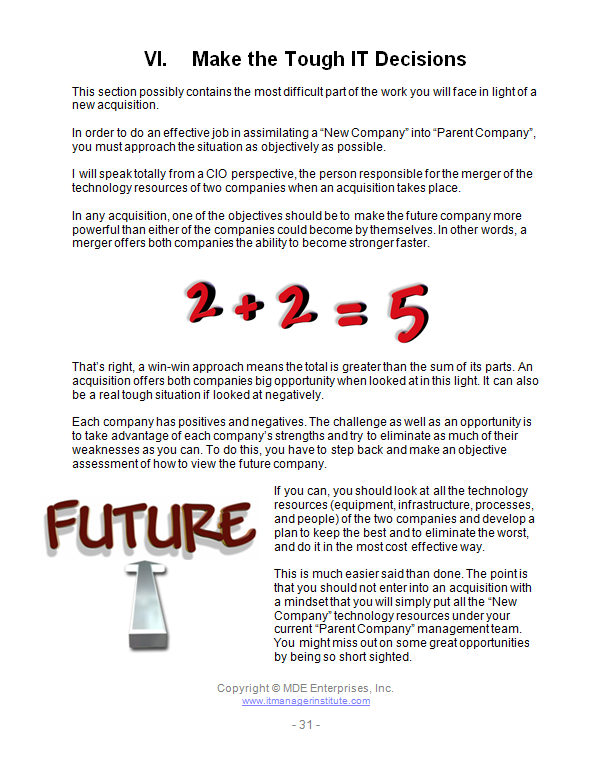
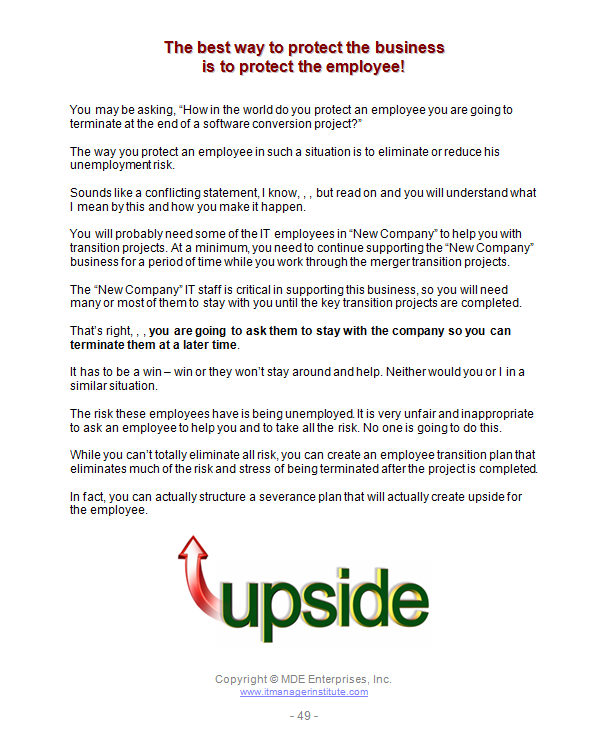
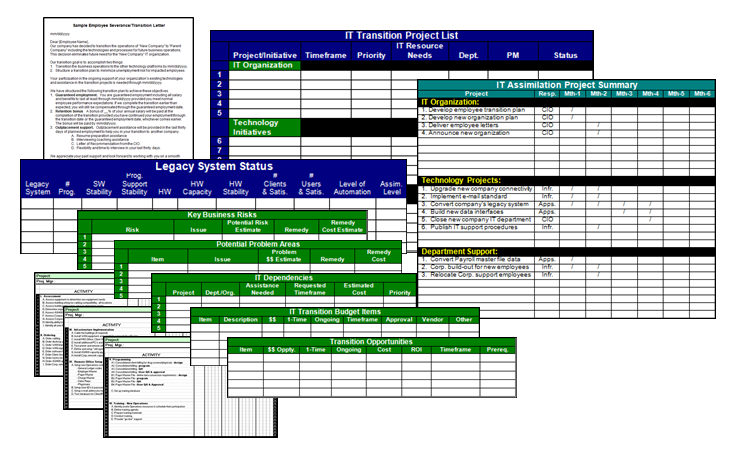
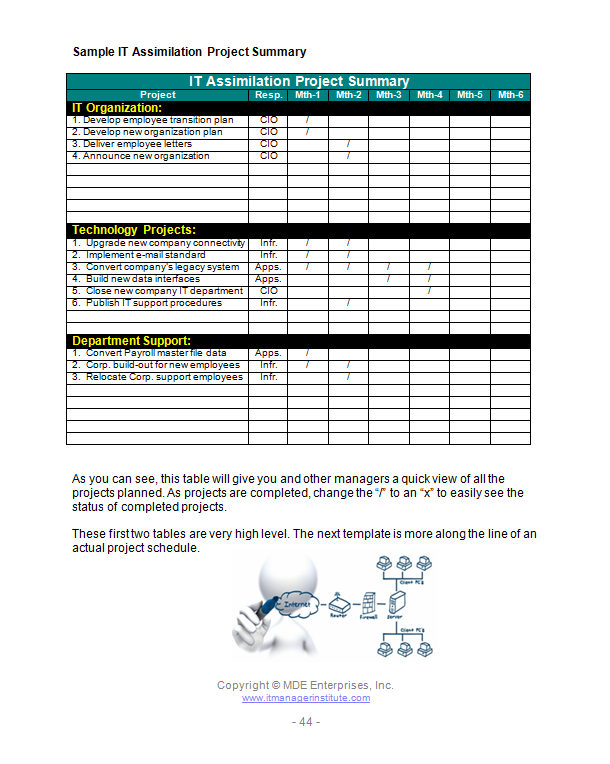
After you conduct an IT assessment, you need a plan to transition your organization. In IT Assimilation I use my company acquisition experiences to provide you lots of tips and techniques to do this effectively.

“Ok, so we’ve acquired a new company. Now what do we do?” These words have been used far more than you might realize. This document provides a game plan and a road map on what and how to go about assimilating an acquired company’s technology.

Key issues are emphasized to help you minimize risk as you transition and eliminate redundant technologies

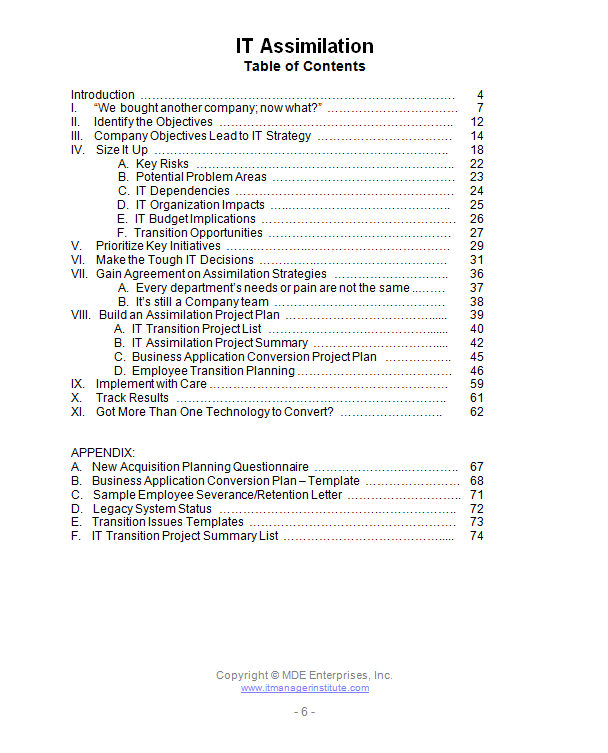
Table of Contents

Book excerpts

Tools

————————————————————

Buy the entire
Practical IT Manager GOLD Series

$279.00