Category Archives: IT Manager Tips

Helpful articles and tips

Force yourself to communicate

Are you aware that over 70% of us in IT are shy and more introverted as opposed to being outgoing and extroverted? I’ve been studying IT personality types since 1990 and have measured hundreds of IT managers and technical resources. The results are so consistent it’s almost scary.

If you work in IT, I can guarantee you that there is a 70% or better likelihood that you are shy.

You may not appear to be shy around your immediate network (your pals), , , but when it comes to socializing with people outside your network it is a struggle for most IT people.

Doesn’t matter if you are the CIO, a seasoned IT manager, a programmer, project manager, or desk top technician. If you work in IT, the odds are high you are more introverted.

Two traits of introverted people
Before I give you these, let me just say that there is nothing wrong with being shy and introverted, , , nothing at all. What it does mean is that certain things you need to do to be successful will be more difficult.

Trait 1 – Poor communication skills. Shy and introverted people have more difficulty in social settings and being able to communicate effectively, , , unless they have recognized this problem and made efforts to develop these skills.

Trait 2 – Lower desire to communicate. This may be a bigger issue than actually being a poor communicator. This lack of desire to communicate with people outside your immediate network can be a big problem for any IT manager. To succeed you must communicate effectively with several groups of people:

  • Senior management
  • Department managers
  • Employees
  • Vendors

Put things in motion
I’m one of the majority of IT managers who is introverted and shy. If you were to attend one of my classes or meet me in person, you probably wouldn’t believe so or recognize it in me, , , but I can assure you I am. My wife of almost 40 years would also verify this for you, , , and she certainly knows me, even better than I know myself I think.

Because I know I’m shy and introverted and I understand the challenges this trait creates, , , I put some things in motion that will force me to communicate as soon as I start managing an IT organization.

Let me repeat, , , FORCES me to communicate !!

  1. Monthly IT Support Status Meetings with key clients
  2. Monthly IT Staff Meetings with my IT employees

These monthly meetings require me to prepare and to communicate with clients we support (viewed as senior managers and department managers of the company) and the employees in my IT organization.

Communicating with your clients and employees on a regular basis is critical in keeping them informed and giving you the opportunity to coach and manage expectations. When you fail to communicate you lose credibility and essentially lose touch with the people you need to be close to.

When you know one of these meetings is coming up, , , you will prepare for it and communicate with the group you plan to meet with.

Make it simple for yourself. When you join a new IT organization, create a schedule to meet with your staff for 1-2 hours the first week of every month. This schedule will take the guesswork out and also eliminate your procrastination. If you don’t schedule it, things will come up and you won’t get around to it.

Do the same with your clients by scheduling monthly status meetings to cover the support issues and status of key projects that impact your client.

Schedule your communication events and make it happen.

Donald Trump and Project Managers

One of the few reality TV shows I like to watch is Apprentice with Donald Trump, , , one of the most successful real estate developers in the world.

I find it interesting to watch the dynamics among the participants trying to become Mr. Trump’s new apprentice, , , to go to work for him.

In this particular series, every participant is without a job. All have been successful in the past but due to the bad economy they have been impacted by layoffs and downsizing that have occurred in the last two years. Each candidate is looking for work.

To give you just a bit of background of the show, , , the participants are divided into two teams and each week they compete in a business project of some type, , , it could be selling ice cream on the streets of New York City, creating an ad display for a new product announcement, hosting a charity event, , , or any type of thing a company might get involved with.

Every week each team selects a project manager (PM) and the teams are given basic information about the project objectives and key things that will make it successful. Then the two teams go their separate way to develop the project and deliver on the objectives that have been communicated to them.

Pretty simple – right?

You would think so, but it never fails to amaze me how weak most people are in managing a project, , , and some of these people are supposed to be quite capable professionals.

It also never fails to amaze me as to the dynamics that play into a project because of the different personalities and egos of people on the team. It can be quite ugly at times and illustrates the difficulty that can exist in trying to manage people.

Does the vision of “herding cats” ring a bell?

Rarely does a contestant manage the project really well. Basic things like confirming the objectives and deliverables up front almost never occur. As a result, many projects deliver less than what they should or miss the target completely.

Most conduct a Project Kickoff Meeting of sorts but the quality ranges from excellent to unsatisfactory with most leaning toward the poor side.

This week’s episode was quite interesting and showed just how frustrating a manager who is responsible for projects in his company can be, , , in this case, Donald Trump.

The objective was to conduct a fashion show that night for a large company to highlight their shoes and the “walkability” of the shoes. The guests were to be a list of celebrities and friends of Donald Trump.

One team did a great job, , , the other team was simply awful.

At the end of each project, Mr. Trump fires someone after meeting with all the participants in a Board Room session to critique the two project teams and to announce a team winner.

In this case, Trump was so disappointed (and probably embarrassed) with one team that he ended up firing both the Project Manager and one of the key participants in the project.

The key participant was the person assigned the task of MC (Master of Ceremonies), , ,  or announcer who described the shoes each model wore as they walked down the fashion show runway to display the shoes. Nice guy but just a terrible speaker in that kind of setting, , , and totally unprepared.

Trump focused in on the key points in the Board Room as he ripped the project manager (PM) and a couple of members of the team who had done so poorly, mainly the participant assigned the task of Master of Ceremonies for the event.

Trump asked a few key questions any manager should ask his PM:

  • Was the person (MC) capable of doing what you asked of him?
  • Did you inspect to validate he was capable?
  • Why didn’t you have a real rehearsal beforehand?
  • How can you expect to succeed with no rehearsal?

There were several problems in this project:

  1. The PM did not assign people tasks they were capable of.
  2. The PM did not inspect to insure each task would be executed well.
  3. The MC (presenter) had no clue about how to prepare for a presentation of this type (more on this in a second).
  4. There was no real rehearsal to prepare so they ended up “winging it”.

The bottom line is that the PM did a terrible job and allowed some of his team members to be put in a situation where they had no ability to succeed.

Being named Project Manager does not mean the PM will actually deliver.

Having a credential that says you are a PM does not guarantee success.

And certainly just because someone tells you they can do something as in the case of the MC does not mean they can actually do it.

If the PM had inspected the MC before rehearsal time, he would have discovered that the MC was making a mountain out of a mole hill. He was developing detail notes to use to talk about the shoes as a model walked down the runway. When I say detail, , , it must have been minute detail, , , way more than what you need for such an event.

When the show started and they handed the microphone over to the MC, he gets up there with a laptop in hand and starts, , , or let’s say “tries”, , , to introduce a model and talk about the shoes she wears. Right off the bat it was obvious he was not prepared, and holding the laptop was awkward and looked idiotic.

He scrambled and was obviously uncomfortable, , , mispronounced many words, , , did not describe the shoes properly and when he did it was not what you want to say about them, , , had long pauses of uncertainty.

TERRIBLE !!!

All he needed was a 1-page PowerPoint slide for each model with a couple bullet points on a card describing simple elements of the shoes that reinforced “walkability” and “style”, , , simple, , , easy, , , and to the point. It took the MC all day to develop his comments, , , for a task that should have taken 30 minutes, , , OK, maybe an hour at most, , , there were only 8 models.

Get rid of the laptop and walk up there with a few note cards, , , and above all know what you are going to say. Much easier.

The only thing that did not go wrong was that the laptop battery lasted through the presentation. If the battery had died I’m not sure it would have been worse.

The key problem, , , the MC did not know what he was doing or even how to go about his task so he over complicated it, , , and the PM was not close enough to the project task to determine if it would be successful.

Mr. Trump was truly frustrated with this team as any manager would be. They failed dismally and embarrassed him in front of his friends and the company he was conducting the projects for. He skipped through some of the protocol he normally goes through in the Board Room and fired both participants without giving it additional consideration, , , first time to ever do this.

A couple of lessons in all of this, , ,
– You can learn a lot by observing others.
– Assign tasks to people who can do the work.
– Inspect to insure they can do the work, , , and are completing the work.
– Make adjustments when you see something isn’t working.

At the end of the day, the objective of any project is to succeed. Making an adjustment might hurt someone’s feelings but that’s better than failing and getting yourself and possibly others fired.

10 tools I use in my business

Having the right tools makes all the difference, , , improves your productivity, makes life easier, and most importantly can reduce a lot of stress. Many of the tools in my IT Manager ToolKit were developed with these ideas specifically in mind.

For example, I have a Class To Do List that lists everything I need to do to prepare to deliver one of my IT Manager Institute programs, , , from ordering the class materials and arranging for flight and hotel, , , to getting a haircut and going to the bank before I leave town. I can tell you from personal experience that this little tool eliminates my showing up for class and not being fully prepared. It also eliminates any stress in preparing for the class because I know with a quick glance exactly what is left to be done.

There are other tools I use in my business that might be of value to you in your management role. Here is a quick list:

WordPress – One of the best communication tools I’ve found and it’s free. You should look into this one as a means to share information within your company, even with clients outside the company. IT can be the leader in introducing a great tool like this to Human Resources, Marketing and Sales, or your Operations groups in your company.  www.wordpress.com

iContact – I produce and distribute my monthly Practical IT Manager Newsletter to 20,000 IT managers from all over the world using iContact. If you send lots of email on a regular basis, you need good List Management Software and I’ve been very pleased with iContact.  Free trial at  www.icontact.com

Mimeo – What a great find this was. If you need to prepare documents like class materials, brochures, books, pamphlets, etc, , , Mimeo is super, , , plus they can get your documents anywhere in the US the next day and anywhere in the world in 2-4 days. This service probably saved my marriage (just kidding). But preparing all the materials for my IT Manager Institute takes me all of 10 minutes now. In the early days of delivering the Institute, this step took many hours and was quite a pain. Better quality, good price, and quick response all make preparation for my class mighty easy – I love it.   www.mimeo.com

IDPhoneCard – When I’m out of the country, I save hundreds of dollars on every trip by using the IDPhoneCard service to talk to my family every day. On my first “out of country” trip, I came back to a little surprise in our next phone bill – an extra $400.00 charge for long distance overseas calls. OUCH!! Now, I pay a few cents a minute for calls versus $2.00 or more per minute. This service has easily saved me over $5,000.00 in the last 6 years. If you travel overseas or need to make calls to other countries, this service can be a great benefit. http://www.idphonecard.com

Another tip – Be aware that when you are overseas and your cell phone is on and roaming for messages you are getting charged a premium fee, , , unless you have a true International Plan with your cell phone carrier. If you do not have an International Plan with a fixed monthly cost, you may want to put your iPhone in Airplane Mode (or whatever shuts down your particular phone) to avoid these charges.

Articulate – PowerPoint plug-in that adds nice features plus gives you the ability to publish your presentation in flash to the web, a CD, and other options. Our 20 Minute IT Manager sessions and my IT Manager Institute Self Study were created with Articulate – great product. I also use Articulate Online to host my IT Manager Institute Self Study   www.articulate.com

ProShow Producer –  When I want to create a quick slideshow of photos with special effects and background music, this is what I use.  Quick to use, inexpensive, and lots of capabilities.   www.photodex.com

Xara3D – This is my tool of choice to create 3D text and graphics. Inexpensive and does a lot for me.  This company has many products, but Xara3D is the one I use most.  www.xara.com

UltraSnap – From time to time, you need to capture an image of your screen or maybe a portion of your screen. I always had a problem getting good quality images until I discovered UltraSnap many years ago. It’s a “snap”, and I use UltraSnap PRO all the time.  Click here for info.

Skype – Make phone calls from your PC to anyone who has a Skype account, , , and no charge. If I’m going to be on a long call and can do it from the Internet, this works nicely.   www.skype.com

PDF995 – Convert any document to a PDF file quickly and easily. Installs as a printer on your system and when you print your file, simply select the PDF995 printer to create a PDF file. It’s free or you can upgrade to eliminate the ads.  www.pdf995.com

Well, this is a quick list of some of my favorites. We use many more tools in our business as you might expect, but these are some of the jewels we have found over the years.

Got a favorite tool you would like to share? Make a comment and give us a brief description and link to go see it.

What I learned from a perfect sports weekend

It was going to be a perfect sports weekend:

  • Ryder Cup on Friday through Sunday
  • Atlanta Braves baseball Friday, Saturday, & Sunday
  • Tennessee at LSU football game on Saturday
  • Tennessee Titans football game on Sunday

Friday
It started out great with the US Team Four Ball matches in the Ryder Cup, , , we were ahead of the European Team by 1 point (2 1/2 to 1 1/2) after this session. We rarely lead after this session in Ryder Cup competition so I’m getting a little optimistic, especially since everyone seems to be favoring the European Team to win.

Then the weekend starts to look questionable when the Braves lose to the Phillies on Friday night. Atlanta is trying to make the National League Playoffs and the magic number entering the weekend is “2”. They have to win two games or the San Diego Padres have to lose two games, , , or any combination to get into the Playoffs. Atlanta loses and San Diego wins on Friday so with both teams having two games left, we are no closer than before the Friday night game.

Saturday
Saturday morning, more optimism as I awake at 3:00am to watch the Ryder Cup. After another session, the US Team stretches its lead and is now ahead by 2 points. Almost unheard of and a great sign, , , but this is going to be the last good news for a while. The Ryder Cup is plagued by rain and more rain. Matches are delayed and restructured to try to get in all matches by Sunday.

Saturday afternoon, the Tennessee Volunteers outplay LSU the entire game but chaos and confusion on the last play of the game ends up costing Tennessee the game. We lose after seeming to win the game due to a penalty and LSU getting to replay the down, , , and you guessed it – they score a winning touchdown. I’ll come back to this shortly.

Braves lose and Padres win again on Saturday, , , no positive progress to the Playoffs. The Braves are now up against the wall, , , we have to win the final game of the season against the Phillies and the Padres have to lose their final game to the San Francisco Giants. Looking dismal.

Sunday
In the Ryder Cup, the European Team kills the US Team in session #3 that started on Saturday and finishes up on Sunday. Now instead of being up by 2 points, the US is down by 2 points going into the 12 singles matches on the last day, , , which has been postponed to Monday due to the rain. We’ve come from behind before but this margin will be hard to overcome.

Tennessee Titans lose their football game with the Denver Broncos in the last seconds of the game on Sunday, , , we are now 2-2 for the season, , , not a great start to our season.

Not looking good for “our teams”!!!!!!!

A ray of sunlight on Sunday night comes with a Braves win and Padres loss, , , our Atlanta Braves team makes the playoffs by the slimmest of margins. It’s Bobby Cox’s last year as the Braves Manager. He has been one of the best managers in baseball and we would love to see the Braves get to the World Series again, , , unlikely but they at least have a chance now.

Monday
Monday morning I’m up at daylight again to watch the singles matches of the Ryder Cup. When I turn on the TV, we are behind in 8 of the 12 matches and we have to win 7 of them to bring the Cup home.

Well, we lose the Ryder Cup by 1 point (13 1/2 to 14 1/2), , , the US Team almost pulled it out by getting 6 1/2 points, , , just short of what we needed and almost the miracle comeback we were hoping for.

Let’s see, that makes it 1 win for me (the Braves making the Playoffs) and 3 losses (Tennessee Volunteers, Tennessee Titans, and Ryder Cup results).

I had hoped it would be a great weekend of some of my favorite sports teams and events, but it turned out to be pretty much of a disaster. The biggest disaster was with the Tennessee – LSU football game. This loss and the crazy way the game was lost after we had all thought we had won the game had to be heartbreaking for the players and coaches, , , certainly was for alumni and fans.

Win from losing
There is a silver lining in all of this and worth sharing what I learned from each situation:

  1. The Braves never gave up and in the end their hard work paid off.
  2. Coach Dooley of the Tennessee Volunteers told his team after the loss, “Life is not always fair. Take from this game how well you played in a very difficult and demanding environment (at LSU) and hold your head high. What’s most important is how we handle the unfortunate results going forward.” This coach has a lot of character and he is instilling it in his players. Renewed optimism about our young Tennessee team, , , half of the team was dressed for their first “away game”, and going to LSU is always tough for any team. Almost beating a Top Ten team in the country on their home field may be the spark we need this year.
  3. Tennessee Titans outplayed the Denver Broncos most of the game, but could not put them away. Ultimately, Denver capitalized on their opportunity and won the game. You have to take advantage of your opportunities.
  4. In the Ryder Cup, the US Team could have easily quit, but every player put forth great effort to play their best. What could have become a rout almost became a win to be talked about for all ages, , , like the ’99 Brookline comeback. You had to feel good for both teams and this positive attitude was reflected in every player and coach interview I heard after the matches were over, , , from both sides. GOOD STUFF !!

My perfect sports weekend didn’t turn out so well, but there were many good things to come out of the losses. Is it possible to win when you lose? I think so.

Budget for it and you might just get it

It’s budget preparation time for many companies and I’m reminded of an event that happened early in my career, , , over 20 years ago, in fact.

It was November 1986 and our company had just gone through a major reorganization, , , I mean MAJOR !

With this new focus, I was to begin managing a small support unit called IFAS. In this organization, we supported the IFAS software which our company had licensed to large hospitals throughout the US. My group, , , the Southeast IFAS team!

On this team we had 23 people supporting 25 hospitals in the southeastern part of the United States. Because it was November, we needed to develop an operating budget for the next year.

As I worked through my budget, I remember clearly thinking that I needed to budget something for an “event” to motivate my new team and to show them my appreciation during the next year. So what I did was put in $1,000 in a Miscellaneous category for some kind of employee event. I had no idea what the event would be, , , but the important thing was I planned to do something.

As we got into summer of the next year, I sat down with a couple of my people to determine what we could do to “appreciate the team”. We discovered we could rent a houseboat on Lake Lanier for an afternoon for $700, and because the boat was docked during the morning we were told we could hold a meeting on the boat prior to taking it out, , , , that’s exactly what we did.

Monthly staff meeting on the top deck of the boat in the morning and swimming, water skiing, and enjoying the day on the lake in the afternoon.

This little “event” went over great and my staff was so impressed, , , it was a huge morale booster. The word got around to the other four IFAS offices pretty quick and many wondered, “Why does Mike get to do these things?”

The answer is pretty simple, , , I budgeted for it, , ,  even though I didn’t know at the time of my budget preparation exactly what we would do. What I did know is that I needed to spend some money on my team the next year and show them I appreciate their hard work, , , so I put some money in the budget to make it happen.

Are you putting money into next year’s budget right now?
If you are starting to develop next year’s budget, be sure to include key things in addition to your basic expense items, such as:

  • Employee recognition
  • Employee outing or “event”
  • Employee training
  • Training for yourself

Budget for something and you might just get it. Don’t plan for it and I can almost guarantee it won’t happen.

Book_IT BudgetingNeed additional insight about budgeting for an IT organization? Check out my book, IT Budgeting: operational and capital budgeting made easy. Included with the e-book are the tools I use to develop operating and capital budgets.

Bottlenecks will “thwart” your progress

Is “thwart” a word?  I think it is and I like it, , , except when it happens to me!! 😦

It means:  “prevent from accomplishing a purpose”

Bottlenecks are limiting constraints of a project. In any project there will be one or more bottlenecks that can prevent you from completing the project successfully. It might be getting the resource you need, it may be failing to complete a critical task on time, or any number of other issues.

One of the important responsibilities of a project manager is to identify the bottlenecks of the project and to figure out how to eliminate them or minimize their impact.

Bottlenecks are the “breakers” of projects – Bottlenecks exist in every project and are just waiting to spoil your successful completion of the project.

A key focus for any Project Manager is to identify and eliminate bottlenecks – A strong project manager understands the relevance that bottlenecks have in regard to project success. Because of this insight, successful project managers work diligently to determine where the bottlenecks are and how to address them early on.

Eliminating a bottleneck can create more bottlenecks – When you eliminate a bottleneck it may create one or more new bottlenecks, usually further down the project timeline. Be aware of this fact because you will need to “seek and destroy” any new bottlenecks that occur.

An example of this is that you might eliminate a bottleneck in a manufacturing assembly line thinking that when the bottleneck is eliminated you will produce more “widgets”. However, in some cases the elimination of an identified bottleneck may create more bottlenecks downstream in the assembly process and actually reduce your production output of widgets rather than increase it.

Eliminating a bottleneck can have big benefits – When you eliminate a bottleneck, it often frees up time within your project and can actually build in time buffer for other tasks of your project. Keeping your project on time or possibly improving the time schedule can reduce the cost of the project and positions the company to reap the benefits of the project sooner.

When you build a project plan, schedule the tasks conservatively to help insure you can complete them on time. Finding any bottlenecks that positions you to complete the project ahead of schedule is a huge benefit when it occurs.

Anticipate and look for project and business bottlenecks – Make it your mission to find the bottlenecks in your projects or business environment. Anticipate where they can occur and do what you can to detect them early and to eliminate them once discovered.

Example:
When you have a project to open a remote office that requires connectivity to your network, one of the primary bottlenecks is to establish the local circuit connection in the new office. The specific bottleneck that you have very little control over is with the local telecom company in getting the local connection up and running. This issue can be frustrating and can hurt your credibility with the clients who plan to move into the new office and need systems connectivity to work if you don’t achieve your committed timelines.

One of the things I used to do was to estimate 60-90 days to get the connection established in certain parts of the US because our experience with telecom companies in these regions often took that long. It should only take 30 to 45 days at most but some companies are simply slower than others.

If you plan for the best possible time it should take, it’s pretty much a certain way to fail in the project. I always try to put a conservative time frame with buffer into these type of plans.

Estimate conservatively and begin focusing your resources on pushing the connectivity as soon as possible. I used to tell my technical resources that I wanted connectivity as soon as possible although we built into the plan for it to be there in 60-90 days from the start of the project. I would rather pay a couple of months of the telecom costs even though we aren’t using it than to miss the date by a week.

Office openings have several events planned that require scheduling and that affect many people such as training, moving furniture and equipment, etc. It’s much cheaper to pay two months of unused telecom charges than what it costs our company when we can’t open the office as planned.

Minimizing the downtime is key, so getting the connectivity in place ahead of time actually gives us more flexibility in coordinating the office opening. It’s a great relief when we know we have eliminated one of the primary stumbling blocks, or bottlenecks, in this type of project.

Summary
In any project, one of the best things you can do to help insure you deliver the project on time is to find the bottlenecks and do what you can to eliminate or minimize their impact on the project. Be proactive and hunt the bottlenecks down and start working on them and you’ll find yourself achieving more success.

Don’t let bottlenecks “thwart” your progress !!

Why some managers get promoted over others

I’m sure you’ve seen it, maybe even experienced it yourself. Some managers seem to get the promotions and others do not, even though they work very hard and are extremely conscientious about managing technology resources effectively. This happens for technology employees as well, , ,  some get the nod and others do not.

If you are interested in what’s going on read the rest of the article. I’m going to give you a senior management perspective that can help you in your management career.

As a CIO or executive of a company, we want to promote from within as much as possible. Promotions are encouraging to our employees and to be quite frank, we like taking care of our own when they do a good job for us. Unfortunately, we often can’t promote from within our company and must go outside to find the resource required to do a certain job.

I believe there are several important issues that position you for a promotion. This applies to technical employees as well as IT managers.

First – you must be promotion material
This means two things. You have to have done a good job in the position you are in and we must be able to backfill your position when you are promoted. In addition, you need to be right for the job in question. Let’s break each of these aspects down a bit and explain.

Job performance – This is a no-brainer. To be promotion material, you need to be excellent at what you are doing. As a senior manager, I want to promote the top 10 to 20 percent who I think will be able to rise to the occasion when confronted to the bigger challenges and issues of the new position. Job performance is a key factor we look for when determining whether someone should be promoted and can handle the next level position. Simply put, we promote the best we have, not average or poor performers.

Backfill your position – Being promoted is going to create a gap in your current area of responsibility.  Your position will most likely need to be backfilled. I can’t tell you how many times I’ve sat in senior management meetings to discuss the needs of a new position of a growth company and not be able to promote from within. When looking through our organization, we had people who had shown the performance to make them a good candidate for the higher role but when looking at how we would fill the gap created by promoting them, we had to back off making them the offer because there was no one to fill their position. Many times we had to go outside when we had a great internal candidate, but losing them in their current position was too big a risk.

A management-101 principle is that you need to find a way to position someone to take your place. Having the skill and experience isn’t enough; you need to be able to backfill your position so business continues to run smoothly, , , so start investing in someone to take your place one day.

Right for the position – I had a great employee in my Help Desk organization many years ago. As we grew, we eventually had the need for a new Help Desk Manager in our high growth company. My employee had very good management potential but because we were growing so fast I decided to hire someone from outside the company who already had management experience and in scaling up the Help desk services and resources of a fast growth company. My employee was pretty upset initially, but I explained to him that promoting him to this particular management position too early would potentially run over him as fast as we were growing. I convinced him that he would become a much stronger manager by learning from a seasoned Help Desk Manager who had already experienced what our company was going through. I also committed to invest in developing his management skills to position him for a management role in the future. This employee became a very strong IT manager and CIO in his own right in later years. Had I put him into a situation that he was not ready for and if we couldn’t support him properly, I could have ruined his management career.

Proven track record
You have to have a proven track record of success. As a manager, you have to deliver tangible results. The same is true as an IT employee. Not only is it important that you achieve quantifiable results, much of whether you are promotion material is about how you go about getting the results. For example, as an IT manager your efforts need to be in sync with your client and they agree that you have done a good job for them.

For IT employees and IT managers, it’s imperative that you exhibit strong teamwork as you work with your peers and others in accomplishing your job. We don’t just look at your technical skills when determining if you should be promoted or not. People who work well with others in a cooperative spirit and foster a win-win environment are those we want in senior level leadership positions.

So, what this means is that regardless of your position you should pay attention to the track record you are creating. IT has a poor reputation for delivering projects with some studies suggesting that 70% of all IT projects fail. Put yourself in the 30% success group and keep track of your successes. You may find that people, especially senior managers start looking at you differently. We promote the people who we trust will be able to do the job, , ,  and your past track record is a good indicator of what the future should look like.

Deliver what you say you will deliver
Sounds pretty simple, but you might be surprised at how many people promise something but don’t come close to delivering it. One very simple aspect of this is to follow-up on your commitments. Whether you are the CIO or a Desktop Support Technician, it’s imperative that you follow-up on any commitment to someone.

What often happens is that we see something that will improve a client’s situation so we make a promise to do something for them later. Before we get back to our desk, we are hit with five more issues that need attention and as a result we forget our promise. Well, I can assure you that the person you promised something to does not forget. It may be a very minimal thing that doesn’t even have any real importance but the fact that we forget it tells the person we do not follow-up or take our promises seriously.

Nothing increases your value as much as when people view you as, “the person I can count on to do what he says he will do”.

Strong communication skills
This one is significant. People who have strong communication skills have a real edge on those who don’t. I encourage anyone who is reading this article to make an effort to develop your communication skills. There are classes you can go to in virtually every university plus companies who focus on effective communication. Topics like public speaking, negotiation techniques, organizing and holding productive meetings, presentation techniques, etc. are all worthwhile and can be important investments in positioning you for a promotion.

Learn how to speak in public, make stand up presentations, hold meetings, and how to communicate your vision, plans, and status of things. I cannot emphasize enough how much solid communication skills can mean to you. In many cases, the person who gets the promotion over others is the one who can communicate effectively. Effective communication skills are real career differentiators.

Business minded
Being business oriented and focusing your resources on issues that provide tangible value to your company is key, especially for IT managers. Too often, our managers are focused on the technology and not what the business needs. In management roles, this is a very important issue when looking to determine who should be promoted. I’ll always opt for the manager who knows how to build strong client relationships and has a track record of delivering business value to our business operation clients.

Managers are not good promotion candidates if their focus is out of sync with our business partner’s needs and issues. Most studies suggest that over 50% of all IT organizations are out of sync with the business so this is not a small issue. Senior managers promote those who show they can focus on the right issues for the company and don’t get sidetracked into doing things for technology sake.

The need must exist
We can do a lot to help prepare an employee or an IT manager for the next level promotion, but at the end of the day the need must exist for such a promotion to occur, , , and the person must be a good candidate for the specific position.

In a small company with very few technology employees, promotions just don’t happen quickly. In high growth companies that grow 20-30% every year, promotions seem to happen quite often.

When counseling your employees and discussing the idea of preparing and positioning them for the next level, be sure you make it clear that our company has to have the need and the candidate must be a good fit before such a promotion will occur. Otherwise, you will be setting an expectation that when certain things occur in the employee’s development, the promotion will follow. Again, we have to have the need and a good fit before a promotion will actually occur.

I hope this gives you some things to think about as you make efforts to enhance your career and move to the next level. Getting a promotion usually means you are ready for the role so take a look at what is required in the next position and be sure to develop the skills necessary to be successful in the position. If the next position is an IT manager role, you will be required to handle the following type of issues:
–  project management
–  people management
–  communication to many different levels of people
–  leadership
–  developing and motivating staff
–  organization
–  and much more

Best of success.

Are you a “Giver” or a “Taker” ?

There are two types of people in the world in my opinion. There are “givers” and there are “takers”. This article explores the issue and emphasizes the importance in becoming a “giver”. I’ll also give you some personal examples where “giving” has rewarded me over and over.

This article is taken from my article archives and offers a timeless lesson worth remembering.

It’s 4:30am here as I write this article. I just finished a Question and Answer conference call with a seminar group in Nigeria about a PowerPoint presentation they just saw me deliver on IT due diligence in a merger and acquisition environment. I wasn’t there but they watched my slides and heard me speak in a flash presentation. It’s 11:30am their time and the second time I’ve done this to support the Nigerian company hosting the seminar.

When you work with people all over the world like I do, your hours can be a bit out of the ordinary, but I love it. The reason I bring this up will be clear later in the article as it is a prime example of what “giving” can do for you.

Look around. If you observe people closely, you will find that people tend to fall into one of two categories. A person tends to be someone who “gives” or will tend to be someone who “takes”.

“Givers” are willing people who truly want to help others. I think nurses and teachers are some of the best examples of this. Teachers are not as concerned about what they can receive as much as what they can do to help others. Nurses have similar characteristics.

In my own family, I believe most of my relatives are more “giving” in that they don’t really ask a lot of others and aren’t always looking for “what’s can you do for me”. On the other hand, I have a couple relatives who are really interested in only doing things that will do something to promote their agenda.

In management, “takers” can be detrimental to the IT organization’s success, especially when the “taker” is an IT manager or CIO. In an IT management role, you always get a more positive acceptance with clients, employees, and senior management when they view you as one who “gives” versus one who always wants to “take”.

What does this mean?

“Givers” go the extra mile. They don’t just do the job, they work hard to ensure that when they do a job it is thorough and complete. They make certain the quality is there and they want people to know, “my name is on this project”. They “give” when they aren’t necessarily asked to “give”. It’s second nature to them because they inherently understand that, “it’s better to give than to receive”.

We have all heard this phrase. Well, I can tell you from personal experience that it is truer than you might ever believe possible. I have many examples in my personal and professional life where my family and I have reaped huge benefits because of a simple “giving” gesture, even when I wasn’t expecting anything in return.

A challenge in our world of technology is that supporting technology is a dynamic and ever changing business. Because of the amount of change that occurs we constantly need things from others. We need our employees to do their jobs, to do it in a quality manner, and to pay attention to the details.

We need assistance from our clients as we implement new technologies or support the technologies of their business environment. The point to this is that to be successful IT managers and CIO’s, we are highly dependent upon others.

If you are predominately a “taker”, someone who only deals with others when you need something, it becomes more challenging for you to approach others and ask for their help. Actually the difficulty is not in asking for the help (“takers” have that game down very well).

The difficulty lies in getting the help or getting help in a quality, committed effort that is going to make your project a real success.

Put yourself in the other person’s shoes. Let’s say that person is your client, a Department Manager in your company. A Department manager is extremely busy with issues in his department and is challenged to make improvements that help him achieve department objectives. When the CIO or IT Manager approaches him and asks for help by allocating department resources to work on an IT project, who do you think he is going to help?

You got it; the Department manager will eagerly seek a way to help the IT manager who has been “giving” and helping him attain department objectives much more quickly than he will to help the IT manager who always “takes” more then he “gives back”.

It’s a simple issue really; we all want to help those who have shown they truly want to help us.

Managing employees works the same way. Our ability to exhibit to our employees that we are genuinely interested in their success and that we do things to help them succeed is key. When we do these things we are “giving”. In my mind, “giving” is a key responsibility of an IT manager, not an option.

Some examples of “giving” to employees are:
–  establishing processes to help employees succeed
–  developing employee performance plans that include training and education investments that grow their skills
–  rewarding individuals and teams for excellent performance
–  telling your employees you appreciate their commitment to the job and focusing on the quality of their work
–  working with an individual to develop his/her career plan
–  even coaching an employee on improving his/her performance

Back to my Nigeria example:
In my business, I’m able to “give” quite a lot, and it always seems to return tenfold. I may not realize it immediately, but I receive much more back in the long run than what I believe I “give out”.

A perfect example is the Nigerian project. It all started in 2004 when I was asked to travel to Nigeria to make a presentation about the importance of IT due diligence in a company acquisition. Unfortunately, there was no way to make this happen in the timeframe needed, , , so I declined the invitation.

In an email message I received back, it was obvious that the group needed help, , ,  the message was professional, sincere, and heartfelt.

What I agreed to do was to put an online PowerPoint presentation together that would address their business objective and that they could present to their audience. They agreed and paid me for the project.

Here is a key part of the story, , ,

  • All I was required to do was to develop a 1-hour PowerPoint presentation on a topic that I’m very familiar with – IT Due Diligence.
  • I was already paid so there was no tangible incentive for me to do more than what was requested to fulfill the project commitment.
  • I had never worked with this group before so there were no personal ties to motivate me to do more than what was minimally required.
  • I was very busy at the time so I didn’t have a lot of extra time to do more.

The bottom line is that I could have provided the minimal requirements of our agreement and the client would have been very satisfied with the project.


Here is the distinction of “giving” versus “taking”.

I decided to do more than what was minimally required!

Why?

Simple, I genuinely wanted to help the Nigerian company make their conference a success. So, I made suggestions of things we could add that I thought would help improve the experience of attending the conference for their clients.

The end result is that in addition to the 1-hour PowerPoint presentation I developed for them to deliver, I added several things to make their conference a real success:

  • A second 45- minute presentation on Key Considerations in Conducting IT Due Diligence in a Company Acquisition
  • A Case Study that could be used as an exercise to point out issues associated with conducting an IT due diligence
  • Two e-books and due diligence tools I sell that discuss the process of IT due diligence and assimilating the technology resources of acquired companies
  • The right to make CD copies to give to each conference participant containing the presentations, e-books, Case Study and tools, , ,  a fairly comprehensive IT due diligence package for an IT manager.
  • Time for me to sit in on a Q&A conference call that would be conducted immediately after showing my first presentation. This meant being available at 3:30am my time.

The Nigerian company was more than pleased as you might expect by the “extra’s”. Some of these “extra’s” were already produced so it took me no additional time or effort, , , but I also didn’t have to offer them.

The key here is that I was automatically looking for ways to help make their project a success as soon as I got involved and committed to the project. I wanted to “give” versus “take”.

I was not looking for anything above the initial payment made for the single presentation we had agreed upon; in fact it never entered my mind.

Well, good things happen to those who “give”. The reason I’m taking a second Q&A call this morning is because the Nigeria company was asked to hold a 2nd conference, , , the first one was such a big success that many who couldn’t attend wanted the information and requested a repeat conference.

The company paid me a second time to replicate what we did in the first conference. All I had to do for this second conference project was be available for the 3:30am phone call.

My objective was not to “take” or “get” more; it was simply to do what I could do to help them succeed in their project. The result was getting paid twice for essentially fulfilling one consulting engagement, , , but guess what, , , it was a win-win for the Nigeria company as well as for me.

UPDATE – September 2010

This little Nigeria conference project and the business relationship we developed has led to significant business ventures. First, there was the 2nd conference. Then we delivered a trial IT Manager Institute training program in Johannesburg, South Africa in 2005. This has led to joint ventures in delivering 8 IT Manager Institutes in South Africa, Nigeria, and United Arab Emirates in the last 6 years. I might not have delivered any of these classes if this relationship had not been created, , , and I had not “over delivered” what was expected.

My point: “when you give, you get back much more”.

“Giving” is part of my basic nature and it has been developed over time. I didn’t always understand this issue early in my career, , , for a long time I was a “taker”. I can tell you that I believe I started being more of a “giver” in 1986 and when I did my career literally took off.  This is material for another day, but suffice it to say that I believe there is a direct cause and effect in “giving” and career growth.

I highly recommend you begin seeking ways to start “giving” to others and go out of your way to help others be successful. You will be surprised at how successful it helps you become in return.

Plus, it’s a lot of fun helping others.

Warn all users

One of the things you need to do in your company is  educate your users about the danger and risk associated with improper use of e-mail and the Internet.

The Internet is great but it’s also full of land mines sitting there waiting for an unsuspected user to come walking by, , , and BOOM, , , we all know what can happen to the network.

An Internet Usage Policy is great, , , but I don’t know that it always helps your users fully appreciate the situation.

I just read a great article on CNET News that I would highly recommend you share with your users about phishing sites. It’s titled, A flood of phishing sites and how to avoid them by Elinor Mills. Her discussion is high level and discusses the issue in easy to understand terms, , , perfect for the technology users in your company you are supporting.

Elinor includes a statistic that should scare the daylights out of all users and get their attention as to how rampant this issue is and the danger lurking for the unsuspected user:  “During a three-month study of its global malware database, Panda Security found on average 57,000 new Web sites created each week with the aim of exploiting a brand name in order to steal information that can be used to drain peoples’ bank accounts.”

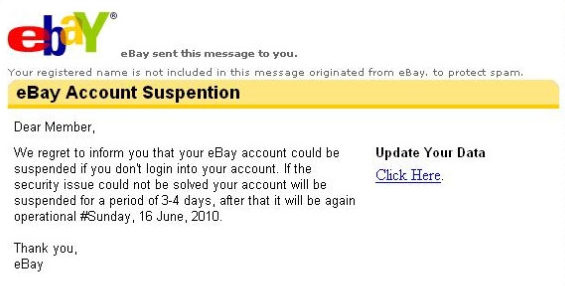
Below is a sample of a fake EBAY message.

I see these bogus messages all the time and simply ignore them, , , but they sure look real and can tempt you to “take a look”. You will be doing your colleagues a great service in helping them avoid these pitfalls in your company and even more so on their home PC by helping them better understand what’s taking place.

Elinor’s article is a MUST READ and SHARE ARTICLE !!

Read the article at:  http://news.cnet.com/8301-27080_3-20016026-245.html?tag=nl.e703

A sad day

Yesterday was a tough day for us, , , we had to let Corky go after 14 years. If you have every owned a dog, you know how close you get and how special a good one is, , , Corky was one of our best and will be missed a great deal.

My favorite photo of Corky and Boo (our Security Officer and Social Director after partying all night).

As an IT manager, it’s important to focus on the positives and avoid dwelling on the negatives. Yesterday was certainly a tough day for us but what we remember most are the fun times we had with Corky.
You are going to have some tough days as you manage an IT organization. Just remember, today may be difficult and even make you want to question what you are doing with your life, , , while tomorrow may become one of the best days ever. Be positive and optimistic about your future and it often turns out that way.