Why do you want to become an IT manager?

I’ve been fortunate to have managed IT organizations with thousands of employees in my twenty plus years of managing IT resources. One of the interesting things I’ve noticed consistently during that time is that many employees want to become “the manager”.

I absolutely love managing IT organizations and the people in them, but it’s not all glory and accolades. There is hard work, tremendous challenge, and sometimes frustration to do the job right, , ,  so before you sign up for a new management role, take a closer look at the job.

“Why do you want to become a manager?”
When interviewing or counseling an employee, I’m often confronted with his or her desire to become a manager. The first question I ask is, “Why?”

The response you get back can tell you a lot so listen closely to your employee’s answer.  Here are a few examples I’ve heard over the years:

  • “I want to be the boss.”
  • “I want the authority and prestige of the position.”
  • “I want to direct others on what they should do.”
  • “I don’t know; it just seems like it’s right for my career.”
  • “I want to build a big organization.”
  • “I want to make the decisions.”

The people who gave these answers didn’t have a clue at the time as to what an IT manager’s job is really about. In fact, most employees don’t and too many get thrown into a management position with little or no real preparation to do the job effectively.

Many technicians see the role of the IT Manager as one who defines the technology direction of the company and determines what tools to use, i.e., makes all the decisions. Most don’t get the fact that the company’s needs and issues are what should drive an IT manager’s decisions, and a strong manager empowers his employees so they are capable of making day-to-day decisions, , , not becoming a central point for all decisions to be made himself.

Being good at what you do does not necessarily prepare you for a management position. Let me repeat this: Just because you are an outstanding programmer or systems administrator does not mean you will be a good, even an average manager.

The growth of technology in the last twenty years has created a big demand for more IT managers and many found themselves in the role without anything more to help them than what they knew in their former technical position. From someone who has been there, I can tell you that this is not the preparation you need.

Certainly, knowing how to program can benefit you in a programming manager role, but it can also limit you severely.

When you take the best programmer out of the programming pool and make him the manager, you lose your best productive resource and place a very green person in a management role who now directly influences many others.

In most cases, the result is a significant loss of productivity from the programming staff. It shouldn’t be a surprise when client satisfaction drops and the rest of the programming staff becomes disillusioned; it’s predictable and happens all the time.

The bar used far too often in finding a new IT manager is that the best resource in a technical expertise can manage the rest of the team effectively. That’s not only a false idea, it can be a dangerous one for the company, the IT organization, and employees touched by such a move.

The reality is that managing IT employees and technology resources effectively has very little to do with how technical you are and more to do with your ability to facilitate, persuade, plan, organize, motivate, and communicate. You don’t hear anything very technical in these terms.

Suddenly, what becomes more important is not what you can do yourself but what you can get accomplished through others.

Management is like any other skill and can be learned, but the key issue is that it is truly a set of different skills than what you have used as a technician. The fact that you have been successful as a technical resource does give you a head start because it helps you relate to others who have technical roles.

The key is that when you become a manager, you have to let others do the technical part so you can focus your time and energy on the management part. With technology changing so fast, it is very difficult to continue to be the technical expert and also expect to be an excellent manager.

Management is a full-time job, , , especially if you have an IT organization of any size.

There isn’t enough time in the day to do both really well so one or the other disciplines will ultimately take a back seat and suffer. If you take nothing else away from this article, take the message that when you decide to be an IT Manager, you have to focus your time and energy on issues that help you succeed as a manager.

If you like solving the problems, learning new technologies, and implementing new tools and technology, , , stay in your technical role. Managers simply don’t have time to become the expert in the new technologies and do their management job well.

Position yourself to become a manager
Don’t take this message as one to suggest you can’t become a manager if you truly want to be one. Do take it as a message to prepare and to understand what the job is really all about. It’s not about giving orders and telling others what to do as much as you might think. If that were the case, it would be a simple deal.

Step 1  Learn how to manage projects and establish a successful track record of managing projects that are delivered on time and within budget. Developing sound project management skills is the best preparatory step you can take as this role requires many of the skills you need in a manager position.

Step 2  Observe successful managers in managing and motivating employees. When you see something that’s effective, add it to your skills “tool kit”.

Step 3  Find a mentor who has a successful management track record and is willing to help you develop management skills and who will give you insight from his/her experience. Mentors are invaluable and can save you time, avoid wasted effort, and reduce frustration because they know the “shortcuts” that are effective as a manager just like you know the “shortcuts” in your technical role.

Step 4  Tell your manager you want to be a manager and that you want his help to prepare for the new challenge.

Step 5  Ask for more responsibility from your manager that helps him get his job done and that helps you develop a new management skill. Be sure you preface the request that you want it to help you develop a skill that will prepare you for a management role.

Step 6  Develop key IT Manager skills. There are many IT manager resources on my web site including books, tools, plus online and classroom training. In my book, IT Management-101: Fundamentals to Achieve More, I list eleven key skills that help IT managers succeed including:

  • Assessing needs
  • Creating vision
  • Planning
  • Team building
  • Prioritizing and focusing resources
  • Client service
  • Project management
  • Managing change
  • Leading and motivating
  • Communication
  • Tracking and measuring performance

Download the free e-book and sample tools when you sign up for my monthly Practical IT Manager Newsletter at www.mde.net/free.

Depending upon your background and experience, you may have a long road ahead in your preparation efforts. Don’t expect to be offered a management position the week after you ask for it. Showing an understanding that you realize the management role requires new skills and that you are prepared to make the investment to develop these new skills tells your manager a lot.

I’ve turned down such promotion requests from employees initially but made the investment in helping those who showed a genuine desire to become a manager. Many have turned out to be exceptional technology managers. Had I allowed them to jump into a management role unprepared in both perspective and skill set would have been negligent on my part and could have damaged a career.

In every case, the first question I asked them was, “Why do you want to be a manager?” In most cases, the initial answer was not the same answer given a year later when they better understood the role.

So, , , learn from others and prepare yourself for a management role so that when you get the opportunity, you will be better positioned to achieve success.


Snow, snow, , , and more snow

In the US we are getting hit by snow storm after snow storm, , , and we are ready for it to stop, , , but still 3-4 more weeks of winter left.

In fact, it’s snowing really hard here right now. I’m interested in whether you are getting more snow this year, , , for those of you who get snow.

A quick poll:

Your company has been purchased, , , now what?

You are out of town on a business trip and you get a phone call. On the other end of the phone is the CEO, your boss, , , and he proceeds to tell you that the company has just been sold and you now have a new boss, , , the new CEO!

This happens more than you think and happened to one of my IT Manager Institute students who called me at home late one evening upon receiving the news just like this. The rest of the message from his CEO was that his new boss wanted to have a meeting with him on Monday morning when he got back into town.

If you have ever been in such a situation, you know what races through your mind when you receive such life changing news, , , things like:

  • Will I have a job?
  • Will I like my new boss?
  • Will my benefits change?
  • Will I have to relocate?
  • Will I have different responsibilities?
  • Will things be different and will I like it?

These questions and more were certainly going through my student’s mind. The reason he called me was because he knew I had been on the other side in many company acquisitions, , , i.e., the purchasing company. He wanted my advice on what to do and how to deal with the situation!

It’s a very reasonable question for anyone encountering a situation like this.

My response was rather simple, “Step back, take a deep breath and relax, , , this could be the best thing that’s ever happened to you.”

“, , , this could be the best thing to happen to you

IT managers are detail oriented people. When we hear something new and don’t fully understand it, we analyze, , , and ultimately come up with an answer about whether this set of circumstances is good or bad. In almost all cases, detail oriented people come up with an answer that it’s going to be bad for them.

We do not come up with, “This is going to be a very good thing for me, my team, or my company.” It’s almost always, “This is NOT good.”

The problem is there is no way of knowing whether it will be good or bad until you learn more from the new boss.

What I suggested was that he go in on Monday and meet with the new CEO and ask him, “How can I be of help?”, , , and mean every word of it. You see, during an acquisition, the senior management team is looking for managers and employees who can help make a smooth transition happen. When they find them, they tend to be eager to work with them and genuinely want their help.

If you go in and show resistance or that you are not happy with the situation, , , it’s going to be an early out for you, , , but not in the best way possible. Helping the new team with a transition may still mean you lose your job, , , but it may create opportunities you never would have thought of as well.

In the case of my student, the new management team was impressed with how he handled the situation. He did lose his CIO position, but they  gave him contracted consulting work to help with the company transition and he did quite well financially the next year.

Ultimately, the contract ran out but it gave this young manager plenty of time to make a smooth career transition himself, and he learned some valuable things during the transition.

When things happen, look for the positives in the mix, , , and work hard to avoid coming up with negatives when you analyze the situation. This “terrible” thing could turn out to be one of the best things to happen for your career.

IT hiring expected to increase in 2011

Every indicator I see says IT hiring will increase in 2011. Survey after survey says things are looking up, , , at least for new jobs in the IT segment.

GREAT NEWS, , , but don’t get too excited yet!

There is also a huge challenge looming for IT managers when it comes to hiring, and I just wrote about it in an article analyzing Cutter Consortium’s 2011 IT Trends Survey.

The issue is that hiring is going to become tougher and tougher for IT managers. The ability to find qualified technology expertise is going to become more difficult, , , not easier.

There are several reasons.

First, we are about to see many IT employees start looking for another company.

Even though there have been millions of jobs lost in the past 3 years, IT was somewhat insulated, , , not completely, but to some extent. We were not impacted as heavily as other sectors like construction, retail, etc. because we took a big hit in the early 2000’s during the “Dot.com” crash, , , remember the days when so many IT people were out of work?

In the current economic downturn, general types of workers were more affected and IT was insulated unless their company downsized across the board or went out of business, , , companies had already thinned out their IT organizations during 2000-2003.

This thinning process has placed enormous pressure on current IT organizations to keep up with their company’s needs during some very tough years. Technology support need continues to increase but IT staff levels have remained relatively flat for several years.

The result of this is that for the past 2-4 years, IT employees have been “hanging in there” and content to have a job with their company under possibly difficult circumstances because the job market has been so uncertain. Now that it is looking better, we are likely going to find IT people starting to search for a better situation.

Second, the pool of qualified technology candidates has shrunk and continues to shrink in a market that’s growing in need.

Because of the “Dot.com” crash and the more recent economic challenges, college graduates majoring in computer science and similar studies have had major difficulty finding a job. When these things happen, college students tend to veer away from majoring in these specialties, , , they major in something else where they are more certain to land a job upon graduating.

Add to this diminished output of qualified candidates coming out of the colleges and universities, , ,  and then look at the loss of senior level IT employees who are retiring. The “baby boomers” are retiring or changing professions faster than colleges are producing new IT professionals, , , and with them leaving we are losing the top tier of IT talent with years of experience.

Third, as companies need more IT workers and begin hiring, , , they will be looking for your best people.

That’s right, , , your very best people are their targets. When a hiring manager has an immediate need and wants experience, he or she is going to try to find a proven candidate, , , headhunters and placement companies have a way of learning who your best people are in your company.

What this means

All of this is going to place increased pressure on the IT manager in many ways:

  1. Motivation skills become much more important in order to keep your good people.
  2. Management skills become more important to insure your team is challenged and focused.
  3. Communication skills become more important to insure there is an open path for employees to discuss their issues.
  4. Interviewing skills become more important to find and hire the best.

New hiring forecasts are good and that’s great to hear, , , but with it you are going to see some additional challenges in the future. Develop a strategy to motivate and develop your team, , , they will walk through fire for a manager they respect and know supports them.

IT clients, , , 17 types you must work with

As an IT manager, you deal with all types. Your clients can be very different in many ways, , , being able to work with them can be challenging, even frustrating at times.

Let’s take a “fun” look at the type of clients you must deal with. This list is probably not a complete list, , , so if you have others you want to add, , , make a comment to this post and let us know. You can use this list to describe almost any group, , , employees, people, friends, etc.

“Client” as I define an IT client are two groups, , , possibly three.
Group 1 – Senior managers, , , CEO, CFO, COO, President, etc.
Group 2 – Department managers of your company and their organizations.
Group 3 – External clients your IT organization supports. 90% of all IT organizations do not have these. They are very similar to Group 2 clients.

OK, let’s get to the list of client types and see if you relate to any of them.

1.  Happy –  Our favorite, , , this client is happy with IT services and likes what we do.

2.  Unhappy –  An opportunity when we learn what makes this client unhappy and address his issues.

3.  Ray of sunshine –  Always happy and positive, , , this client likes everyone and everything.

4.  Tuned out –  This client isn’t listening to anything you have to say, , , they have you and others “tuned out”.

5.  Cool –  Some clients simply ooze with cool. This client will be one of the top dressers and appears to have his act together.

6.  Hidden agenda –  You may have a client who acts happy but in reality has another agenda, , , CAUTION.

7.  Worried –  Some clients worry about everything. They are skeptical of change and easily scared by the slightest problem.

8.  Second guesser –  This client second guesses everything you do and often challenges how you do things.

9.  No clue –  Some people you work with have no clue as to what is going on, , , they are in the dark on most things.

10.  Green with envy –  These guys don’t like IT or anyone outside their own organization getting credit for anything.

11.  Fighter –  Some clients seem to always be looking for a fight and are easy to get into disagreements with.

12.  Angry –  An angry client can seem unreasonable and likes to call you bad names. Don’t take it personal, , , fix it.

13.  Crazy –  Some people, clients included, have crazy ideas about what IT should be doing. BE CAREFUL with these.

14.  Bent out of shape –  Between angry and unhappy, , , pay attention to these before they get worse.

15.  Confused –  Confused clients have difficulty becoming happy. Clear up their confusion by speaking their language.

16.  Professor –  Some clients think they know technology better than you. Try to embrace them, don’t alienate them.

17.  Sleeper –  Some clients are asleep at the wheel, , , they tend to be lazy and lack focus in their organizations.

Recognize any of these in your company?

Each type has unique characteristics and creates different challenges in working with them, , , another reason why your IT management role can be such a challenge.

Got additional types worth mentioning? Add a comment below and share your thoughts.

IT managers can put a cost on anything

One of the difficulties we have as IT managers is in communicating with business managers.

–  We are technical, , ,  they are not.
–  We speak in technical terms, , , they do not.
–  We understand the technology, , , they do not.
–  They discuss things in financial terms, , , we do not.
–  They understand their business, , , we do not.

It’s material for a big gap to develop and prevent us from getting on the same page with our client.

One of the things we can do is learn to discuss things in financial terms. Are you aware, it’s possible for you to put a cost on virtually anything? Well you can, , , and you need to. Here’s why.

Business managers speak in financial terms, , , especially senior managers like your CEO and CFO. They mentally convert most things they hear into either business value, business cost, or business risk. All three of these have financial implications.

Let’s look at typical examples:

  1. Cost of downtime  –  Downtime is certainly a risk and a cost to your company. Are you aware you can literally identify the cost impact of a printer going down, a router failing, or a server crashing? Need to upgrade your infrastructure? Conveying your strategy in “cost of downtime” can be a big help when you discuss this with your senior manager. CLICK HERE to learn how easy this is and use a tool I developed for this purpose.
  2. Cost of losing a client  –  Here, I’m talking about your company losing a paying client, , , someone who buys your company’s products or services. Any good marketing or sales manager can tell you what losing a client is worth, , , in financial terms. If you have an IT initiative targeted to help your internal marketing or sales client improve client satisfaction, , , they should be able to help you identify what your work value will be in helping “keep clients”. It’s always cheaper to keep a client than to lose one and have to replace him.
  3. Business opportunities – Projects that help the company sell more widgets or services, , , or add clients have a definite financial value. Your marketing and sales teams always forecasts future sales, , , seek their help in identifying worthwhile projects that help them succeed and in outlining the opportunity value your IT project work adds to the mix.
  4. Cost avoidance  –  Doing a project now can avoid costs down the road. Don’t forget to include this aspect when looking at the financial value of your project.
  5. Productivity savings  –  Improving productivity of the company’s workforce can be a big financial value. Improved productivity lets a department do more work without hiring more staff or the ability to reduce staff to do the same amount of work. The department managers and their bosses can help you determine the financial value of improving productivity. For example, in one company every time we developed a data interface from a hospital system into our systems we knew it would be the equivalent of one full-time equivalent (FTE). As a result, our operations people wanted as many interfaces programmed as possible because it eliminated clerical workers having to key in data and handle paper, , ,  big help in improving their financial position. Identifying the financial value in this case is simply the cost of a clerical worker in salary and benefits.

Talk in financial terms and business managers hear you, , , speak in technical terms and use all the acronyms we like to throw around in the IT world and they not only do not hear you, , , they don’t want to meet with you because they simply can’t understand what you are saying.

Make your discussions conversational and put things into financial perspectives and see what a difference it makes with senior managers.

Super Bowl preparations

Today is the 45th Super Bowl and the preparation is completed. Now, it’s time to execute. The team that has prepared best and goes out and executes the best will be the winner, , , maybe.

Another factor is going to be which team can react to the other team’s game plan the best and what happens during the game. Often, the team that gets the fastest start is not the ultimate winner, , , it happened last year when the New Orleans Saints came from behind to beat the Indianapolis Colts.

You can draw a parallel between your IT organization and a Super Bowl football team. You prepare your team and you execute well, , , but are you adjusting in a timely manner when game changing events occur in your company?

An IT organization has to be somewhat flexible. Business needs change, and at times they can change quite often due to real issues that come up and affect the company. Some of these issues may be negative impacts, , , others can be unforeseen opportunities.

In either case, your company may need to react to surprise situations, , , and when they do, IT support is often needed.

It’s important for you to develop an IT strategy to support your business. I emphasize this in many of my works. At the same time, be careful not to put a strategy in stone where you can’t adjust to new things that come up and impact your business.

Openly discuss these things with your senior management team. Ask them how rigid or how flexible you need to be when developing your IT strategy. Building your strategy in partnership with your senior management team is much more beneficial for everyone than developing it alone.

Senior management probably doesn’t want to be involved in the details, but they will normally be more than willing to provide guidance and advice about how flexible the plan needs to be.

Once the strategy is agreed upon and you are executing the plan, , , be observant and watch for things that occur in the business that may need you to adjust your focus. When you do, be sure you pull some things off the list so you are still working within your organization’s capabilities and capacity.

Today’s game should be a good one, , , at least on paper. I like both teams so it doesn’t really matter to me who wins, but I need to make a choice so I’ll go with the Green Bay Packers over the Pittsburgh Steelers  —  27 – 20.

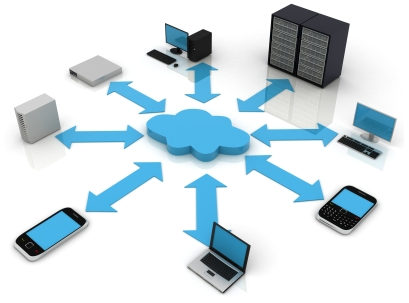
Is your business in the clouds?

Are you using some form of cloud computing in your company?

If not, you probably will be not too far into the future so you need to be learning about it.

Here is why. A recent survey by Duke University and CFO Magazine tells you all you need to know. They surveyed 481 CFO’s in the US, and here is what they were told:

  • About half already use some form of cloud computing in their company.
  • 83% said they expect their company to rely on cloud-based computing services within 3-5 years.

Cloud computing is here and it is here to stay.

Business executives like the cloud computing concept of “pay as you go”. Outsourcing is certainly nothing new and the cloud gives companies additional outsourcing opportunities as they strive to keep costs in line.

I have to say I like it too. For example, a CIO in a small company struggles to have the critical mass of infrastructure and systems technical expertise to manage a data center, support a network and all the systems of the company. Even when they do, there is constantly a risk if a key employee goes out sick or leaves your company.

Why not outsource your data center? This becomes more and more compelling when you look at the full cost of keeping everything “in-house”.

Consider the following:

  • People cost with specific technical expertise – It is hard to maintain critical mass of all the technical expertise you need in a small company and it can be more expensive.
  • Systems that depreciate and become obsolete – Let someone else make a home for your systems who can better staff and provide the controlled and secure environment you need for them.
  • Equipment that depreciate and can break – Might be nice to let someone else worry about this who has the critical mass to support it effectively.
  • Space – Space has a cost just like anything else, , , maybe all that space can be better utilized
  • Utility cost to manage the heat created in a data center – Your data center is one of the biggest users of energy in your company. Outsourcing your data center can have a big impact on monthly utility expenses.
  • Redundancy required to insure 99% up-time – It’s expensive to have redundant systems and people to create an environment that stays up 99% of the time.
  • Security can be enhanced – Outsourcing your systems, software, or data to a cloud service can enhance your security by taking advantage of a company who is able to afford a more robust security environment.

In the old days you wouldn’t have thought much about outsourcing your software, much less the data center. But in today’s environment, companies who can create a critical mass and are focused on specific services for other companies can be a big plus for all of us.

Cloud computing allows us to focus on the expertise we really want and need in our company and rely on a 3rd party for the expertise we would rather have somewhere else anyway.

Managed appropriately, cloud computing can offer your company a more cost effective technology environment, more secure, and with higher reliability. Still, , , any environment must be managed, , , otherwise it can turn into a disaster.

Here is a final thought for you. Google and Amazon use cloud computing quite heavily, , , why do you think they do? The answer is pretty obvious, , , it is more cost effective to use outside services of companies who make it their mission to provide such services. That’s the 3rd party company’s core competency, , , Google and Amazon don’t want to be the experts in this area. It is less expensive and more reliable to use outside experts, , , for some things, , , not everything.

Get ready to push the cloud button, , , it’s coming.

Prioritize your work , , , a video to watch

Yesterday, I posted a short article on How to prioritize IT projects. It’s a good overview, but there is more to take into consideration in prioritizing work.

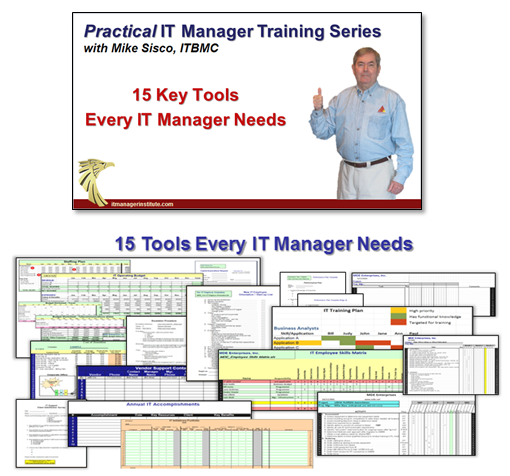
CLICK HERE to review my 20 Minute IT Manager session titled, Prioritize your work.

Gain additional insight in 19 minutes about things you must consider as you determine the priority of what you work on in your IT organization. 

There are 162 sessions in the 20 Minute IT Manager Series. It is a comprehensive training library for IT managers and focuses on:

  • IT management
  • Project management
  • People management
  • Leadership
  • Professional development

It took Tom Mochal and me over three years to develop this unique training program and it covers virtually every aspect of managing an IT organization. Most sessions include Tools for Success™ or templates you can download.

Details at www.20minuteitmanager.com

BIG OFFER was a BIG SUCCESS

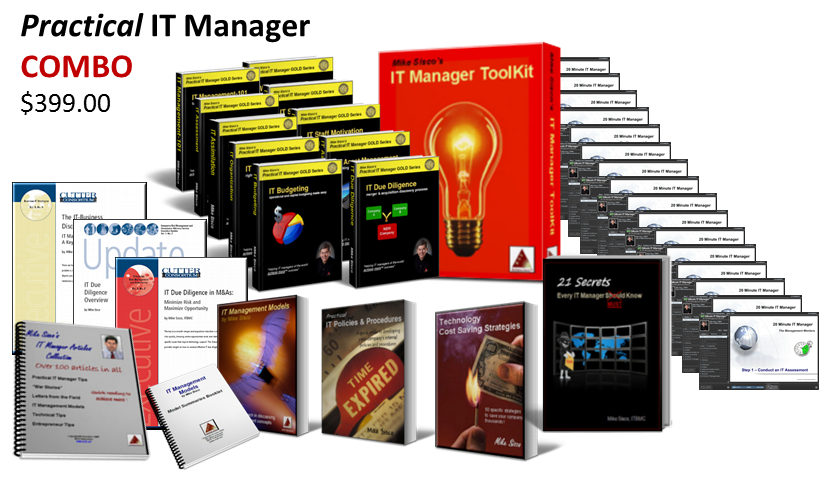
The 3-day BIG OFFER we promoted in early December was so successful we decided to make the bundle a permanent item. Every IT manager should have these tools to achieve more success.

Three BIG bundles and two Bonus Items in one BIG OFFER

Our  BEST VALUE and
the biggest bundle of
IT manager resources in the industry

—  #1 — Practical IT Manager e-Book Series
My entire library of 14 IT management e-books. Practical and to the point to help you achieve more success, , , used by thousands of IT managers around the world.
Retail value – $705.50


—  #2  — IT Manager ToolKit
Over 100 IT manager tools and templates developed from my 20+ years in managing IT organizations. Simple, practical and they work, , , you can even customize them to meet your specific needs. 
Retail value – $175.00

—  #3  — Mike Sisco’s 20 Minute IT Manager training sessions
A comprehensive online training library of 82, 20-minute e-Learning sessions from the 20 Minute IT Manager. Covers virtually every aspect of managing a successful IT organization, , , over 25 hours of training.
Retail value – $819.18

—  Bonus #1  —  Executive Report
The IT-Business Disconnect: IT Manager Work Behavior – A Key Contributor
Learn about one of the most serious issues facing CEO’s and CIO’s today and why our work behavior plays such a significant role, , , a real eye-opener and information every IT manager needs to know.
Retail value – $150.00


+

—  Bonus #2  — Executive Report
IT Due Diligence in M&A’s: Minimize Risk and Maximize Opportunity
I’ve led the IT due diligence on 45 company acquisitions and developed an IT due diligence process and tools to boost my productivity in conducting an IT assessment. Gain valuable insight from my experiences in this 25-page Executive Report. 
Retail value – $150.00


$1,999.68
$399.00

These materials will BOOST YOUR CAREER by helping  you:

  • focus your team to deliver tangible business value
  • conduct a thorough IT assessment
  • quantify your company’s business needs and issues
  • develop and present your IT strategy
  • create an appropriate IT organization
  • gain credibility by delivering projects successfully
  • budget more effectively and productively than ever before
  • motivate and develop your team to be world class
  • identify simple measurements to achieve more
  • track and report your IT initiatives easily and effectively
  • deal with difficult clients or problem employees
  • find cost saving opportunities to help your company
  • communicate effectively with clients and employees
  • , , , and much, much more

Knowledge empowers you to achieve more !

This bundle of IT manager training materials is the most comprehensive I’ve ever offered and represents over 20 years of IT management experience and thousands of hours of development work designed to help IT managers achieve more success.
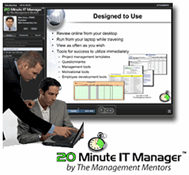
ORDER NOW

$399.00

My complete set of 14 e-Books
Over 100 IT manager tools
82 online training sessions
2 BONUS Executive Reports

Learn more

———————————————————————————–

Enterprise Option

Would you like anyone who has access to your company Intranet be able to access any of the tools, e-books, or online training?

Our Enterprise Option is very cost effective

$1,500.00

Enterprise option