Category Archives: IT Manager Tips

Helpful articles and tips

Education is key, , , even for an IT manager

Knowledge is power and positions you to achieve greater levels of success. Over the years, I’ve watched the light bulb go on for a young IT manager I was coaching on a particular  management issue. I’m sure that my mentors saw the same thing happen with me.

Managing effectively at a high level is something most of us can do if we know what to do and how to go about it.  Management techniques and processes can be learned just as a programmer learns how to incorporate a new routine of code into his coding arsenal.

I’ve seen other managers look amazed at the fact that I can submit an IT budget for a large organization in record time and I always achieve my operating budget.

I’ve seen employees light up by being part of a successful and motivated organization while others on the outside were looking in wishing they were part of our winning team.

These things are easy when you know what to do and how to go about it. I didn’t invent all of these tips and techniques, but I’ve done one of the best jobs in the industry in packaging practical processes and tools in training programs, books, and tools that help IT managers achieve more success.

I remember learning how to install a new mini-computer system with business application software for a new IBM customer. It didn’t take me long to incorporate a systems installation project template that I could use for every new installation. All I had to do was identify the responsible person for each task, put in dates for the tasks to be completed, add a few new tasks and it was ready to go.

This simple process saved me countless hours of work, organized each project, and gave the client a tremendous feeling of security because of the specifics all laid out and the confidence I had in knowing my projects worked. And this was long before structured project management programs came into vogue.

I certainly didn’t invent the new installation project plan IBM taught me, but I learned quickly how to use and improve it to boost my productivity and to insure we accomplished the mission.  I consider it one of the keys to why I successfully installed 13 systems my rookie year at IBM and received a Regional Manager’s Award. Knowledge truly helps you succeed.

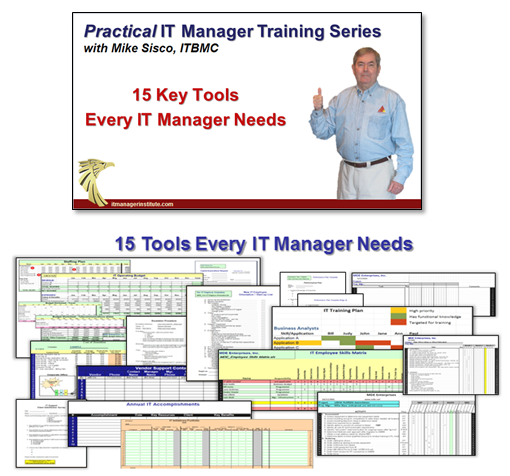
My books and tools are used by IT managers all over the world and the IT Manager Institute is the most practical training in the industry to focus on the “business aspects” of managing technology resources. Check out the tabs at the top of this page to learn more.

Why is the new CIO revisiting all projects?

“We have a new CIO and he wants new cost justification for all existing projects. What is this all about?”

I’ve been that new CIO before and I’ve done exactly the same thing  –  asked for the cost justification and benefits of all existing projects as well as planned projects. The reasoning is pretty simple:

  1. Is there cost justification?
  2. What is the business value we will get from the project?
  3. Does the project fit within the company’s business needs and issues?
  4. Does the project have the appropriate priority?
  5. Does the project have a business sponsor?

I’ve seen IT organizations work very hard and spend thousands of dollars on projects that provide no value to the company. It’s not that uncommon actually because a real problem exists when “technicians” develop IT strategies without doing their homework and gain agreement to insure their initiatives are in sync with company needs.

Your new CIO’s main obligation is to the company that hired him. His first priority has to be to assess the company’s needs and to inspect every project that spends money or uses technology resources to determine if the IT organization is working on the “right” priorities.

Many studies suggest that over 50% of all IT organizations are out of sync with their company needs. If that’s the case, there is a very good chance the previous CIO was focusing on some inappropriate things.

Jump in and help him size it up quickly. It’s not a personal issue so don’t be too attached to your project even if you are almost done. For example, if you are working on a systems conversion for a subsidiary of the company and the parent company intends to sell that subsidiary, you are wasting time and valuable resources. Even if you are 60% complete, it may be the best solution to cancel the project for the company’s best interest.

Help your CIO refocus the IT organization so it provides the most value possible to your business client. Everyone wins when you do, and all lose when you don’t.

If it isn’t broken, , , don’t fix it

I can’t tell you how many times I’ve seen an IT organization conjure up a project just for the sake of doing something they wanted to do. Never mind what the company or their clients really need, “let’s go do something really ‘neat’ or ‘cool’ ” sometimes seems to be the theme of the day.

Let me give you a specific example. I conducted an IT assessment for a small manufacturing company a few years ago. The CEO called me in because his IT organization was proposing a $380,000 network upgrade. The CEO had questions as to whether he really needed to spend that kind of money on their network, but he wasn’t sure. He wanted to believe in his IT staff and to do the right thing, but he was uncomfortable with this proposal and just couldn’t put his finger on it, , , his gut told him something was not quite right.

This scenario takes place thousands of times every day all over the world. CEO’s often do not understand what their IT organizations are doing and why they need so much money. Bringing in a consultant is not what the CEO really wants to do. For one thing, it casts doubt on the IT organization. Another issue is that it’s expensive, , ,  or is it?

Getting an objective opinion could be one of the best investments a company can make and may turn out to be your most inexpensive option. In this particular case, we saved the company over $300,000 by doing a simple 2-week IT assessment.

The situation
The problem was that the IT staff was managed by a manager who had minimal experience in management but lots of knowledge and experience in networks and systems, , , infrastructure experience. As a result, the projects he focused the IT group on tended to be infrastructure related.

The good news here was that the network infrastructure was outstanding, especially for a small company. The data center was as organized and stable as any I have ever seen  –  truly excellent. The users of the company could not remember when  they had experienced any unplanned downtime.

The infrastructure network and systems also had significant scalability due to the fact that the company had recently closed two of its five manufacturing plants and downsized its staff by over 30% due to poor economic conditions.

Sound familiar?

All things were not all that rosy within IT, however. Users were very unhappy about IT support. This dis-satisfaction was uncovered in just one day of interviewing the key department managers of the company.

The problem was simple and so was the solution.

IT placed priority on the technology (networks and systems) and did not focus on the user’s needs and issues which were in the business applications and Help Desk areas. IT could not tell me what their client’s key needs and issues were, , , although I was able to find out in only one or two days of interviewing them.

The small Help Desk couldn’t tell me basic things like:

  • How many active calls are in the backlog?
  • How many calls a week do they receive?
  • What’s the mix of the type of calls they receive?
  • Where do the majority of calls come from?
  • Is the call activity steady, growing, or declining?

When IT couldn’t tell me these things, it validated what I had heard from some of the department managers who said, “Our questions get lost, we never hear back from IT, and we don’t feel that IT is focused on our issues.”

Why is it that IT is focused on infrastructure which has absolutely no noise level, yet the obvious issues and needs in the business applications area and Help Desk are not getting addressed at all?

Simple, IT wasn’t communicating with their customer. They were focusing on what they know. The manager came from the infrastructure side of IT so that’s what he focuses on. In his mind, he was doing exactly what the company needed, , , and his recommendation was an elegant solution. The problem is that it missed the mark on what was needed and wasted a valuable company asset during tough times, , ,  money.

When asked why so much focus on infrastructure, , , the answer I was given was that it would help the IT organization better support the company’s systems and networks. I guess that’s great, but there was no indication from the business that these components were not already getting supported extremely well, , , the pain is in business applications and Help Desk.

The recommendation
My recommendation was to scratch the network upgrade and focus attention on the two areas that needed it:

  1. Address business applications issues and needs where the company could gain real value from its IT investment.
  2. Improve the Help Desk processes and tracking systems, , , and focus IT on better communication steps.

The bottom line is that we didn’t fix what was working, saved the company significant dollars, and focused the IT group in areas that improved the company’s productivity in a very short period of time.

To be fair, the IT manager in the example wasn’t recommending things because they were “cool” projects to work on. He was actually making a recommendation that he truly thought was the right thing for his company. He just didn’t know how to communicate properly with his client in order to identify the real issues IT should focus on. It happens all the time.

Remember, “If it isn’t broken, , , don’t fix it”.

Take a day off

I took most of today off after a conference call first thing this morning with a potential business partner in India. We used SKYPE so the call was free and spent about an hour on our “Internet phone”.

Technology is certainly making things easier for us and bringing us closer together. Just 10 years ago, many of the things we take for granted today were not possible.

Just 20 years ago, the Internet was an infant, , , just a baby with so much promise. Well, the results are significant and I think all the time about, “what a great time to be alive”.

Yes, it’s great to be part of what’s going on with technology, but it also creates some pretty challenging issues for CIO’s and IT managers. Any of you have clients or users who want the latest and greatest and they don’t seem to care how much it costs? There is a fine line between being aggressive and state of the art versus fiscally conservative and “just enough is good enough”.

There are times when you need to get away from the grind of supporting the technologies in your company. We all need diversions from time to time. Vacations certainly help. You might also consider sprinkling in a 3 or 4-day weekend from time to time.

I took today off to play in a charity golf tournament to support my 1st cousin’s high school football team, the Riverdale Warriors. I played with his Dad (my uncle) and two of his buddies. I was the youngest in the group and we had a great time even though it was mighty hot out there. My golf game hasn’t been all that great lately if you’ve been reading, but it’s starting to come around, , , hit more good shots today and made more putts than I have been doing. Maybe there is light at the end of the tunnel.

The nice thing about my work is that I can work at night, weekends, or essentially whenever I need to. The downside is that the work is always there. I love what I do, but too much of a good thing can also become a problem. Soooo, , , I’m better now about taking a break, , , a day off here and there, , , to give myself a breather. It helps me stay fresh and improves my focus, , , plus after 30 years or more of working in the technology field, , , I have come to believe I’ve earned some time off now and then.

I highly recommend it. Take a day off when things are getting too tough or too stressful, , , your IT staff and your family will appreciate the fact that it helps loosen you up.

As a young manager and IT professional, I rarely took time off. Even when I did, Dorine will tell you that I spent a lot of our vacation time working , , , or even ending it short to make a special trip to support something going on in the company.

Be careful with this type of mindset. Your company can get along without you; if it can’t, you have built the wrong type of IT organization and you need to rethink some things.

Today was great, , , and tomorrow I will be ready to hit the project I’ve been working on with renewed energy.

Are you organized?

Are you organized?  Do others think you are organized?

If not, you need to get there if you want to improve your productivity and success.

I carry three key items with me, , , along with my laptop :

  1. Cell phone
  2. Notebook
  3. Calendar

Can’t live without a cell phone, , , although there are times when I wish we could. Actually, cell phone technology has come a long way. My preference – an iPhone.

The notebook is simply for taking notes and has a document flap to hold my small pocket calendar, a few brochures, and some business cards. Lightweight and small is what I prefer, , , when I travel it needs to fit in my brief case and take up minimal room.

I have tried to use a PDA (personal digital assistant), but just didn’t like it as much as the pocket calendar, pen and paper notebook system  I’ve used my entire career.

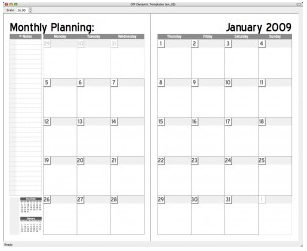
A small pocket calendar is used to schedule appointments and I have a technique to track travel miles for tax purposes. I prefer a monthly presentation scheme so when I open it up, I see all the days and appointments for an entire month. Many people prefer weekly formats because they have more room for notes, , , but for me, it makes the calendar too big and bulky. I want everything I use to be small and lightweight.

I update my contact list once a year and print it out in alphabetical order. You never know when you might lose your cell phone or destroy it, , , I’ve killed several phones in my career including one 18 months ago when my canoe tipped over, , , not fun if you have to restore all your contact list. My key contact phone numbers are also maintained on my phone, but we have a backup with the printed list if and when we need it.

It comes down to a matter of preference on how you like to manage your calendar and addresses. For me, retrieval is quick using the old fashioned paper system, , , although my iPhone has a quick and flexible retrieval process I find myself using more and more.

I create a weekly to-do list every weekend to help me focus my attention on what needs to get done in the week ahead.

Project  folders and Client folders keep information that I want to save and are filed alphabetically in my desk. Archived files that I need to keep are filed in a file cabinet in alphabetic sequence for easy retrieval.

I also maintain a “Manager’s Notebook” where I keep information I need to access from my office from time to time, , , things like:

  • Master contact list
  • Company financial summaries
  • Strategy documents
  • Resources

I don’t carry this with me when I travel due to its size, but I know where to go when I need something quick.

Keeping yourself organized is a discipline that you need to develop. Use a process that works for you and is easy for you to maintain, , , keep it simple.

Determine what’s important to track for your business and use the tools that work for you and your way of doing things. Play around with some tools to see what you like best.  I’ve probably used a dozen different types of notebooks and portfolios over the years, but find myself always coming back to the type described above.

For me, I like simplicity and lightweight tools that are easy to carry when I travel. The key is to have a system that allows you to retrieve contact information when you need it and that you can make notes for follow-up so your clients and business associates can depend on you.

Whatever your choice of tools, you really can’t go wrong when organizing yourself.

One last tip, , , don’t forget to carry a pen or two, , , you always need something to write with.  🙂

How do we overcome a poor IT reputation?

I get this question quite a bit, “How do I overcome our poor IT reputation in our company?”

“Rome was not built in a day.”, they say. To turn a poor situation around takes focus, commitment, hard work, , , and time. If you have a bad situation, it didn’t get into this state of affairs over night. Neither will it be fixed over night.

Start by identifying the key problems that’s leading to client dis-satisfaction. I use the word ‘client’ for both internal managers and employees who use technology as well as external clients who pay you for services (if you have them).

Once you know what your problems are, determine what it takes to fix them or to eliminate what causes them. It may be organizational focus, possibly managing expectations better, or even eliminating some things that you are trying to do because it’s either not that important or the IT organization isn’t up to the task.

It is always critical that you manage the delivery of your services to match up with both your IT organization’s capabilities as well as capacity. Signing up for something when you don’t have one of these two elements is pure suicide so if you have such a situation, get it fixed promptly.

Unlike what you may feel, your clients really do want you to succeed. They will typically always push you for more than what you can do, and you can either sign up for too much and fail, , ,  or sign up for an appropriate level of service, deliver consistently, and succeed, , , every time!!

Keys to improving your client satisfaction levels:

  • Back off of unrealistic commitments and re-establish what you can do.
  • Always quantify what you can do and can’t.
  • Build some buffer into your commitments (surprises do happen in the IT world so plan for them)
  • Coach your staff to over communicate.
  • Be aggressive in follow-up and calling back.
  • Strive to keep your client informed; never leave the client in the dark.
  • Don’t commit to deadlines unless you can deliver and if you commit, you had better make it happen.

It’s important for you to position your IT organization to over deliver. No one gets upset if you complete projects faster than expected or at less cost than expected. Someone always gets concerned if you are late or over budget, , , so position yourself to deliver “better than expected”, and see what a difference it makes.

Clients want results and need you to do what you say you will do, and they want you to be consistent in this area. Most clients are more forgiving than you might think, but when you lose their confidence it’s all over.

Do these things with a positive mindset to improve your IT support delivery, and you will start turning your situation around.

IT Management Model – Drain the swamp

Too many IT organizations run by the “seat of their pants” and are reactive in nature. I’m sure you’ve seen it, even heard people express symptoms of the problem like,

  • “We are too busy & don’t have time to plan.”
  • “We have too much work to do.”
  • “Projects aren’t finished on time because of constant interruptions and surprises.”

Every manager has the opportunity to establish an environment that is predictable and that clients can rely on. For some, however, getting there is a big stretch due to how they operate.

One of the reasons many managers find themselves in an environment that is constantly full of surprises and reactive is that they are so busy fighting alligators (dealing with problems). They forget to “drain the swamp”, , , in other words, eliminate the source of the problems and the problem goes away.

The point is that every organizational situation has key issues that need to be addressed to turn it from a reactive environment to one that is more predictable. You have to identify your key problems (i.e., the alligators) and determine how to eliminate the root cause (the swamp).

No swamp, no alligators to fight.

Key points to the model:

  • Define your mission & plan your initiatives
  • Dedicate resources to primary objectives
  • Eliminate the source of problems vs. spending resources on fixing problems

Drain the swamp is a key model every IT manager needs to pay attention to. Lack of clear objectives and failure to maintain focus causes more productivity loss than anything I know of.

Drain the swamp is one of 72 models in my book, IT Management Models. Learn more

Is soccer real football?

With the US and England playing in the World Cup Soccer matches this past weekend, it reminded me of a model that I’ve used hundreds of times in coaching others on my team through the years.

It begins with understanding the basics of American football and focuses on playing your position.

In an offensive line (shown as the “O’s” in the graphic below), the primary mission is to block defensive players (the “X’s”) and to protect the quarterback, , , to move the ball forward in order to score points.

Each lineman has a designated area to block. When one player fails to execute as planned, the team can bog down making forward progress more difficult. Every player has to play his position and count on his teammates to execute their assignments to achieve success.

This example works the same for an IT organization. I’ve seen too many IT organizations perform ineffectively because they either:

  • lack focus due to a lack of specific responsibility
  • team members lack the skill to succeed
  • team members wander away from their assignment to help another area

Focus is key. Missed assignments of responsibility or lining up your players without the skills to be successful is a management issue. Once proper responsibilities are established and communicated, and the skills are in place; it is the team member’s responsibility to execute. When they do, success is usually achieved.

Management has to insure the skills are in place and each staff member knows their responsibilities and how to take care of their assignments. When this happens, you simply let the team do what it knows how to do, , , with minor coaching and tweaking when necessary.

Key management points:

  • Assign every team member specific responsibilities
  • Take advantage of strengths and “shore up” your weaknesses
  • Insure each team member has the skills necessary to succeed
  • Provide the tools that allow each person to be successful
  • Expect each team member to succeed individually and to support the team
  • Build your strategy around your team’s capabilities

Oh, by the way, , , CONGRATULATIONS to the US and England in a 1-1 tie, , , and we all know that most people in the world consider “real football” to be soccer.  I’m OK with that until American football season starts.

Go Tennessee !!!      Go Titans !!!

Why is the IT Department so misunderstood?

Business managers and users don’t really understand what you and your IT organization are all about. Here are a few of my own personal ideas as to why this exists:

  • IT is not normally the core competency of your company; therefore, most managers of the company do not need to be very knowledgeable about technology, , , so they aren’t and they don’t want to be.
  • Many IT managers have excellent technical skills but lack strong management and interpersonal skills.
  • The nature of technology is that equipment breaks and users need support, something they would actually rather not have to deal with.
  • Many companies lack the discipline to manage a true change management process and a project management culture that helps prevent problems.
  • Some departments use IT as an excuse for their poor performance.
  • IT managers often miss the mark when prioritizing initiatives for the company.

I’m sure there are many more reasons, but this list should give you plenty to think about in assessing your situation.

Staff meetings are worth the time

Contrary to what a lot of people believe, staff meetings do not have to be a waste of everyone’s time. In fact, a well run monthly staff meeting can have many benefits for your IT organization.

As a young IBM Systems Engineer, monthly staff meetings were great breaks from the daily work routine. It was there that I learned the value of a properly conducted staff meeting.

I’ve incorporated regularly scheduled staff meetings throughout my management career to help me accomplish many things with my IT organization including:

  • Keeping staff informed of company events & issues
  • Reinforcing teamwork
  • Coaching key points
  • Providing group education
  • Building camaraderie within the IT group
  • Recognizing successes and achievement
  • Having fun

You need to balance the impact on productivity against what you gain by having a meeting. Fifty employees out for one hour in a meeting is potentially 50 hours of lost time, maybe even lost billable time if your organization generates revenue. That’s a hit against your organization’s output or billable revenue to be sure.

On the flip side, getting everyone together once a month keeps them informed and allows you to emphasize key issues that need their focus. The bottom line is that it helps you manage the output of their productivity potential. Informed employees who know their manager realizes the importance of both hard work and having fun tend to be more motivated. Highly motivated employees produce more in a 40-hour work week than those who are not.

When I hear employees or managers make statements that meetings are a waste of time, one of two things is happening. Their meetings lack substance and are held simply to meet, or the person doesn’t realize the peripheral benefits that are taking place by keeping the team informed.

Your IT employees typically have a huge need to know what’s going on. Staff meetings are one way to keep them informed. Meeting time is high quality time with your people when you organize and prepare for the event and make it a priority to make it meaningful for your staff.