Are you presenting at the right level?

Take a good look at this graphic.

Are you presenting at this level? If your audience is a group of programmers or engineers, maybe this is the level you should be discussing your points.

But, , , if the room is a group of company executives, presenting at this level will put them to sleep, , , completely asleep.

Being high detail oriented as we are, we tend to think our audience needs a complete and full set of information to be able to understand something or to make a decision. This is not always the case. High detail technical people need lots of detail but low detail people usually don’t, , , and guess which group company executives tend to fall in when it comes to technology.

You got it, , , the low detail group.

Discuss issues with your senior management team at the 30,000 foot level unless you know they want lots of detail. Give them the answers, not all the mechanics of how you plan to do something. They want to know what the value is, where the risks are, and how much it’s going to cost, , , if they want to know how you will go about doing the work, they will ask you, , , and then you can discuss the “hows”.

When you prepare to make a project recommendation, present to a group of people, or discuss an issue with someone, , , be sure to consider who they are and at what level you need to discuss your points.

I would tend to err on the higher level side; you can always go into more detail if needed. But if you start with too much detail and lose your audience, it’s over.

Sometimes “less is more”.

Global Help Desk challenge

I received the following question over the weekend and thought the question, , , and my response might be helpful. Here goes:

The challenge from one of my newsletter subscribers
“I am in a dilemma over the Global Help Desk servicing our users.  My company is based in Singapore, but the Global Help Desk resides in the UK. The Global Help Desk is supposed to handle first level calls, and if they cannot help over the phone, the request is then dispatched to my small team of engineers (x 3) based in Singapore. My team is supposed to handle only 2nd or 3rd level requests. However, since we do sit among the users in an open concept office, the users tend to go directly to my team for support instead of following the Global Help Desk support framework.

I have to admit that the Global Help Desk analysts are not exactly up to mark, despite several work improvement plans with their supervisors to improve the situation. Also, it seems to be a cultural thing in Asia, whereby people prefer face to face support versus calling some 10,000 miles away. I explored many areas to improve the issue; for example conducting a workshop to educate the users, putting up posters, even moving to an enclosed room…however the situation still remains the same.

I do not want a conflict between users and my team just because we have to adopt a Global Help Desk framework which just doesn’t work. Users (even senior management) are starting to lose confidence with the overall level of IT support and service in our organization.

What is your advice?”

My response
“This is a good situation to look at because it happens quite a lot, even when users are in the same building as their Help Desk. A distance of 10,000 miles would certainly make your users feel like they are required to contact someone in a “foreign” country, , , even if they are from the same company. The fact remains that people from different countries have different cultures and speak very differently.

Here are my thoughts:

First, you don’t want to create artificial structure or process in supporting your client. What you want is to create an environment where you are providing great support and your clients appreciate what you are doing. More on this in a minute.

Second, clients are like “water”. Water as we all know seeks its own level and flows to the lowest possible point on the ground. Clients are similar in that they seek the easiest and what they see as the best and fastest means of resolving their problem. What this should say to you is that your local clients don’t feel they get the best support when having to go through the Help Desk some 10,000 miles away.

What I would do is analyze the situation from your client’s perspective, , , not from an IT perspective. The client is sending a message that they do not receive extra value when reporting their issue to the Help Desk. What they probably feel is that IT is simply imposing a set of rules on them that makes no real sense, , , “where is the value in calling in a problem to a group we do not know and who rarely takes care of the issue 10,000 miles away”?

You might consider running a research project for 30 days, , , or even just 2 weeks will do. Train your staff to take the call from the client and take care of the problem like they are doing already.  Part of taking care of the issue is to be sure they log any of the calls that came to them directly from a user into the Help Desk issues log. At the end of the month, analyze a few things:

  1. How many calls went to your staff directly versus went into the Help Desk?
  2. What percentage of all calls that went through the Help Desk were handled by the Help Desk?
  3. Analyze the type of calls that come in to determine if the Help Desk should be able to answer more of the calls? Maybe, staff on the Help Desk need to be trained to be able to handle more issues immediately. One way to get users to call into the Help Desk is to  be able to handle their issue quicker.
  4. Can you determine whether the User is getting their problem resolved faster when they go directly to someone locally versus calling in the problem to the Help Desk?

Another way to address the issue is to have a point person on your local staff to field all calls and to be sure the Help Desk is updated. After all, good Help Desk information is a vital source of information to help you know where you need to focus to eliminate calls and to improve support.

At the end of the day, you want to be able to deliver support as quickly and as efficiently as possible. Users typically do not want to change unless there is something in it for them, , , so ask yourself, “How do we provide users more value so they call the Help Desk rather than grabbing one of your technicians?”

This means several things:

  • Being able to respond and resolve the issue as much as possible with Tier-1 support when taking the initial call
  • Being able to get to the problem in Tier 2 and higher as quickly as possible
  • Being knowledgeable and able to resolve the issue effectively
  • Maintaining call and response data so you can focus on eliminating certain types of calls by preventing the problem
  • Being able to track support call status effectively

To me, I don’t care so much about how we take care of the client as long as we are doing so and doing it cost effectively. If one of your local support people acts as a local Help Desk “point person” so you can be more effective for your client, that would probably be a good thing as long as you continue to insure you get the call data into the Help Desk database. This information is very valuable to help you understand where your support resources are spending their time and what kind of issues are taking place with your users.

Ultimately, users aren’t going to change without a challenge unless they can truly see there is more value in calling the Help Desk first. If users start getting faster and more reliable support from IT as a result, , , and hopefully you can show them the data that supports it, they will reinforce within their groups that calling the Help Desk is the way to go.

I hope this is helpful.”

Got a helpful hint of your own? Post a comment and share your experiences.

Ladd Vagen wins our first week ToolKit giveaway

Our first week’s contest winner is Ladd Vagen from Flagstaff, Arizona.

To promote our company turning 10 years old on September 1st, we are giving away a free IT Manager ToolKit each week through the end of the year. Better yet, we will select a random winner from our ITLever subscribers and award a free Apple iPad on December 4th, 2010.

You must be a current subscriber of ITLever to win. To subscribe, click the EMAIL SUBSCRIPTION link in the righthand panel and then select the frequency you want to receive new posts to our ITLever Blog (immediately, once a day, or once a week).

Ladd gave us some great comments this morning when I asked him, “What do you like about ITLever?”

His comments were, “I like how Mike is able to find pearls of wisdom and relevant examples of good business/IT practices in unrelated experiences.  I especially liked the story about Amber Falls Winery.  And then there are the ‘just for fun’ articles (the sidewalk chalk was incredible!) and, of course, the practical articles which are always helpful.  Thanks, Mike – keep up the great work!”

For a complete list of all winners, go to https://itlever.com/2010/08/12/subscribe-to-itlever-and-win/

Subscribe to ITLever and you may be our next big winner.

Picking grapes

My wife and I like wine. We just volunteered this week to help a local winery, Amber Falls, harvest their 2010 grapes, , , and it was so much fun.

I visited a small winery in Slovenia last year and was impressed with the winemaker’s stories. His family has been making wine for over 600 years and the small village he lives in boasts of having more than 70 wine cellars, , , , something the Romans apparently built when they came through the region to store wine for their soldiers.

When we were in the dirt floor cellar tasting our host’s wines, I could just imagine a couple of Roman guards posted there hundreds of years ago sampling wine like we were doing.

I asked the winemaker about harvest and he said it was always a big event. Family and friends come in and pick the grapes for each year’s harvest and it was always a big and joyous occasion, , , pick grapes all day and have a big feast and party at the end of the day.

For some reason, I’ve wanted to be part of a winery grape harvest ever since, , , so this year Dorine and I volunteered to help our friends at Amber Falls.

Guess what, , , it was great, , , we had a super time and even enjoyed getting up at 4:00am to be at the winery at 5:30am to start. In two days, we and other workers and volunteers picked about 14 tons of white grapes. The whole process was easy for the pickers and everything was handled very efficiently, , , down to the lunch afterward.

Being organized is extremely important in any business. Amber Falls made the entire process simple and easy, , , like clockwork. Oh yeah, they started their “kickoff meeting” at exactly 5:30am, , , very professional and efficient.

Did I tell you we are awesome grape pickers? 14 tons of grapes is no small achievement!!

Can’t wait to go back in a couple of weeks to pick the red grapes. I’ve been told to wear something you don’t mind getting messed up as the red grapes can leave quite a stain, , , I guess it’s sort of like a “badge of honor”.

This weekend, we are at our Camp Liberty and plan to go out to the winery in a few hours to listen to some jazz music.

Tim and Judy, , , Pat and Margaret, , , are the owners of Amber Falls. They have created a great attraction for all of us in this area. We take everyone who visits us to Amber Falls because it is a very special place.

Cheers !!

Click on either of the images above to go to the Amber Falls Winery web site.

Ten ways to improve client service

If client satisfaction is one of the primary measurements that determines whether we are a successful IT organization (and it certainly is), then it makes sense for us to develop strong client service attributes in our IT organization. IT organizations do not develop strong client service skills on their own; they require leadership, guidance, and coaching to get there.

Client service must become a culture within your organization where your staff knows what to do to improve client satisfaction as well as reinforce the appropriate behavior within the organization.

Excellent IT service organizations exhibit high levels of client service in everything they do. It’s a habit, something that takes place automatically, and ultimately requires less energy. The result – you guessed it – very high level of client satisfaction.

Supporting clients is difficult, sometimes downright hard. It is much easier when our clients like what we do and respect what we are doing. Strong client service skills develop true “partners” with clients.

One of the things I share with managers who attend my IT Manager Institute is that when I was an IBM SE in the late 70’s (wow, what a long time ago), I had an excellent track record of taking care of my client. It certainly wasn’t because I was the best technical resource in the organization. My technical skills were decent enough, but the difference maker was some of the traits I list in this article.

I did things that contributed to excellent client satisfaction and incorporated these traits in my management role later in life. When you find things that work well, incorporate them into your management style. It will pay huge dividends and make you a better manager.

Here is a list of ten key items to help improve client service:

1.  Provide value
“Value” is in the eyes of the beholder, or the customer. If we are to be construed as a strong client service organization, our team’s focus and priority must be targeted to what the client truly needs. I use the phrase, “the client is always right” a lot. As a CIO, I certainly need to influence what we work on but the real foundation of what needs to direct my strategy lies within senior management and our users (my client). My job is to translate their real issues and needs into aspects of technology that make the most cost effective sense in addressing these issues and needs. The bottom line here is that if our IT focus does not create a feeling of providing real value in addressing the client’s needs, we aren’t going to be considered to be an organization that provides value.

2.  Keep the client “out of the dark”
Nothing aggravates us more than when we have a problem and don’t know what the status of the issue is or how to solve the problem. Our clients are the same as we are. They have a job to do and they need systems and technology to get their job completed. When they have a problem, we need to make every effort to “keep them in the light” so they know what’s going on. It makes a big difference in improving client satisfaction.

3.  Display a high sense of urgency
Clients do not want to have to push their IT support organization to resolve their technology problems. It’s actually stressful for them to complain and to “nag” us. On the other hand, they have a problem and need it resolved to get their work done. As such, they have a very high sense of urgency in getting “back to normal”. As we respond to day to day issues, we need to exhibit a high sense of urgency in addressing the client’s problem. It may be a small issue but to that particular client, it is the most important issue on our “IT plate” at the time. Develop operating procedures and service level agreements that help you manage client expectations and that allow your IT organization to succeed. When we deliver what and when we say we will deliver, the world seems to spin on its axis much more smoothly.

4.  Be courteous and friendly
Clients want to work with people who are friendly and nice to work with. Our desktop support technicians and Help Desk Coordinators are often have more contact with our client than many of our higher paid employees. Inspecting how these employees are interfacing with your client is very important and developing a mindset that “our business is to support the client” is critical. Teach your staff that every support call is an opportunity in disguise.

5.  Follow-up
This is probably the biggest item on the list and it is a trait that is so important to instill in each of our employees. Clients need to be able to count on their IT organization. The thing that will cause us to lose credibility quicker than anything is when we have employees who commit to do something and do not follow-up. Remember my comment about my IBM SE days mentioned above? Well, the real difference maker was that I had excellent follow-up skills. When I made a commitment, I wrote it down and even when I did not have the answer to an issue, I always contacted my client to give them an update of where we were. They knew they could count on me to resolve the issue or to get back to them. This is a BIG DEAL !!

6.  Over communicate
When a client has a problem, especially if it involves system downtime or something that stops work, we can’t communicate too much. In a bad situation, I will often put a resource on “point” and instruct him/her to contact the client every half hour to give them a status of where we are in resolving the situation. Not only will this extra communication be appreciated, it will go a long way in building the type of relationship you want to have with your client.

7.  Learn to prevent problems
Our IT organization has to be able to “put out the fire” when it occurs, but we need to be in the business of fire prevention. The Help Desk is an excellent source of information to tell us where the problems are, what type of problems we are having, and where to focus fire prevention efforts. When we do things that starts reducing the number of problems, it is important to share these positive results with our clients. After all, we are reducing their headaches and no one is going to discuss the positive steps we are taking if we don’t let people know about it. Organizations that show they are preventing problems exhibit traits of an organization that understands the needs of the business.

8.  Anticipate client needs
We need to anticipate client needs as much as possible rather than wait for the “last minute” call to action. For us to be successful, we have to get the IT organization out of a reactive mode of operation as much as possible. Putting in procedures and processes that helps your organization “be more responsive” gives you an advantage and in an IT management position, we need every advantage possible.

9.  Implement escalation procedures
When problems happen, you want your organization to escalate quickly and automatically as necessary to address the issue as effectively as possible. The client wants to see that we have a high sense of urgency and appropriate escalation of issues within the IT organization and to senior management as necessary shows that you are organized to be responsive.

10.  Use a simple change management process
A certain amount of structure is necessary to allow your IT organization to support the business. Change management processes are critical components to help facilitate the business of supporting client needs. Once change management processes are adopted, the activities related to supporting clients is automatic and much easier to follow. We need change management processes for supporting equipment change requests and for handling programming changes.

Developing a track record of great client service requires discipline and attention to detail. It also requires your IT organization to communicate proactively and responsibly. Implement these ten traits within your IT service delivery approach and you will see a dramatic improvement in your relationships with your clients. It takes everyone on the team delivering support in this manner. One “loose cannon” can undermine a lot of positive progress so inspect your employees and coach them as necessary to reinforce what you expect in supporting your client.

More sidewalk art

It’s amazing what a creative artist can do with chalk and an open sidewalk. Here are more examples of amazing sidewalk art.

Jaws comes to life in the city

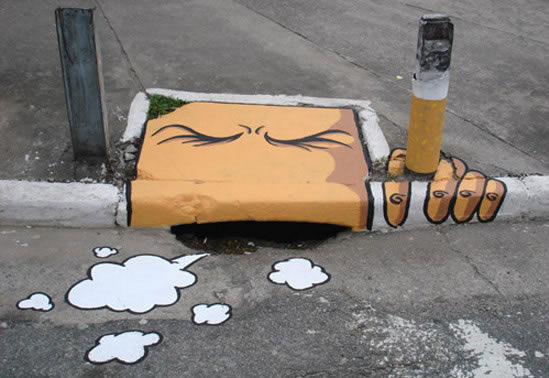
Smoking is bad for your health

Now that’s one big butterfly

Lots going on in this one

JUST FOR FUN, , , enjoy !!

Software vendor evaluation tool

How do you go about evaluating vendor software products when you need to buy something to meet one of your business needs?

Good marketing can hide poor functionality so you want to do some due diligence when you purchase software to address mission critical business  needs.

One way to do an objective evaluation is to look at side by side comparisons of things you deem to be important in your selection criteria. A great way to do this is to use the Software Vendor Evaluation Matrix tool I developed to help me do this. This is one of over 100 tools in my IT Manager ToolKit.

CLICK HERE to download the tool.

Want to learn more about it? I have a 20 Minute IT Manager session that discusses it fully. There are 162 sessions in the 20 Minute IT Manager series. Details at www.20minuteitmanager.com.

CLICK HERE to access the 20 Minute IT Manager session and learn more about using this tool.

Stretch your people; they will reward you for it

When I worked for IBM in the late 1970’s and early 1980’s, I learned a very valuable management lesson from two entirely different sources. The first source was from my IBM SE Manager. He was teaching me about an important management principle although he didn’t tell me.

The second source was from a client. In fact it was the client who bought my first system sale after I became a Marketing Representative. These two managers were very different with little in common other than they knew a thing or two about managing employees.

I was being stretched and didn’t know it
As an IBM rookie Systems Engineer (SE) in 1977, my manager assigned me to a geographic territory and aligned me with a senior salesman. It was exciting times, the era of the mini-computer when small  and mid-size companies were purchasing their first business computer.

The salesman I was partnered with had his best year in 1977. I didn’t realize it at the time but my manager decided to let me install most of the systems that were sold in our territory unless either the senior salesman or I raised our hand and asked for help. I was being stretched, but I had no clue that this was what was happening.

I didn’t really think about asking for help so I worked extra hours to take care of the business that was put in front of me when we sold new systems in our territory. It just seemed to me that it was what I was supposed to do.

By the end of the year, I had installed thirteen new systems in five different industries while supporting over thirty other clients in a geographic territory of some 5,400 square miles. It was the most new installs ever by an SE in that office by far; not something a new rookie SE is supposed to do.

It was a real win-win. “How so?”, you might ask, , , especially for me when I ended up working so many extra hours.

The win for the manager is fairly obvious. Instead of throwing more resource into my territory to help in supporting existing clients or installing the new ones, the manager was able to deploy his resources to other situations of need.  In other words, he was able to leverage his staff.

The win for me was that I was recognized in our January Kickoff meeting with a Regional Manager’s Award and $1,000. It was a great win for me, believe me.

Expect more and you will get more
The second example I learned at IBM was more direct. When I became a Marketing Representative, my first sale was with a small Termite Pest Control Company.

This company had approximately thirty trucks and technicians supporting a fairly large geography. As we discussed the benefits of having a computer system, the main benefit the Owner wanted was to be able to leverage his staff.

He articulated the need this way: “When I send a unit to Vicksburg, some 60 miles away, I want to give my technician a list of ten to twelve jobs to take care of rather than six or seven. While he is there doing a major service, I want him to have a list of several other annual inspections that are coming up. If I give him only four jobs and he completes them by noon, he will goof off until he needs to return so he arrives back here at the end of the day. If I give him twelve jobs, he may not be able to complete all twelve jobs; but he will probably compete eight or nine of them. What this does for us is to improve our productivity quite a bit. The other thing is that it benefits my employee because we pay a monthly bonus when they achieve certain objectives. Having the information that helps me leverage my technician’s time allows them to make more money and our company to be much more productive. We both win.”

I was pretty young at the time, but I’ll never forget this concept and seeing what it did for the Termite Company business. He was able to grow without adding as many people as he would have taken prior to being able to leverage his employee time.

Remember this because it’s a real issue in that people will always find ways to fill their time. If you do not have productive objectives in front of them, they will fill the time with something, but it probably won’t be activity that contributes to the success of your organization or company.

The Termite Company owner focused his employees on specific jobs by providing them access to information. Remember, this was back before spreadsheets and laptops were available; all you had was a handwritten list.

In the other case, my IBM manager allowed me to rise to the need. In both cases, the manager got more from his employee by stretching their expectation.

Employees are actually eager to do more, especially if it’s a win-win. It’s not taking advantage of an employee when you give them more to do and that stretches their capability; it actually helps them grow. Sure, there are limits to assigning more responsibility so be realistic when you do and monitor the situation so you aren’t abusing your employee.

In my IBM situation, I would have seen it as a negative if my manager had thrown more resources into our territory. I wanted to take on the responsibility; the challenge motivated me.

Take a look at your situation and determine if you are stretching your employees. You will find that employees who have a lot to do tend to be happier employees.

Creating credibility in today’s world

Let’s get right to the point.  To establish credibility you have to create successes.

There is nothing like having a track record of successes to validate one’s credibility. It is ultimately what we are all going to be judged on.

Look around and think about this for a moment. Of all the managers you have worked with or currently work with, who are the ones who have credibility in your mind?

It’s the people who have had successes and can get things done – right?

Of course it is, , ,  and I can assure you that whether you ask a client, senior management, or an employee you will get the same answer in almost all cases. You might find a case or two where someone votes for the manager with the winning personality, but more often it’s going to be based on who can get things done and do it in a positive way.

Credibility is not established by “hitting home runs”. It is something that is earned over time. We have all seen the “flash in the pan” manager who comes in, does something wonderful, and then just can’t seem to get things done.  These people impress others quickly but soon fade from the scene of credible managers.

It’s one thing to have a single success; it’s something different and far more important to have “sustained successes”.

Credibility emanates from consistency and doing the little things well. Again, you don’t have to hit a home run to establish your credibility. Start with small successes and work your way up to the “big hit” opportunities. What’s more important is the consistency of your success and that you succeed more often than you fail.

Failing is a matter of life. If you don’t have a failure here or there, then you aren’t trying to do very much. For example, you can guarantee zero errors in a programming support environment, , , but to do that, you have to either eliminate new changes from being worked on or put such a strenuous quality review process in place that your productivity will be unacceptable. We have to strike balance.

The key is to sustain a track record of successes. That doesn’t mean zero failures. That said, it’s important to avoid “disastrous” and “dumb” mistakes.

The cornerstone of success
Managing projects successfully is a critical part of any IT manager’s success. When your team exhibits the ability to deliver projects on time and on budget, you join the minority of the IT managers who achieve this. Many studies suggest that over 70% of all technology projects either fail to be delivered on time or exceed budget.

Believe me, deliver projects on time and within budget and your credibility will grow quickly because you will be viewed totally different than other IT managers who fail most of the time.

What this means is that you need to implement a project management culture within your organization and for your clients. Quantifying the deliverable and scope up front, gaining agreement, and building realistic plans are critical, , , not optional.

Don’t miss this point. Predictable delivery of your projects is essential if you want to be credible. It’s so important that I wrote an entire book titled IT Project Management: a practical approach. In my 5-day IT Manager Institute, I spend an entire half day on the topic of project management and the importance it has on your success and career. Project management is only one aspect of managing technology resources effectively, but it is a key part and the “cornerstone” for your success.

You need credibility in several areas
To be successful, establishing credibility takes many forms. You need to be credible with clients, senior management, and your employees to achieve real success. Managers who can win over senior management for a time but are not credible with clients and/or employees ultimately lose favor from their senior management supporters.

First, create credibility with your customer. At the end of the day, this is the key piece of what you have to have to be credible. Clients have to trust you and know that they can depend upon your IT organization to support their efforts.

Second, create credibility with your employees. It won’t be you the manager who delivers the products and services that the client uses to conduct business. It’s going to be your employees. When they succeed, you will succeed. It can’t work for a sustained amount of time the other way around.

Third, create credibility with senior management. When clients and employees believe in you and trust you, senior management will follow. Another thing that builds credibility with senior management is when you look at the technology support world in more of a business perspective.

Prioritizing and focusing your technology team’s initiatives on issues that make a tangible difference for the company will endear you to your CEO, CFO, and other senior executives. Typically, they want to see cost savings, new revenue opportunities, or productivity improvements from technology initiatives.

Little things make big differences
The manner in which you go about managing people, issues, and processes on a day to day basis creates a persona about you as a manager. Little things go a long way in helping others trust you and trust is an essential foundation in establishing a credible reputation among your colleagues.

Here are some key things to remember:

  • People trust people who do what they say they will do.Senior managers admire people who can turn difficult situations into positive ones.
  • Clients respect people who are straightforward and manage their expectations well.
  • Following up on commitments gains allies in all areas of your business.
  • Giving your staff credit for successes and taking responsibility for failures builds tremendous staff loyalty.
  • Empowering your employees and providing them the tools to be successful creates great trust.

It’s really not all that difficult to establish a level of credibility within your business environment. Start by taking small steps that lead to bigger strides. Build on the small successes and be consistent in how you go about managing people and issues and especially how you treat others in the workplace. You will find that a consistent approach that treats others with respect will have very positive impact.

Remember, the key is to deliver what you say you will deliver and when you say it will be done. Ultimately, this is the acid test of whether you create trust and what makes a person credible.

If people cannot depend on you to do what you say you will do, no matter how good your intentions, you will not have credibility with them. Telling someone you can’t do something or that it takes longer than they want it to happen may not be what they want to hear, but they will gain respect for you when you actually deliver what you say you will.

Establishing and maintaining credibility has a lot to do with managing expectations, so always try to position yourself to “over deliver”.

Best of success in establishing and maintaining the best of credibility in your business and personal environment.

Do you wear red sunglasses or green sunglasses?

What type of manager are you? Have you thought about it much?

There are “hip shooters”, , , those who fire at anything that moves. The opposite type are the “procrastinators” who just can’t seem to pull the trigger, especially on the more significant issues.

There are a few “proactive” managers but unfortunately most tend to be “reactive” managers.

There are also managers who wear “red tinted sunglasses” and their opposites who wear “green tinted sunglasses”. How they manage is all about how they see things.

Here is the deal, , , someone who wears red tinted sunglasses does not see red because the red is filtered out. He only sees green. As a result, this manager is much more aggressive because he doesn’t see problems or sense any danger in dealing with an issue.

On the other hand, the manager who wears green tinted shades only sees red because green is filtered out. This manager is much more cautious and deliberate in making decisions because he senses danger at every turn.

It really doesn’t matter what color of shades you wear because both styles can be very effective. What it does mean is that it’s important for each of us to understand whether we are an aggressive, risk taking manager or one who uses lots of caution.

Depending upon the issues at hand and your company environment, the situation might necessitate you to move toward the other type of management style a bit to succeed. Knowing yourself and how you tend to manage is important in determining whether an adjustment might be needed.