How long should your IT strategy be?

I usually develop two strategies after completing an IT assessment.

First, a tactical strategy that entails the next 60-90 days, but could be up to 180 days (6 months). Once I get my staff focused on the “immediate” targets of our tactical plan, I begin working on developing the strategic IT plan.

The strategic plan is usually focused on the next 18-24 months unless my company wants something longer like a 3-year strategy or a 5-year plan. If that’s the case, my primary focus still tends to be on the first two years, , , and the strategy elements beyond two years get much more general in nature.

The reason I try to keep my IT strategies focused to two years is because you can see two years out, but technology is changing so fast that it can get pretty blurry beyond two years.

Think about this for a second. Look back to 2005, just five years ago. Lots of change and many innovations have occurred in the last five years, , , and technology continues to change at a faster and faster rate.

I have been in the IT world since 1969 and I can tell you that we take many things for granted. For example, most of you reading this article were not in IT before the spreadsheet. Prior to Excel and Lotus 1-2-3, it was Visicalc that revolutionized the accounting world by eliminating paper and pencil, , , and lots of erasers.

You might also be surprised to learn that we didn’t always have project management methodologies, let alone project management certifications like PMP thirty years ago.

Have you paid attention to the advances in PC and laptop technology? The power and capacity keeps going up while the price falls. The 300GB disk drive capacity alone in the Lenovo ThinkPad I carry around would have required some 6,000 square feet of floor space 30 years ago, , , and think of the heat all these disk drives created. In fact, one of the Division Headquarters of IBM actually heated its building from the heat created from the CPU’s, disk and tape drives that had less disk capacity than my laptop.

That’s right, many of the things we have today and take for granted had to be developed as new technologies, methodologies, and tools. What will be great about this is that in ten or twenty years from now, we will look back at what we have today and think we sure were struggling compared to what we will be able to do then.

Enjoy the fact that technology is doing so much to improve our lives, , , but be careful when you try to forecast or build your IT strategies beyond two years out.
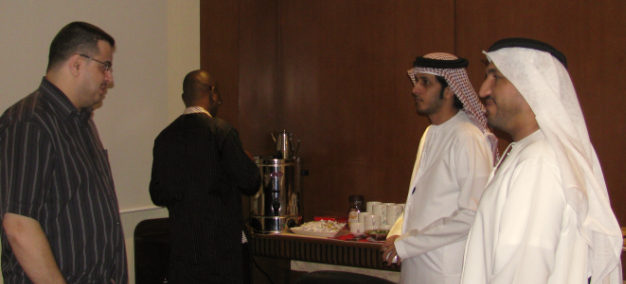
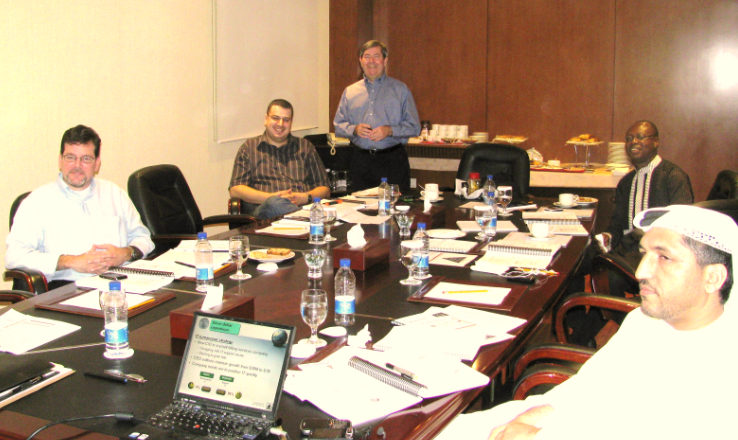
IT Manager Institute #42 – Dubai, UAE

This week’s class in Dubai was a lot of fun, , , a great group that I’m sure I will stay in contact with.

It was my 4th visit to Dubai, , , what a special place, , , I love coming here. Staying an extra day to see a few more of the sights. It’s fun but I also look forward to getting back home on Sunday morning.

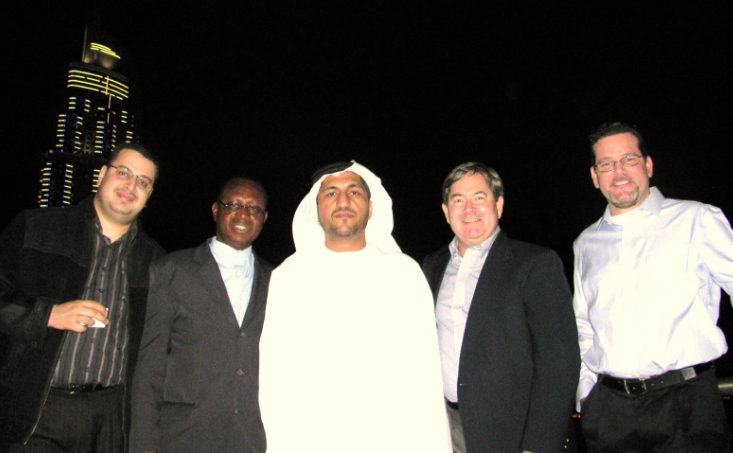
Here are a few photos from the class.

Nice looking group, don’t you think ??

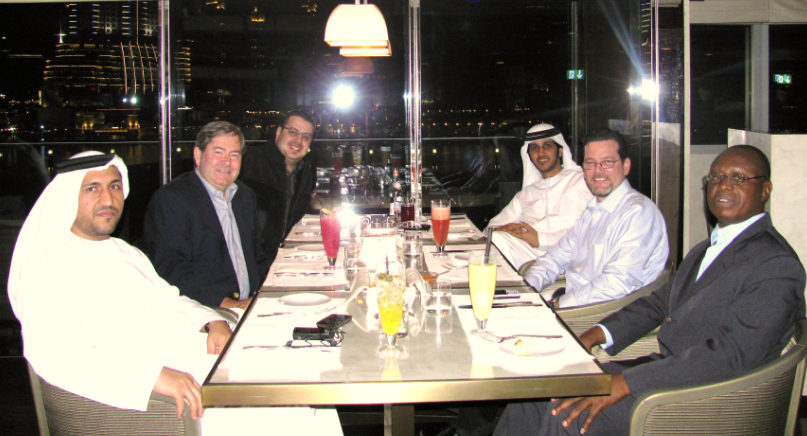
Dinner in the world’s tallest building

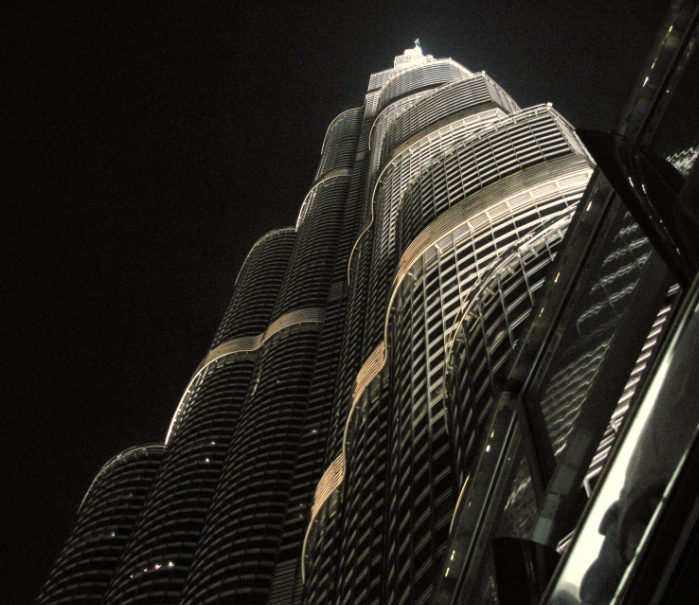
Burj Hotel, , , world's tallest building

The Burj is a majestic site

My 42nd IT Manager Institute in Dubai is going great, , , I really like this class. Tonight we held our class dinner in a special place, , , at the Burj Hotel, the world’s tallest building. It is more than twice the height of the Empire State Building in New York City and is an impressive site.

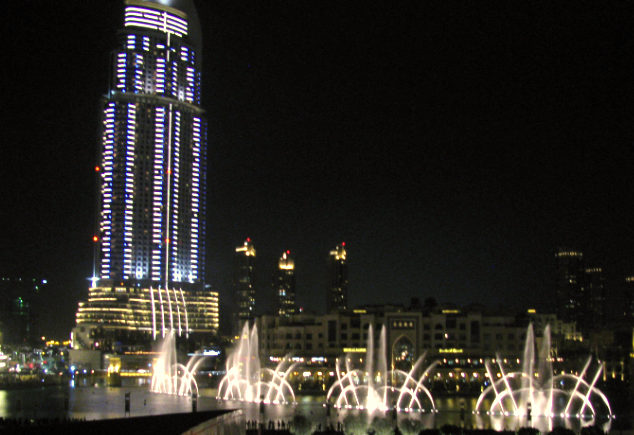
The meal was excellent and we watched the water show outside the restaurant, , , I think everyone had a great time as did I.

View of the water show from our restaurant inside the Burj

Looking up at the tallest building

A great dinner

The Burj stands tallest by far

Expect the unexpected

If you are in the IT world for very long, you soon learn that things can go awry at times. You need to “expect the unexpected” and plan on what you would do if and when it occurs.

What I mean is that you should anticipate things will happen, , , because they will. Think about the scenarios of what can go wrong and plan your move in case it does so you are ready when it happens.

I’m not saying that you should spend all hours of the day worrying and thinking about what might happen, , , but you do want to give it at least a little thought. You will be much more prepared to react and take care of the problem when it occurs.

Let me give you a couple examples:

  1. When I travel to teach an IT Manager Institute, I do two things to anticipate potential flight problems. First, I reserve a flight that gets me there on Saturday so I have an extra day (just in case) and it also allows me to rest and get adjusted to the local time. Many of my trips are 14 hour flights and more. Second, I take an earlier flight to Atlanta or wherever I must make my international connection. If the flight gets postponed or cancelled, I can always get the next flight and still get to the main airport to make my connection.
  2. I built time buffer into my IT Manager Institute class, , , just in case we have a power outage or other mishap. In my 10th Institute in Curacao, that’s exactly what happened, , , a tropical storm knocked out the Marriott Hotel’s power and their backup generator. We had no power for half the day, , , but because I anticipated the possibility of such a thing, it was no issue in getting through all the material. 

When you manage projects, build budgets, install a system upgrade, etc., , , be sure to anticipate the things that might go wrong and put some buffer into your plan. When the unfortunate event does occur (and it will at some point), you will be glad you did.

Make it a habit to “expect the unexpected” and teach your employees to do the same. It will help you become a more responsive IT organization.

Expect the unexpected !!

Early start in Dubai

Up and at ’em at 3:00am today, , , highly unusual for me to be up so early when teaching the IT Manager Institute, , , but you do what you need to do.

One of my students is flying in from Nigeria and his flight gets here at 2:30am. There is a possibility there may be confusion with his hotel reservation so I’m going to be available if needed to insure we start off well.

Dubai is an amazing city and one of my favorite class locations. It’s my 4th time here and I’m always impressed with how well they take care of their visitors. It’s very safe and for the most part pretty economical. I pay just as much or more for basic things like hotel, snacks, taxi, etc. in other countries (including the US) as I do in Dubai. I actually find the prices to be pretty reasonable here, , , but, you can also find very expensive items as well.

To put it mildly, Dubai has it all, , , or at least a lot to do and see:

  • tallest building (seen it)
  • largest indoor acquarium (been there)
  • largest shopping mall (actually two largest)
  • three island complexes made to look like palm trees
  • island group made to look like the countries of the world
  • indoor snow skiing with 3 runs (pretty amazing when it’s 85 degrees outside)

Another special thing about Dubai is that they accept all currencies. Give them European Euros, American Dollars, or Nigerian Naira, , , all currencies are accepted by everyone in Dubai just as easily as is the United Arab Emirates Dirham, , , and that includes shop keepers, taxi drivers, , , anyone who does business in UAE. Makes it very easy.

Today begins my 42nd IT Manager Institute since our first class was delivered in 2003. It has been an amazing ride and one full of rich experiences and being able to meet some of the best people in the world.

The hotel here, Flora Grand Hotel, does a super job. I particularly like the breakfast. Plus, they have a full time Concierge who takes care of most anything you want to do, , , will have to reserve my class dinner this afternoon.

The class dinner is always special. Let’s see, the first Dubai dinner was held in a nice Italian restaurant, , , the 2nd was on top of the Hotel by the pool. What a great scene we had of the streets of Dubai from this one. Last year, we took one of the Dubai Creek dinner cruises (they must have 50 or more of these boats that hold about 150 guests each). Good meal, entertainment, and a lot of fun.

This year, , , not sure what we will do yet, , , the Dubai Creek dinner cruise was lots of fun and easy to do so we may stay with it.

Look for more posts this week while I visit Dubai. Next stop is Dar es Salaam, Tanzania (east Africa) in December. This will be my first visit to Dar and looking forward to a totally new experience.

Nothing like a good Desktop Technician

I’m sure you have experienced a time when you called in your IT resource to help you troubleshoot an issue. Maybe you have called a Help Desk resource supporting one of your software applications.

The story often goes like this. The technicuian starts “working on things” before you even have a chance to fully describe the problem you have. Before you know it, he is either making settings changes to your PC or telling you over the phone to do things.

I call these guys “hip shooters”. They start doing things before they understand the issue. These types can be very dangerous, break a lot of things, and create much frustration.

After a lengthy time and getting no further than when you started, the support resource tells you that you need to reload the software or to rebuild your PC. I’ve only had this happen once or twice and glad I decided to seek a second opinion before going down this perilou path.

Today, I’m in a Dubai hotel and my Internet connection is lost. Everything was working fine last night and early this morning, but seems like I haven’t been getting to the Internet for a couple of hours. The three email messages I though I had sent are still sitting in my Outbox, , , OUCH!!

I hate it when this happens.

Well, when you travel you are going to have Internet connection challenges from time to time. I’m pretty comfortable doing the basic checks that end up getting me the connectivity I so desperately seek, so it wasn’t a big deal.

But today, , , all the troubleshooting ideas I could come up with simply didn’t work!!

Finally, after about an hour of doing my own troubleshooting, I call the Front Desk and ask if they have an IT Support Technician, , , knowing that this could be either a very good experience , , , or a very bad experience.

My support arrives within 10 minutes, , , a good sign.

The result, , , a couple of quick checks, , , a router reboot in his system room, , , and we are all squared away. In all, it took maybe another 10 minutes.

I plan to give the hotel manager a note of appreciation and a job well done. This guy was sharp, no nonsense, great communication skills, , , asked my permission to do certain things on my laptop versus just making changes on the fly, , , just a super professional. I was impressed!

Guys like this need to be appreciated, and I certainly appreciate his help, , , hence, you are getting this Blog post now and not many hours or days later. 

A good IT technician is worth his weight in gold. When you have a really good one, treat him or her well.

Get rid of the paper

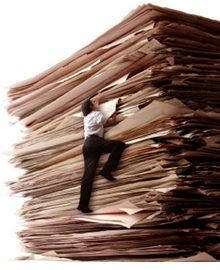
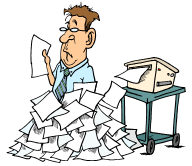
If your company processes lots of paper, you probably have a big opportunity for cost savings. Paper is one of the first places to look at when you want to find potential cost savings.

Why?  Because paper offers so many cost saving possibilities, such as:

  • printing cost (paper, ink, and supplies)
  • cost of printers (hardware and maintenance)
  • special forms creation cost
  • paper handling cost
  • distribution cost (postage, shipping materials and people productivity)
  • processing time (there is a cost tied to the time required to deliver the paper)
  • paper storage cost

Find big pockets of paper in your company and you may have the ability to reduce costs in several ways.

Often, it requires technology to eliminate paper and that’s where we come in. Here are some of the technical solutions to help you eliminate paper:

  • software applications
  • scanning and imaging
  • programming data interfaces
  • creating digital files rather than paper documents and reports
  • , , , even using duplex printers to print on both sides of the paper

Ask your clients and yourself a question, “Is this report or document actually needed, , , or would a digital file be just as effective?”

I’ve run little tests at times by stopping a report that we questioned was actually needed or used. Be sure you have senior management support when you do this to prevent problems. Often, you find no one notices, , , if they do and they need the report, they ask about it.

Look in your desk and file cabinets. How much of the paper that’s in there has been accessed in the past 12 months? Probably very little of it. Wouldn’t it be much better if all of this information were in digital files which would be much more accessible and require so much less space to store?

Getting the idea?

Be creative and look for ways to reduce or eliminate paper. Your company will benefit tremendously.


New Guinea and Canada winners

Two more winners of our weekly IT Manager ToolKit contest.

Rogana Ranu of Port Moresby, New Guinea had this to say. “I enjoy reading the daily articles. In a developing nation finding the information that is shared in your articles is valuable. Your websites helps me with supervising and management.”

Glen Sabatier of Edmonton, Alberta, Canada made this comment. “Entertaining and informative content that is relevant to the work I do as an IT Manager.”

Happy Halloween

It’s Halloween !!!

Do you believe in ghosts?

Do you observe as I have that more problems  seem to occur in our technologies when there is a full moon?

Are you a bit more careful on Friday 13th?

Possibly black cats make you a bit nervous !

At our home, we get somewhere between 200 to 300 kids on Halloween night. This year we opted out of Halloween only because it fell on the weekend and most of our weekends are spent at Camp Liberty.

There are times when we think we have a ghost at Camp Liberty, , , but we are certain it’s a good one who watches over us. And, we have our black cat named Boo who stands guard, , , no one wants to mess with her.

Back to the full moon issue and it having negative impacts on our technologies. Maybe it’s not real but other things seem to bear out the fact that things do happen with full moons – like more traffic accidents, more aggressive driving, more personal accidents, babies seem to be delivered, etc.

Maybe all of this is coincidental, but what I will tell you is that I tend to try and avoid full moon timeframes when we install a new technology, implement upgrades, or do other things that can affect our mission critical systems.

Call me paranoid if you want or just consider me to be a bit more cautious when we have a full moon.

Halloween is a time for fun, , , I hope your Halloween is one to remember.

K-19: The Widowmaker

In my last post, I asked you if your IT organization was prepared for a disaster. What made me think of writing that post was because I watched a movie  a few weeks ago starring Harrison Ford (remember him in Star Wars?) and Liam Neesen (also in one of the later Star Wars episodes).

The movie was K-19: The Widowmaker based on actual events that took place in 1961. In the movie, the Russians wanted to launch their first nuclear  submarine and conduct a rocket launch test. The Captain of K-19 (Liam Neesen playing the part of Captain Mikhail Polenin) refused the aggressive time line being asked to execute the event due to his concern for the safety of his crew.

Harrison Ford plays the part of Captain Alexei Vostrikov, a loyal party member who is assigned the job and becomes Senior Captain of the K-19 submarine.

To make a long story short, the nuclear sub is launched and the rocket test is completed , , , but the interesting part I picked up in the movie that ties to IT management and my last Blog post, Are you prepared for a disaster,  is what takes place on their voyage to the rocket test destination.

The new Captain is a hard nosed and experienced sailor. He knows there are many things that can go wrong on a submarine, so he starts testing the crew for their ability to deal with adversity. Things like:

  • Fire drills
  • Missile drills
  • Flood drills

By doing this he puts tremendous stress on the crew and officers, , , but it also prepares them for what is to come, , , a disaster in the nuclear reactor that poses a potential nuclear explosion in the worst case or radiation exposure to the entire crew.

The end result is that the submarine crew loses several crew members in dealing with the radiation leak and many more die upon their return to base in the months to come. The senior officer is actually heralded for his bravery and the first nuclear submarine launch and rocket firing test, but he is also brought before court martial for the deaths of his sailors.

Had the crew not been forced to practice their mock-up disasters, it is quite possible the entire crew would have lost their lives. Captain Polenin (Harrison Ford) focused on insuring his crew could recover from a disaster they might encounter, , , these drills helped the crew be more prepared when the real disaster occurred.

Have you tested your crew for potential disaster and do you know how they will react? Better to find out now before the real event happens.