Tag Archives: it manager training

Every IT manager needs these tools, , , a closer look at the Practical IT Manager GOLD Series

Managing an IT organization is a tough and challenging job, but it can be much easier and more rewarding when you have the knowledge and insight in how to do the job effectively.

Learning to manage by trial and effort is not only ineffective, it is risky and expensive for your company and can even damage your career.

The challenge is there is usually no one around who can help develop an IT manager in a company, , , technology is not the core competency of most companies so the IT manager has to learn the best way he can.

This is high risk and most of the time does not work very well.

What you need is a set of practical processes and simple tools to help you do what is required to succeed in an IT manager role.

Managing an IT  organization is like anything else, , , once you know what to do and how to go about it and have the tools to do the job, it becomes second nature, , , just like riding a bicycle, configuring a router, or developing a web page.

But if you do not have the experience and know-how, , , managing IT can be a very intimidating challenge with severe consequences.

For example, ask yourself the following questions:

  • Why is it so hard to become a partner with my senior managers and what do I need to do to become a partner?
  • How do I deal with a difficult client?
  • Why is budgeting so difficult and take me so long to do?
  • How do I develop an IT strategy and get it approved?
  • What are the steps to turn a problem employee around?
  • How do I motivate my staff when I don’t have money to spend?
  • How should I go about prioritizing the work we need to do when we do not have sufficient staff to do the work?
  • Why are my recommendations so hard to get funded and approved?
  • How do you manage client expectations when all they want is everything they request and have it all completed today?
  • Why do my clients not understand or appreciate our IT organization?
  • Why are our IT projects not being completed successfully?
  • Why is communicating to my clients so difficult for me?

Sound familiar? It should, , , these issues occur every day in IT organizations all over the world. In fact, let’s take the last question, “Why is communicating to my clients so difficult for me?”

Are you aware that this is a major issue for over 70% of all IT employees? There are specific reasons why the vast majority of IT people are not good communicators. You may not be aware of what it is but I can guarantee most reading this article find communicating with clients and senior managers to be difficult, intimidating, or at least challenging.

The cause is real simple and I’ll show you how to overcome it so you can achieve more success, , , this single issue is the cause of many, many IT manager failures. Learn what it is and how to overcome it and you will achieve much more success.

This issue and the others listed above plus others is why I wrote my first ten books we called the IT Manager Development Series, , , to help IT managers of the world achieve more success.

These books and the accompanying IT Manager ToolKit we bundled in as a bonus have been tremendously successful with thousands of copies sold around the world over the past ten years.

I just completed rewriting these 10 books, , , from top to bottom and from front cover to back cover. They are completely rewritten with new content, new and revised tools, easier to read and even new covers.

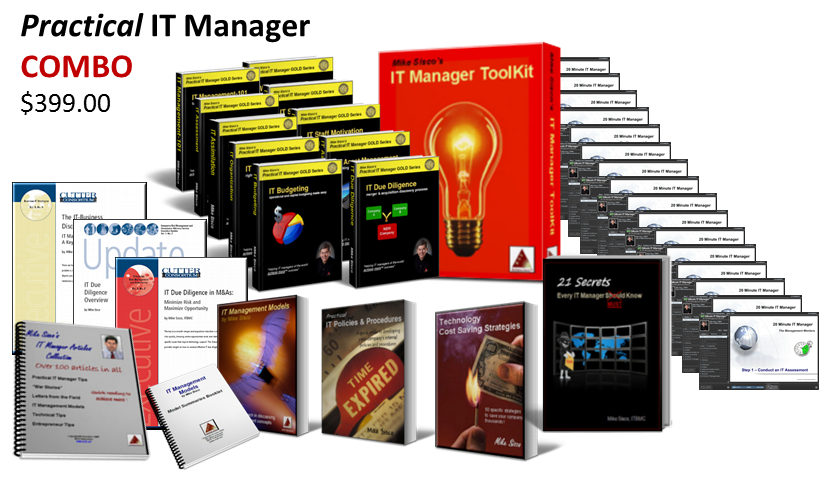
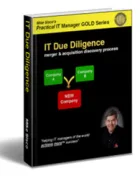
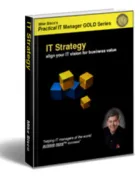
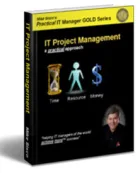
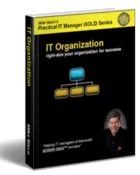
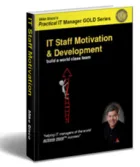
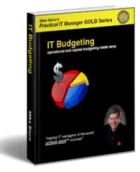
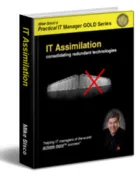
The new product is, Mike Sisco’s Practical IT Manager GOLD Series. Here they are:
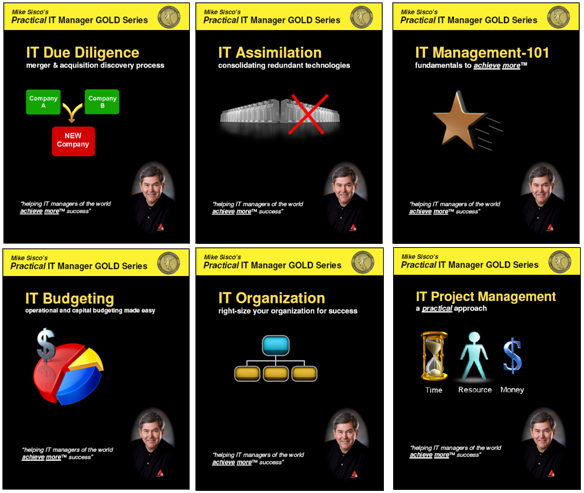
Ten new books that took hundreds of hours to complete, , , all to give IT managers of the world resources to help you achieve more success.

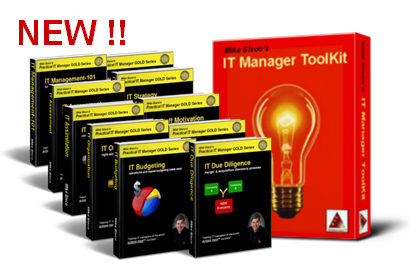
Buyers of the full set also receive a BONUS, , , the IT Manager ToolKit containing over 100 IT manager tools and templates, , , all revised and updated. The tools can be used “as is” or customized to meet your specific needs.

The information and insight in these books teaches you how to manage the “business” of IT versus the technology, , , you need to be viewed as a “business manager”, not a “technical manager” to achieve real success..

The books show you what to do and  how to do things to achieve IT success, and they also explain why certain issues are so difficult for IT managers and IT employees and how to overcome these obstacles.

It’s not good enough to explain how to do something, we also need to know why things work or do not work and what causes them to work or not work. When you understand the dynamics of what causes certain things to occur, or not to occur, it makes it much easier to do what is necessary to achieve success.

The books are straightforward and down to earth, , , just what you would expect from me if you have read any of my ITLever Blog posts or articles.

Practical, simple, and to the point, , , no need to discuss something in 20 pages when you can do it in 1 or 2 pages. IT managers are very busy, , , they need you to get to the point so that’s what I try to do in the books.

Simply put, each book conveys:

  • What to do to achieve success
  • Instruction on how to go about it
  • Tools and examples to help you implement each concept quickly

Here is the order I recommend reading the books if you purchase them:

  1. Start with IT Management-101. You can download this one for free when subscribing to my free Practical IT Manager Newsletter. Go to www.mde.net/free to subscribe. This book is a great foundation and why we make it available for free.
  2. Next, read IT Due Diligence. This book gives you a process and all the tools you need to conduct an effective IT assessment, , , the very first thing you should do in a new IT manager responsibility. You have to determine the business needs and issues plus your IT capacity to develop an appropriate IT strategy of the work you should focus on.
  3. Next, , , IT Strategy. You have to organize your IT assessment findings into logical and appropriate projects of work, , , and they must be prioritized. This book helps you do just that and gives you a few tools that will help you prioritize your work, communicate your recommendations, and gain approval from senior management.
  4. The key to IT credibility is delivering projects successfully, or “doing what you say you will do”. IT Project Management provides everything you need to start delivering your projects successfully, , , even insight as to why they aren’t completed successfully in so many IT organizations around the world.
  5. IT Organization would be my next read. Learn how to right-size your organization by determining what you need and what you have. You need an IT organization strategy, , , this book helps you define what it should be.
  6. If you manage an organization, you better learn how to motivate people, , , IT Staff Motivation and Development is next. I’ll give you proven techniques that will help you motivate your staff like never before and with no money.
  7. IT Budgeting is next on the list unless you are in the midst of your company’s budgeting process or about to go into it, , , if so, you may want to move this up the list of reading. I’ll show you how to simplify budgeting and be confident you create an achievable budget, , , and do it faster and easier than ever before. Budgeting is not difficult if you have insight and tools to make it happen.
  8. IT Asset Management, , , not one of my favorite topics to write about but a necessary focus to manage your IT organization successfully. One of the tools I give you in this one can help create your IT credibility, , , it may be my very best tool in what it has done for my career.
  9. IT Assimilation focuses on the transition activities after completing an IT assessment or company acquisition. You can read this one near the end or right after IT Due Diligence.
  10. The last book is the very first book I wrote, What To Look For in a CIO. Written for executives who are interested in the success of their IT organization, it explains the differences in IT manager types and provides a process to help you define what you need in order to attain more value from your IT investment.
  11. Finally, review the INDEX file in the IT Manager ToolKit to see what’s in it, , , ,there are dozens of additional IT management tools not discussed in these ten books.

Save $195.00 by buying the bundle! You will pay $474.50 if you purchase the books and ToolKit separately. Purchase our best selling bundle like thousands of IT managers have and save! It is one of our BEST VALUES.

$279.00

BONUS  –  Order by November 30th, 2011 and we will send you a special Executive Report (a $150.00 value) that will give you insight into what makes IT employees tick, , , something every IT manager needs to be aware of. 

The IT-Business Disconnect:
IT Manager Work Behavior – a Key Contributor

Take the quick survey in this report and see if your work behavior is similar to most IT managers and their employees. There are very real reasons why our type of personality is drawn to technology. As technicians these personality traits help us succeed, , , but as IT managers these same traits can cause you to struggle with many things and even fail in your new position. Learn why.

All of my writing is practical and to the point. We don’t have time for lots of theory, , , we just want to know what to do and how to go about it to succeed. This is exactly how I try to present the material in each book:

  • What to do to achieve IT success
  • How to go about it
  • Examples and tools to help you make it happen

The books will be highlighted and sold at itmanagerinstitute.com. We are overhauling our entire infrastructure so don’t be surprised if you see a bit of “work in progress” for a while. That’s right a complete overhaul of our entire infrastructure , , , equipment, web sites, shopping cart and order fulfillment, plus a few very exciting features to support our company strategy that you will begin seeing in the weeks ahead.

Additional titles, new tools, and more training are planned and will be released in the months to come once we have the new infrastructure in place.

2012 is going to be our best year yet!

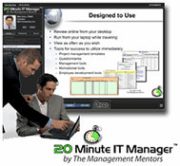
20 Minute IT Manager training library – new options

Tom Mochal and I just announced three new bundle options  for the 20 Minute IT Manager.

Build your own personal or team training library in minutes with any of the options below:

  • The Ultimate Bundle – $499.00 (162 sessions)  – BEST VALUE
  • Tom Mochal Bundle – $299.00 (80 sessions)
  • Mike Sisco Bundle – $299.00 (82 sessions)
  • IT Management Bundle – $199.00 (54 sessions)  NEW
  • Project Management Bundle – $199.00 (57 sessions)  NEW
  • Leadership, Personal Development, People Management Bundle – $199.00 – (51 sessions)  NEW
  • Single sessions – $9.99 each

HUGE SAVINGS on any of the bundled options.

Every topic is 20 minutes in length or less and great ” lunch and learn” sessions. They will be resources you will reference for years to come.

CLICK HERE to learn more and view the entire topic list.

Quick results from the IT Manager Institute

One of the things that gets me excited and encourages me to work even harder is when I receive a positive message from one of my IT Manager Institute students or someone who is using one of my IT manager tools.

The best messages are the ones that talk about the value they are getting from something they learned from me.

Kelly Reed attended my IT Manager Institute class a couple of weeks ago, our 44th program since delivering the first one in 2003. He is getting some quick results and that’s exactly what we like to hear.

Here is what Kelly told me yesterday in an email message:
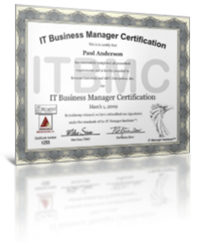
“Just wanted to let you know that I received my IT Business Manager Certificate. Thanks again for everything, I feel like I have true purpose and direction now as I embrace my new role.

On a cost saving note, I am in negotiations with our company’s wireless provider. Looks like we are looking at a savings of $18,000 per year!  My CFO has been so impressed with what I am doing now (Cost Savings, IT Assessment and even how I am talking to her with less detail), she wants me to make sure I take your class again next year as a refresher!
This is what it’s all about, , , helping IT managers of the world achieve more success. Thank you Kelly for sharing with me.

We receive hundreds of positive comments like this one every year and it always “makes my day” when I hear about someone achieving more success in their company. GREAT STUFF !!

In a few situations, I’ve actually had managers tell me on the last day of the IT Manager Institute class that they have talked to people in their company about something they learned in class and have already started to find some cost savings or beginning to use a new management tool.

Do you think a CFO or CEO notices this when you start focusing on the business value opportunities that exist in managing an IT organization, , , or finding ways to save money in your company without being told to look for it?

You bet they do, , , and as in Kelly’s case his CFO noticed a change almost immediately upon his return to their company. What’s even better is that his CFO told him about it and realizes the value of the company’s investment in Kelly’s IT manager training.

Let me say this again, , , POWERFUL STUFF  for both Kelly and his company!!

Here are a few quotes from our most recent IT Manager Institute class:

“The value of this material exceeded my expectations. The course was exceptional and I would recommend it for any current or future IT manager.” 
Greg Horton, Nashville, TN

“Best seminar and learning class I have taken. Wish I had this class many years ago. I plan to implement several things with my team in the next couple of weeks” 
Ken Schernekau, Atlanta, GA

“Mike, I want to thank you for your class and your real world experiences that you brought to the table.  It very much gave greater meaning to the material being taught.” 
Steven Payne, Charlotte, NC

“Mike presented information thoroughly on a level of great understanding. This material will assist me as I grow and hone my skills as a leader.”
Kamela Breeding, Atlanta, GA

“Fantastic! Hit all areas of IT and business, really opened my eyes. The material and tools are priceless! This experience has by far gone way above and beyond what I could have ever expected.” 
Kelly Reed, Couer d’Alene, ID

The IT Manager Institute is available in classroom and in an online self study format, , , same material including the ability to earn your IT Business Manager Certification (ITBMC).

Details at:   https://itlever.com/it-manager-institute/
Class photos at:  https://itlever.com/institute-photos/

helping IT managers of the world achieve more success


What’s different about the ITBMC certification?

Certifications have become pretty much the norm in the IT world. Let’s see, there are dozens of technical certifications, project management certifications, and even a few management certifications. In fact, you can get a certification on almost anything in the IT world, , , it seems that IT people really like certifications.

I may be an exception, , , ,they don’t mean that much to me and never have. The same thing goes for titles, , , call me whatever you choose, just pay me well, let me do my job, and recognize me for the results I get.

But, , , titles and certifications are important for a lot of your people so you don’t want to underestimate the importance in someone else’s mind. In addition, some certifications are now required just to get in the door for an interview with some companies.

In reality, a certification doesn’t mean you can actually do the job well, , , it just means you have received the knowledge and been certified by passing an exam in many cases.

You probably know my company offers the IT Business Manager Certification, ITBMC. I never would have if not for the encouragement of the managers who attended our first few IT Manager Institute programs.

I’ll deliver the 44th and 45th IT Manager Institute program this month and I can tell you that the ITBMC certification has probably been one of the reasons for the longevity and success of the program, , , this is our 9th year in delivering the program with hundreds around the world to receive their ITBMC status.

I can hardly wait to deliver each new class, , , they are a lot of fun and seeing the enthusiasm for the program is very rewarding.

At the end of the day
Certifications do not guarantee you will be successful. What they indicate is that you have received knowledge about a particular subject and passed an exam that suggests you have a good comprehension of the material.

Execution is something else, , , you still have to do the work that is required in order to achieve success.

That’s why I structured the IT Manager Institute program to not only deliver the material of what to do and how to go about it in class, , , I also give you the tools to make it happen plus some takeaways to help you implement the IT Management Process we teach to achieve more success. Things like:

  • 30 Day Action Plan, , , specific steps to take when you get home
  • My entire library of e-Books that reinforce the class presentations
  • IT Manager ToolKit containing 102 tools and templates to use immediately or modify as needed
  • Ongoing support and access to me for assistance

The IT Manager Institute program is unique in many ways because of how we structure the class and also the additional tools and resources you take back to your company. Because the class follows a structured process and is delivered in a “how to” format, your retention is better, , , plus you have many resources to help you remember things from the class.

The bottom line
I think the key to any certification is how well people respond to the program. In our case, we have a 100% positive satisfaction from those who have attended. The reason is simple, , , the practical processes and tools are easily understood and put into practice, , ,  and they work.

It’s one thing to understand a concept. To succeed, you have to actually do the work and that’s why the IT Manager Institute program is structured so you can follow specific steps and use tools designed for specific uses that lead to more success in an IT manager role.

An ITBMC beside your name says something other than signifying a technical skill. ITBMC says you have learned the importance for your IT organization to deliver tangible and quantifiable business value in support of your company. It also indicates an understanding that IT initiatives are driven by business needs and issues and that every initiative you recommend will be cost justified and targeted to some specific business value.

Why is this important? It tells senior managers of your company you have a business perspective when managing your IT organization, , , not so focused on technology and missing the tremendous business leverage opportunities your IT organization offers your company.

Business managers become business partners, , , and without having these “partners” in your company, your success will be limited.

As I prepare for next week’s class, I get a high sense of enthusiasm in thinking about meeting a whole new group of IT managers and giving them the tools and resources that potentially changes their life and boosts their career.

They will leave with the knowledge and tools to make it happen, , , but they still have to do the work just as with anything in life.

Check out Institute class photos at https://itlever.com/institute-photos/

More photos at http://www.mde.net/institute/page4.html

Preparing for an IT Manager role

I receive quite a few inquiries about how to prepare for an IT manager role.  Often, these inquiries come from a parent who wants to help a son or daughter position themselves for a successful career.

Here is a message I received just this week from a supportive parent:  “My son is studying computers and he is in his early year of computer engineering and later on he will decide which branch of IT to specialize in. I want your help to give him tips and a head start to become an IT manager one day.”

In many cases, the parent has little or no knowledge of technology or how to prepare for IT management. What they do have is concern for their child’s future and a strong  interest in helping them prepare for the future. Often I will hear, “When he (or she) gets the opportunity to manage, I want him to be prepared so he will be successful.”

It’s something anyone who wants to be an IT manager one day should think about and devise a plan to prepare for.

My response:

——————————————-

Here is the path I would suggest:

1.  Read the free book you receive when signing up for my Practical IT Manager Newsletter – IT Management-101: fundamentals to achieve more. This book is a good foundational starting point. Sign up at www.mde.net/free

2.  Have him subscribe to my ITLever Blog at www.itlever.com so he receives free weekly tips and tools directed to helping IT managers achieve more success. There are hundreds of free articles, tools to download and other items to help an IT manager and I add new content every week.

A recent ITLever post will be of particular help titled, Solve the IT Management Maze with an IT Management Process. CLICK HERE to see it.

3.  Watch the 20 Minute IT Manager session titled Fast Start for a New IT Manager  at  http://www.20minuteitmanager.com/sessions/060602FASTSTART

There are 162 sessions in the 20 Minute IT Manager series, , , purchase all for $249.00 or $9.99 each. Details at www.20minuteitmanager.com
CLICK HERE for a special 50% discount offer for ITLever Blog readers – only $249.00. Included in this bundle are 12 sessions of a series titled, “12 Secrets to IT Success” that outlines the IT management process I use in managing technology resources.

4.  He will need to establish a positive record of delivering projects successfully in his technical role. My IT Project Management: a practical approach book is a simplified methodology that can help. There are 14 books in my library, , , available for $29.95 each or $279.00 for the first ten, , , $399.00 for the entire library that includes my IT Manager ToolKit.  Details are at www.mde.net/cio

5.  If and when he truly decides to position himself for a manager role, he should attend the IT Manager Institute. It is available in classroom and online self study and includes Bonus items of all my books and tools.

This class will do more for his preparation in becoming an effective IT manager than anything he will find. Both the classroom version and the self study are exactly the same material and lead to an IT Business Manager Certification (ITBMC) that was co-developed by Belmont University and my company to focus on the importance of IT organizations to provide tangible business value for their company.
    Self Study  –  www.mde.net/selfstudy
    Class schedule   –  www.mde.net/institute 

6.  Find an IT manager mentor, , , someone who is interested in helping your son learn about aspects of managing technology resources and a resource to go to for questions and discussions of interest. It is helpful to work with someone local who is willing to be a mentor at no cost, , , as long as the “mentor” knows what he is doing and has a successful track record. Poor or weak resources can actually damage your son’s career.

I have plans to provide a monthly IT manager membership program to provide mentoring services and IT manager development training because of the need we have seen. Watch my ITLever Blog or Practical IT Manager Tips Newsletter for a future announcement. Contact me at info@mde.net if you are potentially interested in a monthly IT manager mentoring program. I must warn you beforehand, , , it will not be cheap due to the effort required to set it up and it will be limited to a designated number of members.

7.  Your son can gain a sense of management by managing a project. In doing this he will be exposed to people management, managing client expectations, and budgeting. If he learns to manage projects well, it is good development for future IT management roles.

I hope this is of help and wish your son the best of success in his young career.

——————————————

The important thing to do when preparing for an IT manager role is to start learning from someone who knows how to manage technology resources, , , and to learn about what a successful IT manager really does, , , it is not all about technology actually. Focus only on technology and not the business and you will have major difficulty in becoming a successful IT manager.

One last piece of advice is to observe others and incorporate the best of what you see into how you go about doing things. I’ve done this throughout my career and know it has made a big difference in my management career. It’s another reason why having a good mentor is so important.

Solve the IT management maze with an IT Management Process

Does this look like what you found when you first became an IT manager?

If so, it’s not really surprising, , , it’s what I discovered and millions of managers around the world discover when they first get their BIG OPPORTUNITY.

Managing an IT organization can seem like one big complicated maze.

Well, it really is unless you have a process to follow and tools to help you achieve the things that are necessary for IT management success.

In my case, I had to learn the hard way about many things, , , but I was also fortunate to have some very strong managers around me to learn from. Not all of them were IT managers, , , some had very little knowledge of technology or in understanding IT employees, , , but they possessed excellent management skills and were good resources to learn from.

Don’t limit yourself to learning from only IT managers, , , it limits your possibilities. It’s going to be helpful to your career to learn things from company executives, sales and marketing, , , Human Resources, , , your client department managers, , , even vendor managers.

What you also need is a proven management process, , , a path to follow that will help you find your way through the maze. There are obstacles at every turn in an IT manager role, , , some can even be deadly impediments to your career.

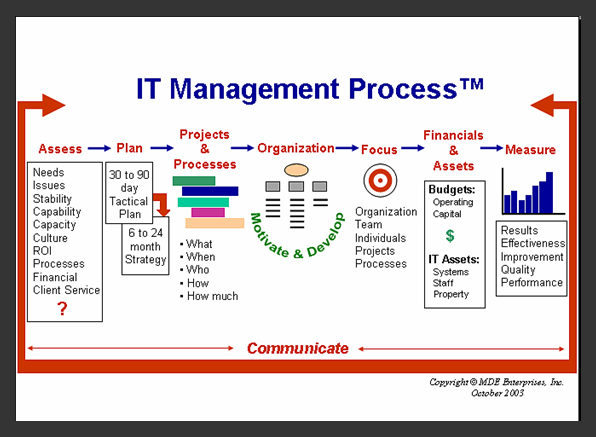
Here is the management process I use in managing an IT organization.

There are 8 key components:

1.  Assess – Conduct an IT assessment to determine what the business needs and issues are plus what your IT organization’s capabilities and capacity is. Once you understand the “demand and supply”, you can develop a plan of attack.

2.  Plan – Develop an immediate 30-90 day tactical strategy and once you get your people focused on it you can start working on developing your long term strategy.

3.  Projects and Processes –  Delivering projects successfully is the key to credibility and there are key support processes you must put into place in order to support your clients effectively.

4.  Organization – You must build an appropriate IT organization and when you have people, you need to motivate them and develop their skills to create a world class support organization.

5.  Focus –  Evert aspect of your organization needs clear focus, from the individual employee to the entire organization.

6.  Financials and Assets –  Managing the financial side of your business and keeping track of technology assets becomes a key part of managing a successful IT operation.

7.  Measure –  To improve, it is important to know where you are and whether you are making positive strides, , , practical measurements will spell it out for you.

8.  Communicate –  What ties it all together and makes such a powerful difference is being able to communicate well.

CLICK HERE to purchase the 20 Minute IT Manager video for only $9.99 to learn more.

Or, purchase the entire library of 162 sessions of the 20 Minute IT Manager
CLICK HERE for a special 50% discount offer for ITLever Blog readers – only $249.00.

Attend an IT Manager Institute class or access the Self Study program to learn step by step how to become a successful IT manager.

IT Manager Institute classes — www.mde.net/institute

IT Manager Institute Self Study  — www.mde.net/selfstudy

In-house training the easy way

There are many areas where your company can benefit by having “canned” training classes. The tools that are available today are pretty awesome and so easy to use.

What type of training do you do in your company, , , or what would you consider doing if you had something you could provide to people in the company?

Examples might include most anything, such as:

  • New employee orientation from Human Resources
  • Benefits enrollment guides
  • Operations policies and procedures
  • Employee Handbook
  • Change management processes
  • Employee education and training program guide
  • Any number of employee development classes
  • Filling out expense reports
  • Virtually anything your people might need to know
  • Process to fulfill a PC order
  • How to deal with a difficult client
  • Management training

To deliver training by having someone deliver a class is time consuming and costly. But to provide training via an e-Learning class on your Intranet can help boost productivity and get the information to people who need it, , , regardless of where they are in the world.

Some training is pretty static in that it doesn’t change very often. For this type of training, I highly recommend using a PowerPoint plug-in called Articulate Presenter.  You can find it at www.articulate.com.

I used Articulate to develop our 20 Minute IT Manager training sessions as well as my IT Manager Institute Self Study. It’s a great tool with a very nice and flexible user interface. When installed, it becomes a plug-in option to your PowerPoint application and gives you lots more options than comes just with PowerPoint.

Your Sales and Marketing organizations along with Human Resources and Operations organizations have lots of opportunities to package training, sales collateral, and other information that’s useful for employees, clients, and prospects of your company. Articulate Presenter can be used for many types of projects and is worth taking a look at.

In addition, Articulate QuizMaker is excellent quiz and testing software and integrates into Articulate Presenter or you can run it standalone as you wish.

Are you a good boss or a great one?

I just read an excellent article in the Harvard Business Review titled, Are You a Good Boss – or a Great One?

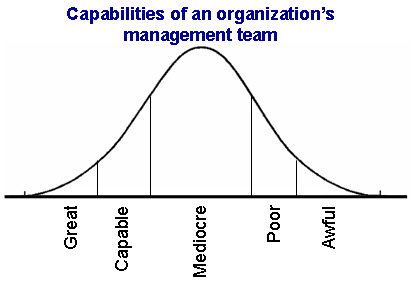
The research behind this article suggests most organizations have a group of managers of different levels of competency:

  • a few great managers
  • some capable managers
  • most are mediocre
  • poor managers
  • some awful managers

It’s a classic bell curve as you might expect.

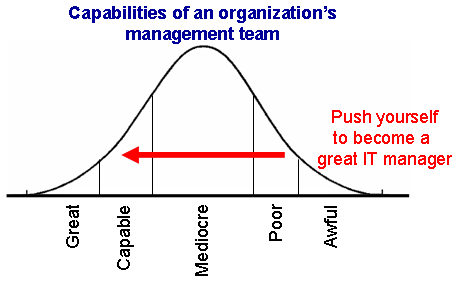
Authors Linda A. Hill and Kent Lineback suggest that the primary reason the vast majority of managers becomes “stuck” at levels below GREAT is because they stop working on themselves.

I have to agree with their conclusions because I have seen the same thing in my career in working with thousands of managers. But, I think there is more to the issue:

  • In an IT manager’s case, we often do not know how to develop our management skills
  • In addition, most companies do not have anyone in the company who knows how to develop an IT manager’s management skills
  • If you look for training for an IT manager, good luck in finding something practical that works in a true operational management situation

Let me comment on this final point. In every IT Manager Institute program I deliver, I continue to hear managers say they have been looking for help but could not find anything until they stumbled upon my information.

It’s a big reason I devoted my life to developing practical tools and training to help IT managers achieve more success ten years ago.

How can a manager become “Good” or “Great”?

First of all, your objective should be to become a GREAT manager. The authors of the HBR article suggest you need to ask yourself, “How good am I?” or “Do I need to be better?”

Take a look at the bell curve above. Where would you place yourself? Most would rate themselves a bit better than their actual performance would indicate.

A better question, “Where would your clients (senior managers and Department managers of your company) rate your performance as a manager?”

The good news is that there is a path to becoming a GREAT IT manager. It’s available to you if you choose to invest in yourself, , , and investing in yourself and your career is something we should all be doing for our entire career. For example, I try to invest in at least two training programs a year that will help me become a better small business owner.

CLICK HERE to read the rest of the HBR article, , , it is well worth your time.

Dinner in the world’s tallest building

Burj Hotel, , , world's tallest building

The Burj is a majestic site

My 42nd IT Manager Institute in Dubai is going great, , , I really like this class. Tonight we held our class dinner in a special place, , , at the Burj Hotel, the world’s tallest building. It is more than twice the height of the Empire State Building in New York City and is an impressive site.

The meal was excellent and we watched the water show outside the restaurant, , , I think everyone had a great time as did I.

View of the water show from our restaurant inside the Burj

Looking up at the tallest building

A great dinner

The Burj stands tallest by far

Be careful when cutting IT expenses you don’t cut “muscle”

The big movement in companies for well over a year now has been to cut expenses and reduce the cost of operations. The IT department has not been immune to this push from the top of companies nor should it be.

When revenues decline, stockholders still expect the companies they invest in to operate profitably and to keep the stock price up. What this means is that we have to find cost savings.

I’m a strong proponent of managing company expenses in line with revenues. I’m also a supporter of understanding the IT expense as a percent of company revenue and using it as a measurement guideline.

The problem comes into play when cost cutting initiatives cut into “muscle” as opposed to eliminating “fat”.  There are critical resource requirements to provide basic levels of technology support. In normal cases, a few areas need to have some amount of backup or depth in case a key member of the team leaves for some reason.

When you begin any cost cutting initiative, you should take a very close look at the support needs of the company and how you are organized to provide that support. Identify critical support requirements that must be in place to support core competencies of the company, i.e. the IT “muscle” that’s required.

You want to try to eliminate these key resources and expenses related to the support they provide from your list of potential cost cuts. By identifying the true “muscle” of your IT organization, you help ensure that the primary business support need will be taken care of. Be objective with this exercise and validate with senior management.

If you have “star” staff members in areas that are being looked at to be eliminated, consider shifting them to your core competency support areas, , , but when you do, you may still have to cut staff somewhere in the organization. The point is that the team you want to end up with should be the very best of the staff you have today and when you have to eliminate staff, you owe it to your team and the company to lose the weakest of the bunch.

You must stay objective when doing this – it is a tough assignment.

Always try to find business opportunities that allow you to make IT investments that will save the company much more than what will be saved by cutting IT expense. Most companies have these opportunities but if you wait until the “cost cutting” message comes down, it is too late.

One of your best assets is a track record of success and one that shows you constantly focus on things that provide business value to your company. The more you work in IT the more you will discover that the biggest cost saving opportunities are things you can do to help other departments in the company, , , not usually what you can save in IT. Don’t rule out technology cost savings, , , just be aware there may be bigger fish elsewhere in your company.