Category Archives: IT Manager Tips

Helpful articles and tips

3-day weekends

Just a quick post, , , we are about to go celebrate July 4th, , , our Independence Day and a major holiday here in the US.

Let’s see, , , I hear we are having ribs, chicken, potato salad, baked beans and key lime pie.

Can’t wait. Our July 4th meal with a few friends is always one of the special days of the year.

3-day weekends are important to have from time to time. Even though I’ve been working all weekend (got a huge project I’m working on), , , we plan to party some this afternoon and know we will have a great time.

Short holiday bursts give you relax time and help you recharge the batteries. Take advantage of them and hope you enjoyed your time off if you are in the US.

Look for the positives in adversity

I know a thing or two about adversity. You may as well. Sooner or later everyone faces challenge in his or her life. The question I have for you is:

“How will you react when adversity touches your life?”

You could lose your job as part of a company acquisition or downsizing.

You could lose a family member unexpectedly.

A big project might fail that you have worked on for 6 months.

A client could spread negative remarks about you and your team.

You could lose your home due to a storm or other tragedy.

There are a million challenges that could come your way professionally and personally. How you deal with your personal set of adversity is important.

My recommendation is to always look for the positives in the situation. It can be hard to understand a tragedy in one’s life but I firmly believe three things are at play in such circumstances:

  1. There is a reason why this has happened.
  2. There is a positive in all of this somehow.
  3. You don’t have to look far to find someone who has a much more difficult situation than yours.

You may have to reach deep to find the reason or the positives in a lot of situations you will encounter in your life. Look for positives and think of the good things surrounding this situation, , , it will make a difference for you and others around you.

I could give you several tragic events that have occurred in my life. At the time, a few were devastating and difficult to deal with, , , but you know what, we got through it and positive things happened as a result.

In a few cases, the tragedy changed my life, , , and in the long run changed it for the better. In fact, I can honestly say that I owe my career and what I do today to some extent to a tragedy that occurred in our family in 1993.

It’s all about how you approach the tough issues in life, , , think of the positives and look for the good in the challenging situations you must deal with. It builds character and ultimately makes you a stronger person.

“Get out of jail free” card

Do you feel like you are imprisoned in your company? No opportunity, no appreciation, lack of understanding of your situation, , , and no fun?

I receive input from managers from time to time that sound like they feel imprisoned and helpless in their situation.

I’ve been there a couple of times myself, , , hated what I was doing and who I had to work with so much that it was everything I could do just to get up in the morning and go to work.

Over a career you will probably have a few situations that are tremendous and you simply love what you have. You may not realize it until it is too late.

In the same career, you will probably have one or two situations that are simply miserable. I can tell you from experience that this will shorten your life if you do not do something about it.

At the end of the day, you control your own destiny.

Before I proceed, let me clarify something. I’ve traveled around the world and have worked with IT managers in virtually every part of the world. I know that in some countries the ability to leave a company and seek a new opportunity is much more difficult than in other countries. Likewise, to make a change in profession can be more challenging in some countries than others.

However, even in the toughest situation, you are still in control of your own destiny. Ultimately, you have to make a decision, , , are you willing to stick it out and hope things get better (they certainly could) or do you want to force the issue and look for another opportunity?

Regardless of what you decide there are some things to consider:

Staying with your company

  1. Things might get better.
  2. You have accumulated some personal capital over the time you have been with your company that will be lost if you leave.
  3. You are networked and know how to get things done in your current company.
  4. You will be leaving many of your trusted colleagues.
  5. You at least know what the issues and challenges are in your current company.

Leaving your company

  1. You will have to start over in gaining credibility and learning how to get things done in a new company.
  2. There will be much to learn in a new company.
  3. There very well may be much better opportunity.
  4. New managers can become valuable mentors.
  5. New companies will also have problems and challenges.

What I’m getting at is don’t simply discount your present situation just because it’s not going exactly how you would like it to. Be certain you consider the positives in your negative situation, , , if you step back and think about it objectively I can assure you there are many positives in your current situation.

Often, people become so emotional about their situation that it becomes very hard to see the value in where they are and the capital they have developed over the years within their company.

The point is this, , ,try to take emotion out of the picture and assess what you have (or don’t have) objectively and do it when you can actually be objective about it, , , not when you are angry, mad, or upset.

I know people who I worked with in the mid-80’s who are still with the same company. I moved on and it was the right thing for me, but these managers are doing well and are happy where they are and have had great careers. Some who left have even gone back to work for the company which says a lot.

If you do decide to make a move, I recommend you position yourself as best as you can to make a smooth transition, , , both for yourself and also for the company you will be leaving. That’s right, , , position yourself to create as little of a ripple as possible for the company you are leaving. This could be a benefit to you ten years from now, , , you never know, , , plus, it is the right thing to do.
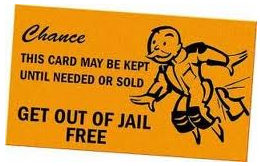
So, here is your Get Out of Jail FREE card, , , you’ve always had it, you just may not have realized it. Maybe after reading this article you might even see that you really aren’t in jail and never was, , , wouldn’t that be a great thing!


Manage by walking around

Hopefully, you get out of your office and visit your employees in their work areas. They need to see you somewhere other than in your office.

You may not be aware but this is difficult for many IT managers. The reason is because 70% of us are shy and more introverted, , , socializing is not what we are very good at, unless it’s with our buddies, , , our immediate network.

Walking around can do a lot for you. It gives you an opportunity to talk with your employees in an informal way, , , a good thing. It also allows you to observe what’s going on, , , you can tell if people are focused or if they are idle and doing a lot of non-work activities. It also gives you an opportunity to ask about the status of important work certain people are working on.

Walk up on two people who are talking with one another and they get very quiet upon seeing you come down the hallway could mean there is something going on. There may not be anything to it but if employees consistently get quiet when you are around a couple of things may be taking place:

  • They aren’t comfortable with you
  • They are discussing things they don’t want you to hear
  • They are complaining to one another

This might not be the case but if conversations consistently end upon me walking into the room, I’m going to do some digging to see if we have a morale problem or if something’s going on that I might need to know about.

I can tell you that walking around the office and socializing with my employees is difficult for me, so I have to force myself to do it, , , and the only reason I do is because I understand the value in doing it.

My point, , , you have to overcome your weaknesses and do things that will force you to do what you need to do. Otherwise, it won’t happen and you will miss out on the positive results you get from doing them.

My most valuable lesson learned in the US Marine Corps

I was enlisted in the US Marine Corps for four years many, many years ago. It was my first experience in having an IT management responsibility.

First, I was the 3rd shift supervisor as an E4 Corporal in a small Data Processing platoon of some 20 Marines at Kaneohe Marine Base in Hawaii (someone had to do it 🙂 ). I became a 1st shift supervisor when I was promoted to Sergeant. In my last year, I transferred to Camp Lejeune in North Carolina where I became the Operations Chief of a slightly larger organization.

As Operations Chief, I had day-to-day operations management responsibility for the entire platoon, , , three shifts of some 30 Marines working in an IT Data Center.

The interesting thing about this is that the position they gave me responsibility for was an E8 level position, , , I was still a Sergeant E5 level, , , three levels below the rank that normally occupied this responsibility.

The experience was great, especially so early in my career. Some of the lessons learned were even better because one in particular helped mold my management approach that would help me immensely in later years.

The best lesson I learned
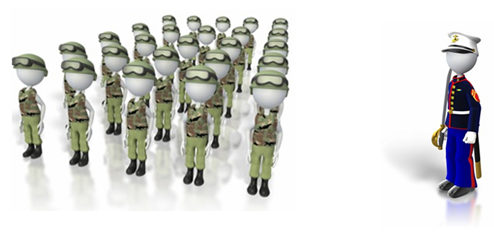
In the Marine Corps, you can give an order to your troops and they have to carry out the order. There is no such thing as, “I don’t feel like it.” or “I don’t think that’s a good idea.” If a senior Marine orders something to be done, we do it or face the consequences, , , and that could mean possible jail time.

Discipline is straightforward and simple, , , you obey orders.

Well, I learned this aspect very quickly, , , but the most valuable lesson I learned was that if you want your men to do a quality job and with enthusiasm, , , then you must explain why we are doing this, what’s in it for them, and what the benefit will be in doing this task. In other words, you need to persuade a bit and not just give orders. This is especially true with IT people.

I literally began changing my management style from an authoritative manager to a persuasive manager without realizing it. I made this change because I somehow understood the results were better when I discussed the reasons and explained why we needed to do certain things with my staff. Twenty years later, this work behavior dynamic is what helped me land the CIO role in one of the fastest growing companies in the US at that time.

I didn’t know or understand anything about employee work behavior tendencies until 20 years later. I’m convinced I began changing my normal personality from authoritative to persuasive in the Marine Corps, , , even though I never realized it was happening until many years later.

A challenge we have is that IT managers in large part are authoritative managers, , , it’s my natural profile as well.  We are more comfortable giving orders. But to truly succeed, we need to empower our employees so they want to do these jobs, , , otherwise they resist.

When employees are empowered, understand the reasons for the work, and feel like it will benefit them, , , maybe even have some fun with it, , , they do a much better job. And that’s what we want, , , quality work and results.

My Marine Corps experience was great but the most valuable experience was starting to learn how to motivate and lead people.

Does the right hand know what the left hand is doing?

Early in my management career I inherited a small IT support group of programmers and business analysts. It was a very bright and capable staff although they were pretty young.

We had a client who always had problems during their month-end process. I had heard about these problems before I joined the group. Sure enough, at the end of the very first month I’m the manager, the client had problems and I take a call from their CFO.

I asked several questions but did not receive any feedback that told me what the problem was. I discounted the issue and thought that maybe it was an anomaly. This would prove to be a mistake.

At the end of the 2nd month, guess what happened. Yes, , , they have problems again. This time I call the client and we decide to have a couple of people visit their office during the next month’s process.

I took two of my most capable people, , , a BA and a programmer to the client to observe the End of Month process during the 3rd month I was the support manager. Our mission, , , identify what the problem is and why it is happening. Once we know what the situation is, we can fix the problem.

The key problem was identified quickly. What was happening was that the client had to run several large detail reports prior to their month end backups every month. Because these reports were not completing in time, several people were kicking off the same report, , , in other words, the same report was being run three or four times simultaneously.

This level of systems activity was slowing the system down significantly, , , so much so that before the reports could finish they had to be cancelled so the client could run their month end backup processes.

We recommended the client put into place a “Month End Jobs Coordinator” to insure only one request of a job could be run at any given time. This improved systems performance and these large reports now had plenty of time to finish running in the months ahead. This simple management supervision corrected the problem completely.

This issue of the “right hand not knowing what the left hand is doing” can cause a lot of problems. Often, the pain is significant and the remedy is something that’s very simple.

Can you take criticism?

Ninety per cent (90%) of us in IT are high detail people, , , that’s a good thing. However, what comes with being high detail is that we like to be accurate and correct, , , and we like to do things “our way”.

One of the downsides to all of this is that we don’t tend to deal with criticism very well, , , it bothers us, , , terribly!

It is very easy for high detail people like you, me, your employees, etc. to be defensive, become argumentative, , , even stubborn when someone tries to point out some of your weaknesses. It could be something to do with a project task, how you implement a software upgrade, even what kind of laptops you buy for users of the company.

Everyone has an opinion and many want to give it to you even if you don’t care to hear it.

Take a moment and consider something, , , really think about this question: How do you cope with criticism?

Do you try to justify your action?

Do you immediately begin to defend your position and what has happened?

Do you argue with clients?

If these things are happening, you might need to ease up a bit. Consider the source of the comment, , , often it’s not intended to be criticizing as much as simply a comment. Generally, people are not intending to make things personal so try not to take it personal.

Look for the insight in the comment that might be of help to you or your team, , , there may be some real value buried in someone’s critique.

Learn to look for the positive that comes with every negative, , , if you look hard enough, I can tell you it is there. I know, I know, , , it is hard to look for positives when someone is criticizing you or “beating up” your team. All I can say is, “Don’t let it get the best of you.”

Listen, be open minded and above all, , , stay positive. Your positive attitude can sway someone else’s negative demeanor to the positive side.

“Listen to the force, Luke.”

Some managers are liked more than others

Are you a manager who is respected and appreciated by your clients and employees, , , or are you a manager who isn’t liked and lacks respect?

Obviously, we want to be a manager who is respected and appreciated, , , maybe even liked by others although this last part is not as important.

Let me draw a comparison between two professional golfers and you might be able to see some things that come to bear in your own situation.

First, there is Colin Montgomery from Scotland. He is one of the most successful Ryder Cup players in history, winner of dozens of European titles and their #1 player for many years. He was successful, yes, , , but he never gained real respect and appreciation in the US.

Why?

Three reasons:

  1. He never won a major tournament or even a US tournament.
  2. He seemed to blame others or “other things” for his failures.
  3. Attitude

Let’s take another professional, , ,Rory McIlroy from Northern Ireland. He won the US Open today and not a negative word was said about him all week. Everyone, even Americans were pulling for him.

Why?

Again, three reasons:

  1. When he shot 80 on the last day of the Masters to lose the tournament after leading for 3 days, he took responsibility, did not try to make excuses, and said he hoped he had learned from it. Eight weeks later he wins the biggest tournament in the world, the US Open.
  2. He plays quickly and with a mission. When asked why he didn’t back off a shot after Phil Mickelson hit out of the rough and the crowd began moving, , , his comment was great, “I knew there would be movement so I tried to shut it out and focus on my shot; if I had backed off we could have been there all day.” Montgomery would have backed off several times because he lets others get into his head and its obvious.
  3. Attitude, , , you will not find a more positive attitude or humble player in golf than Rory McIlroy, , , and because of it fans of every country want him to do well. Not so with Monty.

Do your actions and how you carry yourself create positives with people around you or do they alienate them about how they feel about you.

In the end, we earn our supporters and “fans” or we don’t get them. It’s true for the two golfers in my story. Here is a case in point, , , this weekend 90%+ who watched the US Open were pulling for Rory. Had Monty been in the same situation, , , he would have had some of the Europeans pulling for him, but that’s all.

It makes a huge difference when you have support of others, , , start earning it.

Golf is a model for other sports

Golf is a model sport for all others. Don’t get me wrong, , , I’m a big baseball fan, love football and basketball. But golf is a model for all other sports and here is why:

  1. Golfers earn their pay. You can hit .150 in baseball or sit on the bench in football and get paid millions.  There are no guarantees in golf, , , perform and you are rewarded, , , not the same in the other sports.
  2. There are no lock-outs in golf like you always have to worry about in other sports. Unions have ruined the big sports.
  3. Golf gives more to charity every year than all the other sports combined. That’s a phenomenal thing and sad when you consider how much more the big sports bring in, , , the reason such a difference is because big sports have owners and unions and players who feel entitled. Golfers know they have to perform to be paid so they don’t have this entitlement virus.
  4. The game of golf is full of character. You don’t see the drug and crime issues you find in other sports. Golf is the only game where a player will penalize himself for a rules infraction even when it can cost him thousands of dollars, , , find a baseball, football or basketball player who would do the same. They don’t exist, , , rather they will do whatever it takes, even if unlawful to gain an edge over their competitor.

Those are just a few issues why I believe golf is a model for other sports.

I watched thethird round of the 111th US Open today and it was great. A 22-year old Rory McIlroy from Northern Ireland walked the fairways with fans applauding and pulling for him from all over the world. The reason is because of his character and how he handles himself, , , he is a model for young people to look up to.

Americans like “our Open” to be won by Americans so we usually pull against Europeans. In this one, we hope Rory wins because he has paid his dues by losing a heartbreaker at this years’ Masters, , , but he handled it like a gentleman and with maturity in every way.  He didn’t blame everyone for his failure, he took responsibility like a man far beyond his years. How he handled the situation and how he goes about his business has won him millions of new fans, , , he is golf’s next superstar, , , but you know what, he will earn it, , , it won’t be given to him.

As an IT manager, are you building an organization that’s viewed as having a lot of character and ethics, , , or one that’s viewed as just collecting your pay? How you approach work every day and what you get accomplished tells volumes about who you and your organization are and influences how your clients deal with you.

Why playing in the US Open is like managing an IT organization

The US Open golf tournament started today at Congressional Country Club in Washington, D.C. I’ll spend the next four days glued to the TV with my son, Eddie. Major golf tournaments are some of the best father-son times we have and the US Open is at the top.

In 1992 Eddie, Dorine, and I flew to California to attend the US Open held at Pebble Beach that year. It was six months before Eddie’s auto accident which changed all of our lives forever, , , but one thing has not changed, , , the fun we get in watching US Open golf together. It is one of the best Father’s Day gifts I receive every year.

The title of this post is, Why playing in the US Open is like managing an IT organization. You might think this parallel to be a bit strange, but if you read on you will understand why I think there are similarities.

First of all, , , I played competitive golf in high school, college, and in the Marine Corps, , , plus many tournaments since then. Lots of golf tournaments.

I was also a CIO and IT manager for over 20 years, , , and I have seen similar types of things occur in tournament golfer and CIO.

Here are a few things that will unfold at the US Open this week that are similar to what takes place with CIO’s.

    • 156 players will start the 4-day tournament. After 2 days, the tournament cuts the field to the top 60 players and ties or anyone within 10 strokes of the lead. IT parallel – CIO’s get cut from their companies if they do not perform, , , it is one of the highest turnover executive positions in a company. 
    • Prior to the tournament, players practice and determine how to play each hole the best depending upon where the tees and pins are placed. IT parallel – A CIO of a new company conducts an IT assessment to determine what his team should work on.
    • Professional golfers develop a tournament strategy for the conditions and difficulties of the course. IT parallel – CIO’s develop an IT strategy to attack the business needs and issues of the company.
    • Conditions change, , , weather, pin placements, who you play with, playing conditions of the course. IT parallel – A CIO’s environment changes almost daily as business needs and issues change, , , people come and go, , , and technology changes.
    • Players will have to persevere through a difficult stretch of holes, , , how they respond can decide a winner or loser of the tournament. IT parallel – Every day will not be a great day as a CIO, , , how you deal with adversity determines how successful you will be.
    • Unexpected events happen, , , an errant tee shot can disrupt a great round unexpectedly. IT parallel – A lightning storm, flood, hurricane or unexpected event can turn your IT world upside down in a moment. You have to have contingency plans to weather the storm.

    It will be interesting to watch the ebb and flow of play in this week’s US Open at Congressional. Just watching the morning play you can tell it is going to be a tough test. It’s the same for a CIO, , , no one said it would be easy but with the right tools, preparation and a positive mental attitude your chances are much better in both professions.