Tag Archives: it management

IT Project Management: a practical approach

In my last post, I discussed the importance of project management in creating IT credibility. You won’t be credible unless you deliver projects successfully. Period, , , end of story !!!!

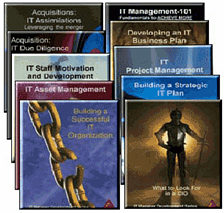
My company mission is to “help IT managers of the world achieve more success”. The very first thing I did in this effort was to write a few books (10 actually) to provide insights and tips on things that actually help you achieve more success as an IT manager.

One of the keys is to deliver projects successfully, , , so naturally, there is a book on project management.

Delivering projects successfully is so important. The book is based upon my experiences in delivering projects successfully, , , both as a young IBMer and later as an IT manager and CIO.

IT Project Management: a practical approach is straightforward and includes the simple process I use and the tools to help you deliver projects successfully. It also includes insights and tips from my experiences that will give you an advantage or edge, , , something we all need.

Short, straightforward, practical, , , and to the point. That’s what we want so that’s how I wrote this one. It is one of my best sellers.

Buy the e-book for $29.95.

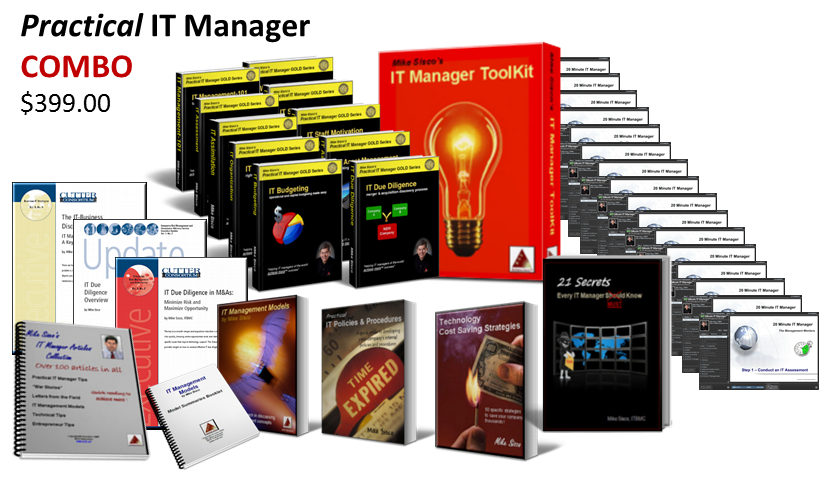
Buy the whole series of 10 e-books plus BONUS IT Manager ToolKit (a $175.00 value on its own) for $279.00

$279.00 — Full series + IT Manager ToolKit

Escalation procedures

In my last post, I discussed the need to have a “downtime plan”. Part of your downtime plan should include an Escalation Procedure.

As I mentioned in my previous post, I like to assign responsibility of key technology support components to an “Expert”, , , the person I want to empower to own that particular area of support. In the post, we identified e-mail as one of these areas.

Another key area is telecommunications or your Wide Area Network (WAN). When a remote office loses connectivity, your team needs to resolve this issue as quickly as possible, , , your company loses thousands of dollars in lost productivity every hour the remote office is down.

To minimize your downtime and the impact it has, you need an escalation procedure that kicks in as soon as we know an office loses connectivity.

Below is a sample Loss of Connectivity Escalation Procedure:

Problem ownership is clearly defined and specific communications to managers and vendors are spelled out. We have a point person in IT and also in the remote office that has lost connectivity. The point people identify themselves to their manager and make them aware of the problem and advise as to what the status update procedures will be.

In this escalation procedure, we have time limits set up so additional steps are put in motion at 30 minutes, 1 hour, 2 hours, and every hour after until the problem is resolved. 

A big part of your escalation procedure is keeping management informed. When you have a formalized escalation procedure, everyone knows who will be providing status updates and when. Keeping your client in the loop and out of the dark is key.

It is simple and easy to develop an escalation procedure for dozens of support issues you might have and that will need some level of escalation if they occur.  Here are the steps I would use:

1.  Assign “Expert” responsibilities for the technical support areas you deem important.

2.  Have your Experts identify possible situations that need an escalation procedure.

3.  Review and agree on the set of issues needing escalation procedures.

4.  Have your Experts develop a first cut draft of the troubleshooting and escalation steps that should take place.

5.  Review the procedures and fine tune them with your Expert.

6.  Create an Escalation Procedure Binder and add completed procedures as you develop them.

Your escalation procedures do not need to be lengthy or complex, , , in fact, your goal should be to keep them to 1-2 pages and simple.   

If you focus on this and distribute the work to several Experts, you can create a binder of a dozen or more escalation procedures in a week. You may want to distribute them to affected managers of the company and communicate what they are and how to use them; I would certainly share them myself, but it is your call as to whether you want to. 

The key is that you are providing managers with information so they know what will be taking place in the event of a problem, , , i.e., what you are doing to resolve the issue. IT still retains responsibility to resolve the problem.

Escalation procedures worth considering include: 

  • Loss of connectivity
  • Natural disaster situations (snow day, flood, hurricane, etc.)
  • E-mail
  • Mission critical business applications
  • Mission critical servers
  • Internet and Intranet access
  • Phone system outage

Putting escalation procedures in place demonstrates to others that you are organized and thinking proactively, , , strong images for your clients and senior managers to see in their IT organization.

IT people are very analytical

Your IT employees are analytical by nature, , , in fact, over 90% are high detail oriented people  and high detail people are analytical.

There is nothing wrong in being analytical. It’s actually a good trait for an IT employee, especially when troubleshooting a problem.

However, it can also be a dangerous thing for your organization if you do not understand the dynamics that take place.

Here is the issue, , , when high detail people are faced with change and they don’t fully understand the change, they analyze the issues they are being confronted with. It could be a reorganization, adding a new employee, changing priorities, cancelling a project, , , any of the things that happen in our day to day work.

Analyzing the situation is not the problem. The problem comes when the analysis results are arrived at by the person, , , ,and in almost all cases, the results high detail people come up with are negative.

Let me give you an example. Let’s say we plan to add a senior programmer to our programming support team so we hire this new employee. If we don’t explain why we are doing this to our other programmers, they start analyzing and come up with their own results as to why the manager is doing this.

They come up with things like:

  • “I should have been promoted.”
  • “They don’t think I’m doing a good job.”
  • “I might lose my job.”

They do not arrive at, “This is going to be a good thing for me.”

What this means is that when you introduce change into your IT organization, it is important to know that over 90% of your employees are high detail people who analyze change. It is critical that you explain what’s going on and why we are making these changes, , , and why this will be helpful to each and every programmer on your team.

If they can’t get to why this will be helpful to them, you will meet resistance, possible morale issues, loss of productivity,  etc.

Head all of this off by communicating with your team so they better understand change and why the change is important.

Advice for a new IT Applications Manager

A few days ago, I received a message from someone who was just promoted to IT Applications Manager, , , i.e., a Programming Support Manager who supports business applications in his company.

His question
“I have about 10 years of IT experience, and currently facing a new challenge by accepting an offer to handle a job of IT Applications Manager. I am seeking your help and advice. What is the best for me to order from your products/books/tools which helps me to manage the Applications Department?”

I gave him an answer about which of my books and tools would be of assistance and told him I would post additional insight on my ITLever Blog, , , so here goes.

Additional insights
Congratulations on your promotion. I assume your ten years of IT experience was probably as a programmer, , , which led to your selection as the next IT Applications Manager, sometimes called Programming Support Manager, Business Applications Manager, etc.

This promotion takes you to a responsibility that is totally different from what your experience has been. Now, instead of depending predominately upon what you can do yourself, you are going to be depending upon other people on your team to get the job done.

It can be a difficult transition unless you have a path to follow and tools to help you.

The first thing I would do is review the ITLever post titled, New IT Manager needs a fast start and download the fast start tool. There is also a 20 Minute IT Manager training session on this topic you can watch. CLICK HERE to view.

Second, I suggest you subscribe to my free Practical IT Manager Tips newsletter and read the free e-book, IT Management-101: fundamentals to achieve more when you subscribe at www.mde.net/free.

Third, browse through the posts of this ITLever Blog, , , lots of IT management insights and tools you can download.

As a new manager, there are several things you need to know how to do:

1.  Determine what to work on
This is all about conducting an effective IT assessment. My book titled, Acquisition: IT Due Diligence lays out a step by step process and all the tools you need to determine the business needs and issues of your client. This is the demand side that should be what drives your IT support focus.

2.  Understand your organization’s capabilities and capacity
The other side of an IT assessment is the supply side, , , what can you do and how much can you do. In order to manage your client’s expectations about support delivery, you must know this part as well. Details are included in the book, Acquisition: IT Due Diligence

3.  Implement a programming change management process
You must have a simple change management process to deliver programming support effectively. Review the 20 Minute IT Manager training session titled Managing a Programming Backlog.
CLICK HERE to review.

4.  Manage the quality of your team’s work
Quality is key. CLICK HERE to review the 20 Minute IT Manager training session titled, Improving Programming Quality.

5.  Track and communicate the results
Communicate your results or no one will know what you are getting accomplished. Make it a point to report on your programming support status and completion activity on a monthly basis.

I hope this information is helpful and I wish you the best of success in your new management role.

Back away from the technical detail

CLICK image to subscribe and receive free IT Management-101 e-book

I received an interesting question from one of my Practical IT Manager Newsletter subscribers this morning.  I get this type of question a lot so thought I would post it along with my response. It is a great question and I hope my response helps my subscriber and anyone who might read this post.

The situation and question asked
“I have been working with this organization for over 10 years now. I’m the IT manager, and initially started off with only one engineer working (permanent headcount) under me. Over the years the business grew, I now have four engineers (outsourced) reporting to me.

My bosses have informed me that I should take a step back in day to day operations, and have the senior engineer take the lead instead. They want me to focus more on aligning IT with the business, have coffee with the management team members, etc

Am sure you must have heard the above from your other students too. Its just that I am in a dilemma now, i.e., with such a small team how can I possibly restructure it to meet my bosses’ intentions?”

My response
Your management team is correct in wanting you to spend more time better understanding your client and their needs and issues and less time focusing on the technology. The fact you have been there for 10 years says they have a lot of confidence in you and that you are pretty much a permanent fixture with everyone, , , but probably more so as a technician than a true manager.

The other thing I picked up in your message is that they want you to spend more time with the other managers of the company. This is good stuff and yet another vote of confidence in you from your senior managers.

As you grow, your job must become more of a true manager role rather than a technical role. It’s understandable that you have had to be technical up until now and operate at best in a “player/coach” mode. Because of the minimal staff, you have had to handle much of the technical responsibilities yourself.

Your ability to pull away from being the technical expert should take place gradually over time. At even the small number of staff you have in place now, you need to become more of the visionary, planner and one who can delegate technology initiatives, , , not the doer.

You also need to be able to spend more time with your clients to better understand their needs and issues, , , not in keeping your technical skills at an “expert” level.

As your company grows, senior management needs you to become more of a business manager who knows how to identify appropriate technology initiatives and place the appropriate focus on them in order to support the real business, , , your senior managers and department managers and their employees.

Pulling back is not easy. In fact, it may be the hardest transition you will ever go through, , , but it truly is necessary for you to gain a higher level perspective and to become a business manager and partner of your clients.

“Having coffee with the management team” is another way of saying they need you to raise your perspective of things from a purely technical focus to more of a business minded focus and someone who can become a true business partner with the managers in the company.

If your managers are suggesting you need to spend more time to insure technology is aligned with the business, they may already feel like your focus is not 100% focused on the business, , , in other words, you are working on things and spending money in areas they don’t fully understand the reasoning for or the business value it will have.

If they feel that way, even though they may not be able to articulate the issue very well, there is a very good chance you are out of sync with the business side of your company, , , and may not realize it.

Studies and surveys suggest that over 50% of IT organizations around the world are out of sync with their business client, , , and this trend seems to remain constant year after year.

The challenge is that most IT managers who are out of sync do not realize it and senior managers aren’t really sure. Even if they were sure, they probably don’t know how to tell you because they don’t really understand technology.

Be aware that if your management team is suggesting you need to focus more on keeping the IT organization “aligned with the business”, your focus may already be out of sync. If so, it is critical that you determine if this is the case and put into motion the things that will correct it.

A big part of the transition challenge is that you will want to keep your hands in the technology. It’s something we like to do, , , but as a company grows it needs something different from the IT manager.

I would look at your situation not so much as a restructuring of the organization but more of a refocus on how you go about day to day support. The manager employee structure essentially remains the same, , , it is where you spend your time on a daily basis that’s different. A gradual shift in focus is what makes sense from what I understand of your situation.

Here is what I would suggest you do:

1.  Block out an hour or two to have some “think” time.

2.  List all the responsibilities you have and also the type of work you do from day to day. You might need to create an activity log for a week or two to actually see what you do on a daily basis. I can almost guarantee you it’s a lot more technical detail than you probably think it is.

3.  Take the list and determine what can be delegated to others on your team. Be specific and think about what you must do in order to transition each responsibility to someone else. This means you have to “let go” and it may require training your employees for them to take on certain responsibilities. Your focus needs to be able to develop other experts in these areas so the company can depend less and less on you personally. This might cause you concern, but if you are doing a good job in supporting your company, it will actually position you for more responsibility in the company. Remember, transitioning responsibility does not mean you are not involved or should not know what is going on, , , it simply means you have someone else doing the detail work. Part of the work should be to keep you informed.

4.  Sit down with your senior management team and each department manager to determine what they think about the IT support you and your team is providing. Ask them a specific question as to whether they think your IT team is focused on the appropriate issues and needs of the company. Don’t try to justify yourself, , , listen objectively to what they have to say and put it into context with feedback from all the other managers.

A sample Client Satisfaction Survey is available at https://itlever.com/2010/05/24/are-your-clients-happy/. If you learn the answers to these questions, it will tell you quite a lot about how your clients feel about their IT support. Don’t send this survey out, , , visit your clients personally and interview them. You will get a lot more from an interview than you will from asking a survey to be filled out. Take a look at https://itlever.com/2011/01/08/dont-send-client-surveys/ to better understand this.

5. Analyze the data from the surveys and determine if there is a consistent message from your clients. If so, learn what the trends are and identify what you need to do to address their concerns.

6.  Develop a transition plan that outlines your focus on transitioning specific technology responsibilities to others on your team and possibly to new hires you will add in the future. Place priority on the things that help you address client concerns from your survey.

7.  Share your transition of responsibilities plan with your senior managers so they know you are serious about taking their advice. You will also need to provide insight in how you plan to spend more time with your clients to better understand their business needs and issues. My book, Acquisition: IT Due Diligence, can help you conduct an effective IT assessment and learn whether there is a disconnect between IT and the business. See http://www.mde.net/cio/page11.html for more information.

One last piece of information. In my career, I have worked with and observed hundreds of IT organizations and thousands of IT managers. In my opinion, there are three key reasons an IT organization fails, , , I call it the Triple Threat to IT Success. Take a look at a 20 Minute IT Manager session I developed on this topic and pay particular attention to slide 17. If you hear these things from your senior managers, you have a disconnect. Review the 20MITM session online at:  http://www.20minuteitmanager.com/sessions/072202TRIPLETHREAT/

Summary
We see IT managers struggle to transition from the technical expert to a business manager all the time, , , it’s a truly difficult transition. Much of it is caused by our desire to focus on technology (we like it) and also our reluctance to let go and depend on others to do the job. You see, , , no one can do the work as well as we can do it or want it to be done so we tend to do things ourselves. Some call it being control oriented, , , I prefer to think of it as, “we like things done ‘our way’.”

Unless you are able to raise your perspective and back away from the technical detail, it is a recipe that will surely limit your career opportunities.

10 Tips to IT manager success

Do senior managers run and hide when they see you coming down the hallway, , , or are they eager to hear what you have to say because they know it’s going to be valuable?

Which type of IT manager are you?

Here are what I consider to be the key components that lead to IT success and can help you gain respect throughout your company!

1.  Understand business needs and issues
You can’t succeed unless you know what to work on and the answer to this lies in understanding the business needs and issues of your client. This is the first part of an IT discovery process.

2.  Understand your IT capabilities and capacity
Managing client expectations requires you to know what your IT team can do and how much you can do. This is the 2nd part of an IT assessment discovery process.

3.  Create a vision
It’s important for people to know where you are headed. Once you complete an IT assessment, you can develop an IT strategy and gain agreement and commitment from your senior management team. This will insure you are in sync with company needs, , , a critical piece.

4.  Establish credibility
Doing what you say you will do not only creates credibility, , , it also creates trust from all around you. The key to doing this is to deliver projects successfully, , , on time, , , within budget, , , and that meet your client’s needs.

5.  Deliver business value
Every project you undertake should  deliver some type of business value, , , if not, you should reconsider whether it is an appropriate project to spend money and effort on. CLICK HERE to learn more about business value.

6.  Communicate in business terms, not technology acronyms
When you talk in technology terms, your clients do not hear you. They literally turn you off and begin wondering how long this conversation will last. Learn to communicate in business value and financial terms and they will not only hear you, , , they will understand what you say.

7.  Over deliver
Position your team to deliver more than expected. To do this, your commitments must be conservative with room to spare. No one gets upset when you complete work faster than expected or less expensive than forecast. See what happens when you don’t achieve what you outline.

8.  Track and communicate IT performance
Clients won’t know how your team is performing unless you share the news. Use a Project Initiatives Portfolio to track how good you are in delivering projects successfully. LEARN MORE

9. Give your team credit for success and take blame for failure
Your employees will literally walk through fire for you when you give them credit for IT successes and take the hit for failures. Coach employees one-on-one for improvements needed but take responsibility as the manager for the problem. Not only will your people respond to this, , , so will your clients.

10.  Over communicate during a crisis
Something will break sooner or later. When it does, over communicate the status of the situation and keep your clients out of the dark. If they don’t know, , , they think you are not working on their issue aggressively enough.

Summary
There are many things an IT manager must do to succeed. Executing  this list of ten tips will help you gain tremendous respect within your company.

Managing client expectations

A big key to IT success is the ability to manage your client’s expectations. In my last post, I talked about the “client is always right”. I’ve encountered many situations where the client was not factually correct, , , but their expectation was exactly what it should be given the situation.

Let me give you a perfect example. In one company I joined as their new CIO several client managers told me during my initial assessment that I should fire one of the IT employees in my organization.

Not one, not two, , , but three managers told me this. When you get this many, there is an issue to be sure. My job is to determine what reality is and take appropriate action. In such a case, there will be one of two issues to exist:

  1. The employee is not performing.
  2. The client’s expectations are incorrect.

What I discovered in this case was a bit of both. The employee was not performing to the level needed, , , but it was because there was considerable more demand than staff to provide such support. The employee in question had a good attitude and tried to do the job well but there wasn’t enough capacity to get it all done, , , we needed 3 or 4 more people to do what was necessary in this support situation.

In this case, it was not an employee problem, , , it was a management problem because we weren’t managing the client’s expectations about what to expect from their IT organization. Now, the client was correct about support not being sufficient for them to do their job, but they were incorrect in what the problem really was, , , and especially wrong about what the solution should be.

Once I fixed the staffing deficiency problem, no one felt that I should fire this employee, , , in fact, they thought the employee’s morale had improved immensely. That’s really funny because the employee always had a good attitude, , , just could not possibly get all the work done to support the client. I didn’t do anything but fix the real issue, , , insufficient capacity to support the business.

Learn to be conservative
To manage client expectations, you must be conservative. What I mean is you need to set expectations that position you to over deliver. That means telling clients you will complete a project in 6 weeks when you think you will be able to do it in 4 weeks, , , and telling your client the cost of a project is $120,000 when you think you should be able to complete it for $100k to $110k.

There is what I call a Law of IT principle in that, “IT projects always take longer and cost more to complete than you think they will.”

If you are not conservative when you commit to do things for your client, it’s going to be rough going for you and your team. Teach your employees how to be appropriately conservative when they commit to do things for others.

Another example – programming productivity
There are approximately 160 work hours in a typical month. I know from experience you should get 110 to 120 hours or more a month of productive programming time on average from a programmer over the course of a year. Some months will be much less due to vacation, training, meetings, etc. and some months will be a lot more, , , but over time you should average around 120 hours of code produced a month by every programmer on your team.

When setting your client’s expectations, tell them you can produce 100 hours per month per programmer. If you have 5 programmers working on the same application, that means you position your client for your team to produce on average 500 hours of code each month when you expect to be able to produce 550 to 600 hours a month.

By doing this, you position your team to over achieve.

Another simple rule
No one gets upset if you complete a job faster than you say you will or less expensive than you say it will cost, , , but someone always gets concerned if you are late or over budget.

Learn to be conservative every time you tell someone you plan to do something for them and teach your staff to do the same, , , it is going to help you deliver what you say you will do, when you say it will be completed, , , and within the budget you submit.

This makes you a reliable manager and that’s something everyone wants from you.

Your client is always right

Before you think I’ve lost it completely, , , let me explain.

In an IT organization, we are there to support the technology needs of people who need technology to do their jobs. In most situations, technology is not the company’s core competency. It is banking services, manufacturing widgets, selling food, clothes, or books, , , or doing something to sell products and services they provide. It is rarely developing technology.

Our IT clients are primarily two groups of people in your company:

  1. Senior managers
  2. Department managers and their employees

If your clients think you do a good job, , , great. However, if they think you are doing a poor job in supporting their business, , , guess what, , , you are.

STOP RIGHT HERE

Let me clarify just a bit.

You might actually be doing a super job with the technology. In fact, you could be the best technical organization around, , , the VERY BEST !

However, if the client thinks you are doing a lousy job in supporting them, something is askew. It could be that you are simply not managing their expectations very well. If that’s the case, then there is a problem.

Delivering technology services well is not just about doing a good “technical” job. You must also manage the client so they agree you are delivering support successfully. The flip side of this is that you could be doing a mediocre job technically, but if your client thinks you are doing a great job in supporting their business, , , guess what , , , you are.

Now, I know what the technical purists are going to say, , , something like, “Mike, that’s crazy. You should know that unless the technical part is handled well, there is no way to be successful in supporting technology.”

All I can tell you is that I’ve seen many outstanding technical organizations get low marks from their clients because they aren’t managing the client’s expectations well. They may be superior technicians but they are respected less because the client’s expectations are out of whack.

Something to think about!

What’s different about the ITBMC certification?

Certifications have become pretty much the norm in the IT world. Let’s see, there are dozens of technical certifications, project management certifications, and even a few management certifications. In fact, you can get a certification on almost anything in the IT world, , , it seems that IT people really like certifications.

I may be an exception, , , ,they don’t mean that much to me and never have. The same thing goes for titles, , , call me whatever you choose, just pay me well, let me do my job, and recognize me for the results I get.

But, , , titles and certifications are important for a lot of your people so you don’t want to underestimate the importance in someone else’s mind. In addition, some certifications are now required just to get in the door for an interview with some companies.

In reality, a certification doesn’t mean you can actually do the job well, , , it just means you have received the knowledge and been certified by passing an exam in many cases.

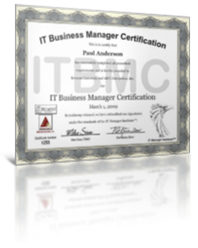
You probably know my company offers the IT Business Manager Certification, ITBMC. I never would have if not for the encouragement of the managers who attended our first few IT Manager Institute programs.

I’ll deliver the 44th and 45th IT Manager Institute program this month and I can tell you that the ITBMC certification has probably been one of the reasons for the longevity and success of the program, , , this is our 9th year in delivering the program with hundreds around the world to receive their ITBMC status.

I can hardly wait to deliver each new class, , , they are a lot of fun and seeing the enthusiasm for the program is very rewarding.

At the end of the day
Certifications do not guarantee you will be successful. What they indicate is that you have received knowledge about a particular subject and passed an exam that suggests you have a good comprehension of the material.

Execution is something else, , , you still have to do the work that is required in order to achieve success.

That’s why I structured the IT Manager Institute program to not only deliver the material of what to do and how to go about it in class, , , I also give you the tools to make it happen plus some takeaways to help you implement the IT Management Process we teach to achieve more success. Things like:

  • 30 Day Action Plan, , , specific steps to take when you get home
  • My entire library of e-Books that reinforce the class presentations
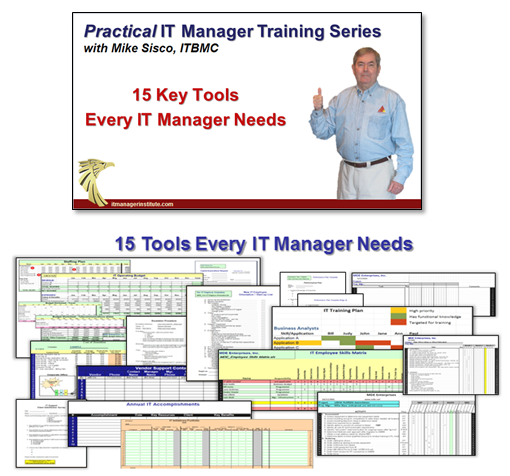
  • IT Manager ToolKit containing 102 tools and templates to use immediately or modify as needed
  • Ongoing support and access to me for assistance

The IT Manager Institute program is unique in many ways because of how we structure the class and also the additional tools and resources you take back to your company. Because the class follows a structured process and is delivered in a “how to” format, your retention is better, , , plus you have many resources to help you remember things from the class.

The bottom line
I think the key to any certification is how well people respond to the program. In our case, we have a 100% positive satisfaction from those who have attended. The reason is simple, , , the practical processes and tools are easily understood and put into practice, , ,  and they work.

It’s one thing to understand a concept. To succeed, you have to actually do the work and that’s why the IT Manager Institute program is structured so you can follow specific steps and use tools designed for specific uses that lead to more success in an IT manager role.

An ITBMC beside your name says something other than signifying a technical skill. ITBMC says you have learned the importance for your IT organization to deliver tangible and quantifiable business value in support of your company. It also indicates an understanding that IT initiatives are driven by business needs and issues and that every initiative you recommend will be cost justified and targeted to some specific business value.

Why is this important? It tells senior managers of your company you have a business perspective when managing your IT organization, , , not so focused on technology and missing the tremendous business leverage opportunities your IT organization offers your company.

Business managers become business partners, , , and without having these “partners” in your company, your success will be limited.

As I prepare for next week’s class, I get a high sense of enthusiasm in thinking about meeting a whole new group of IT managers and giving them the tools and resources that potentially changes their life and boosts their career.

They will leave with the knowledge and tools to make it happen, , , but they still have to do the work just as with anything in life.

Check out Institute class photos at https://itlever.com/institute-photos/

More photos at http://www.mde.net/institute/page4.html

Preparing for an IT Manager role

I receive quite a few inquiries about how to prepare for an IT manager role.  Often, these inquiries come from a parent who wants to help a son or daughter position themselves for a successful career.

Here is a message I received just this week from a supportive parent:  “My son is studying computers and he is in his early year of computer engineering and later on he will decide which branch of IT to specialize in. I want your help to give him tips and a head start to become an IT manager one day.”

In many cases, the parent has little or no knowledge of technology or how to prepare for IT management. What they do have is concern for their child’s future and a strong  interest in helping them prepare for the future. Often I will hear, “When he (or she) gets the opportunity to manage, I want him to be prepared so he will be successful.”

It’s something anyone who wants to be an IT manager one day should think about and devise a plan to prepare for.

My response:

——————————————-

Here is the path I would suggest:

1.  Read the free book you receive when signing up for my Practical IT Manager Newsletter – IT Management-101: fundamentals to achieve more. This book is a good foundational starting point. Sign up at www.mde.net/free

2.  Have him subscribe to my ITLever Blog at www.itlever.com so he receives free weekly tips and tools directed to helping IT managers achieve more success. There are hundreds of free articles, tools to download and other items to help an IT manager and I add new content every week.

A recent ITLever post will be of particular help titled, Solve the IT Management Maze with an IT Management Process. CLICK HERE to see it.

3.  Watch the 20 Minute IT Manager session titled Fast Start for a New IT Manager  at  http://www.20minuteitmanager.com/sessions/060602FASTSTART

There are 162 sessions in the 20 Minute IT Manager series, , , purchase all for $249.00 or $9.99 each. Details at www.20minuteitmanager.com
CLICK HERE for a special 50% discount offer for ITLever Blog readers – only $249.00. Included in this bundle are 12 sessions of a series titled, “12 Secrets to IT Success” that outlines the IT management process I use in managing technology resources.

4.  He will need to establish a positive record of delivering projects successfully in his technical role. My IT Project Management: a practical approach book is a simplified methodology that can help. There are 14 books in my library, , , available for $29.95 each or $279.00 for the first ten, , , $399.00 for the entire library that includes my IT Manager ToolKit.  Details are at www.mde.net/cio

5.  If and when he truly decides to position himself for a manager role, he should attend the IT Manager Institute. It is available in classroom and online self study and includes Bonus items of all my books and tools.

This class will do more for his preparation in becoming an effective IT manager than anything he will find. Both the classroom version and the self study are exactly the same material and lead to an IT Business Manager Certification (ITBMC) that was co-developed by Belmont University and my company to focus on the importance of IT organizations to provide tangible business value for their company.
    Self Study  –  www.mde.net/selfstudy
    Class schedule   –  www.mde.net/institute 

6.  Find an IT manager mentor, , , someone who is interested in helping your son learn about aspects of managing technology resources and a resource to go to for questions and discussions of interest. It is helpful to work with someone local who is willing to be a mentor at no cost, , , as long as the “mentor” knows what he is doing and has a successful track record. Poor or weak resources can actually damage your son’s career.

I have plans to provide a monthly IT manager membership program to provide mentoring services and IT manager development training because of the need we have seen. Watch my ITLever Blog or Practical IT Manager Tips Newsletter for a future announcement. Contact me at info@mde.net if you are potentially interested in a monthly IT manager mentoring program. I must warn you beforehand, , , it will not be cheap due to the effort required to set it up and it will be limited to a designated number of members.

7.  Your son can gain a sense of management by managing a project. In doing this he will be exposed to people management, managing client expectations, and budgeting. If he learns to manage projects well, it is good development for future IT management roles.

I hope this is of help and wish your son the best of success in his young career.
——————————————

The important thing to do when preparing for an IT manager role is to start learning from someone who knows how to manage technology resources, , , and to learn about what a successful IT manager really does, , , it is not all about technology actually. Focus only on technology and not the business and you will have major difficulty in becoming a successful IT manager.

One last piece of advice is to observe others and incorporate the best of what you see into how you go about doing things. I’ve done this throughout my career and know it has made a big difference in my management career. It’s another reason why having a good mentor is so important.