Tag Archives: it manager

Two questions you must be able to answer

Every time you introduce change, , , any type of change to clients, employees, or senior managers, , , there are two questions you must be able to answer.

They may not ask you these questions directly, but in their thinking they want to know:

1.  What’s in it for me?
2. Why is this beneficial?

Implement a new software release, hire a new employee, reorganize the company, cancel a project or recommend a new project, , , any time you want to do something different, you need to be able to determine who will be affected and answer these two questions.

Lat’s take an example I used in my last post, , , you plan to hire a senior programmer to add expertise to the team you do not have. If you recall, I mentioned your employees being high detail and analytical people probably come up with negative implications regarding this new hire. The don’t identify the new hire as something that will be good for them.

So, your communication with your programming team, even managers and leaders of these teams, needs to answer the two key questions.

1.  “What’s in it for me?”  You have to explain the reason we are hiring a senior programmer is because of the experience and expertise this person has in an area that we need experience in. It will help our progrmming staff develop and come up to speed faster in an area where we have no experience.

2. “Why is this beneficial?”  It will benefit each of our programmers by learning an area of technology we need faster and in a more consistent manner and it will help our organization in gaining this expertise. The company benefits because of the work we will now be able to do and the business value we will be able to deliver.

Clients and senior managers ask these questions as well every time you intrduce change, , , so prepare ahead of time to communicate and answer their questions proactively.

My first presentation

Have you ever been truly scared of something, , , I mean really, really frightened?

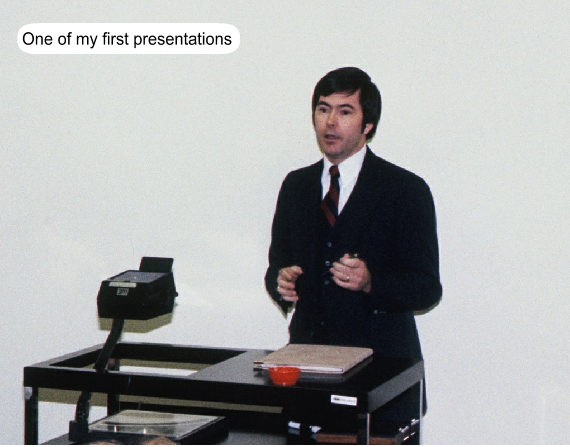
I have been truly scared at least once in my life, and it probably isn’t what you might think it would be. It was when I had to make my very first presentation in front of a group of people I did not know.

You need some background
It was a cold, snowy January day when I arrived at my first IBM class in Atlanta. I was 28 at the time and had just graduated from college, , , I was a bit older than a typical college graduate because of spending 4 years in the Marine Corps.

In the class there were some 30 or so students from all parts of the US, , , we were all proud “IBM rookies” eager to make our mark in the world, , , and we were about to go through IBM’s class called A-Mod.

I remember having to introduce myself to the class like everyone else did and how nervous I got as it got closer and closer for my time to speak. I would soon learn this would just be a teaser.

At the end of the first day, our Instructor brings out flip chart pads and magic markers, , , then he proceeds to pass out assignment material to each of us. He returns to the front of the class and proceeds to assign us a task for the evening, , , we would learn that homework was going to be a common theme in all IBM classes.

Our assignment was to develop a short, 5-minute flip chart presentation on the topic we were given. Everyone had a separate topic, , , no teamwork in this exercise. The following day we were to deliver a stand-up presentation of our topic using the flip chart bullet points we came up with.

The presentation would be recorded so we could view it and our Instructors could critique them to help develop our presentation skills. Our presentations were to be graded and this is important because it leads to our final grade average, , , something our future Performance Review from our managers back home would take into consideration.

Grading would be based upon three things: content, organization of the content, and presentation delivery.

I had never made a presentation to a group of people I did not know, , , never, , , and even though I was older than most in the room and a former Marine, , , I was intimidated by the whole thing.

Intimidated is putting it mildly, , , I was scared.

Not physically scared mind you, , , but afraid of making a mistake, looking foolish, or just generally not doing well in front of my peers, , , even though I didn’t know any of them. It’s a trait I would learn 15 years later is pretty consistent among IT people.

Well, we all go to our apartments and everyone focuses on developing their presentation. My flip charts look great and I believe I have created bullet points that capture the key points of my topic. I was totally comfortable with this part.

But I’m still very much afraid of this task because of the presenting part to come, , , so much concern that I gave real thought to checking out, going to the airport, and heading home to tell my manager that I did not sign up to be  a salesman.

Fortunately, I didn’t go through with it. Can’t hurt that much, can it?

The next day we begin making our presentations and we deliver them in alphabetical order, , , so my name beginning with an “S” means I’ll deliver mine in the afternoon.

How much of the morning sessions do you think I heard?

That’s right, , , none of them.

Why? because I’m thinking through my presentation and analyzing every aspect of it, , , trying to remember what I need to say, etc. The closer we get to my turn, the more nervous I become.

Well, it finally comes my time to deliver, so I go up to the front of the room, they help me place my three flip chart sheets on the stand, , , put a microphone around my neck, , , , , , , ,

Did I mention they were going to place a microphone around our neck and record the whole thing?

More pressure!!!!!!!

OK, I’m finally all set and ready to begin, , , but first, a question for you:

Are you aware of what happens when you are truly scared, , ,  I mean truly frightened about something?

Well, your body does some strange things that I learned for the first time at this moment in my life.

First, you can perspire or sweat.

Your body can tremble or shake.

Your voice can quiver, even come out at a higher pitch.

Your heart certainly beats faster and pounds like it’s coming out of your chest. I know this to be true.

But there is another thing that happens to you that I had no idea of until it occurred to me in this presentation.

Your mouth gets very dry, , , cotton dry, , , dry as the desert sand.

Well, when you speak, your tongue actually bounces off the roof of your mouth as you say certain words and when your mouth is cotton dry, your tongue sticks to the roof of your mouth. As you talk, your tongue gets stuck and when it releases, there is a distinct “POP“.

That’s right, you will hear an intermittent “popping” sound, , , you don’t know exactly when the “POP” will occur but it definitely does.

And remember, I have a microphone hanging around my neck.

As I work through my presentation, I hear this “POP” from time to time and I’m sure everyone else hears it. It’s a bit unsettling, but something occurred during this ordeal, , , as I went further and further into my presentation, it all got easier and easier.

My presence here today is testimony that this frightful event did not kill me, , , but it truly did scare the “bejeevies” out of me leading up to the event.

I’ve been very nervous in a few other large presentations in my career, but they got easier the more I presented.

The lesson
Today, I can deliver a presentation to hundreds of people and I don’t get nervous, , , as long as I’m prepared and know my material. What this says is that you can overcome your fears and learn how to do things that once intimidated you. It’s all about making an investment to become what you want to become.

They say the two things people are most afraid of are public speaking and death. Well, I’ve overcome the first one and so can you.

Being able to present to groups is an important skill for IT managers to have so create opportunities that forces you to present to groups, , , and especially groups that are outside of your immediate network of people.

Strong communication skills can help you considerably in your career, , , well worth the investment to gain them.


Make your resume look like you know your business

Most of the resumes I see of IT manager applicants have far too much technology expertise in them. Business managers aren’t as interested in your technical knowledge as you might think, , , or even as much as you might think they should.

Senior managers are looking for candidates who can deliver the goods, and when you load up your resume with all kinds of technology knowledge, , , it doesn’t say a thing about being able to deliver.

Please note, there are exceptions but they truly are exceptions, , , it helps to know what your interviewer is interested in, , , technology or results.

Senior IT managers and business executives generally want a manager who has shown they understand business need and can show they have delivered. What this means is that we need to list accomplishments and what our results have done for our company.

I literally would refrain from listing a dozen certifications and technology expertise, , , it tells me you are a technician, not a business manager who knows how to get results from their IT resources.

Benefits, accomplishments, and results, , , why would someone want to hire you? It’s usually not what you know about technology when interviewing for a management position.

Your resume is a sales tool that helps you get the interview or it will hinder your opportunity for that interview. Load your resume up with benefits and results and you might find yourself getting more interviews.

4:00am wake up call

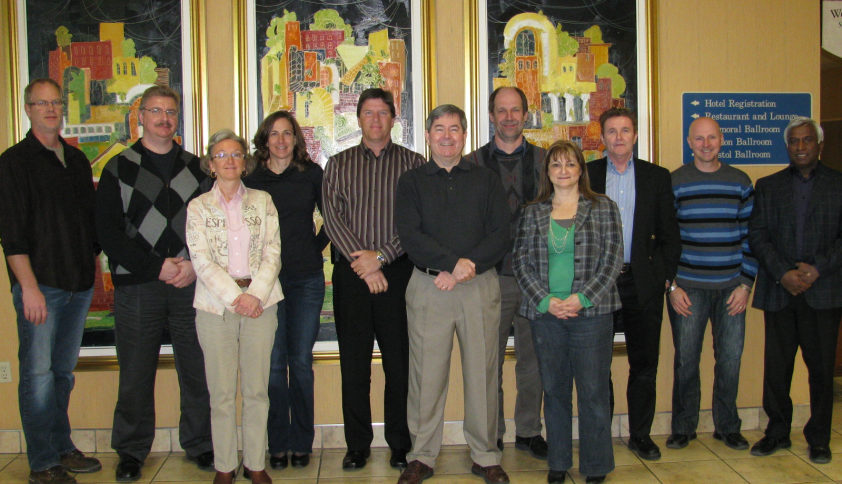
I was up early to catch a 6:00am flight back to the US from London, Ontario Canada where I taught our 45th IT Manager Institute. Hard to believe there have been so many.

What a great group of IT managers to work with. All ten managers in this class are from the same company and they wanted to standardize their management approaches to a certain extent, , , something I heard from most of them on the first day.

IT Manager Institute #45  –  London, Ontario Canada

There have been many senior managers I’ve worked with decide to do this from many industries including government, healthcare, banking and manufacturing. They keep sending more students to the program so it’s a good sign they are receiving value from their investment.

Canadians are always a fun group of people to work with, , , great sense of humor and very committed to what they are doing. I truly enjoyed this group and feel that I’ve known them much longer than just a week.

Good luck and best of success guys and gals !!

Advice for a new IT Applications Manager

A few days ago, I received a message from someone who was just promoted to IT Applications Manager, , , i.e., a Programming Support Manager who supports business applications in his company.

His question
“I have about 10 years of IT experience, and currently facing a new challenge by accepting an offer to handle a job of IT Applications Manager. I am seeking your help and advice. What is the best for me to order from your products/books/tools which helps me to manage the Applications Department?”


I gave him an answer about which of my books and tools would be of assistance and told him I would post additional insight on my ITLever Blog, , , so here goes.

Additional insights
Congratulations on your promotion. I assume your ten years of IT experience was probably as a programmer, , , which led to your selection as the next IT Applications Manager, sometimes called Programming Support Manager, Business Applications Manager, etc.

This promotion takes you to a responsibility that is totally different from what your experience has been. Now, instead of depending predominately upon what you can do yourself, you are going to be depending upon other people on your team to get the job done.

It can be a difficult transition unless you have a path to follow and tools to help you.

The first thing I would do is review the ITLever post titled, New IT Manager needs a fast start and download the fast start tool. There is also a 20 Minute IT Manager training session on this topic you can watch. CLICK HERE to view.

Second, I suggest you subscribe to my free Practical IT Manager Tips newsletter and read the free e-book, IT Management-101: fundamentals to achieve more when you subscribe at www.mde.net/free.

Third, browse through the posts of this ITLever Blog, , , lots of IT management insights and tools you can download.

As a new manager, there are several things you need to know how to do:

1.  Determine what to work on
This is all about conducting an effective IT assessment. My book titled, Acquisition: IT Due Diligence lays out a step by step process and all the tools you need to determine the business needs and issues of your client. This is the demand side that should be what drives your IT support focus.

2.  Understand your organization’s capabilities and capacity
The other side of an IT assessment is the supply side, , , what can you do and how much can you do. In order to manage your client’s expectations about support delivery, you must know this part as well. Details are included in the book, Acquisition: IT Due Diligence

3.  Implement a programming change management process
You must have a simple change management process to deliver programming support effectively. Review the 20 Minute IT Manager training session titled Managing a Programming Backlog.
CLICK HERE to review.

4.  Manage the quality of your team’s work
Quality is key. CLICK HERE to review the 20 Minute IT Manager training session titled, Improving Programming Quality.

5.  Track and communicate the results
Communicate your results or no one will know what you are getting accomplished. Make it a point to report on your programming support status and completion activity on a monthly basis.

I hope this information is helpful and I wish you the best of success in your new management role.

Quick results from the IT Manager Institute

One of the things that gets me excited and encourages me to work even harder is when I receive a positive message from one of my IT Manager Institute students or someone who is using one of my IT manager tools.

The best messages are the ones that talk about the value they are getting from something they learned from me.

Kelly Reed attended my IT Manager Institute class a couple of weeks ago, our 44th program since delivering the first one in 2003. He is getting some quick results and that’s exactly what we like to hear.

Here is what Kelly told me yesterday in an email message:
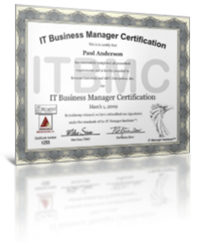
“Just wanted to let you know that I received my IT Business Manager Certificate. Thanks again for everything, I feel like I have true purpose and direction now as I embrace my new role.

On a cost saving note, I am in negotiations with our company’s wireless provider. Looks like we are looking at a savings of $18,000 per year!  My CFO has been so impressed with what I am doing now (Cost Savings, IT Assessment and even how I am talking to her with less detail), she wants me to make sure I take your class again next year as a refresher!

This is what it’s all about, , , helping IT managers of the world achieve more success. Thank you Kelly for sharing with me.

We receive hundreds of positive comments like this one every year and it always “makes my day” when I hear about someone achieving more success in their company. GREAT STUFF !!

In a few situations, I’ve actually had managers tell me on the last day of the IT Manager Institute class that they have talked to people in their company about something they learned in class and have already started to find some cost savings or beginning to use a new management tool.

Do you think a CFO or CEO notices this when you start focusing on the business value opportunities that exist in managing an IT organization, , , or finding ways to save money in your company without being told to look for it?

You bet they do, , , and as in Kelly’s case his CFO noticed a change almost immediately upon his return to their company. What’s even better is that his CFO told him about it and realizes the value of the company’s investment in Kelly’s IT manager training.

Let me say this again, , , POWERFUL STUFF  for both Kelly and his company!!

Here are a few quotes from our most recent IT Manager Institute class:

“The value of this material exceeded my expectations. The course was exceptional and I would recommend it for any current or future IT manager.” 
Greg Horton, Nashville, TN

“Best seminar and learning class I have taken. Wish I had this class many years ago. I plan to implement several things with my team in the next couple of weeks” 
Ken Schernekau, Atlanta, GA

“Mike, I want to thank you for your class and your real world experiences that you brought to the table.  It very much gave greater meaning to the material being taught.” 
Steven Payne, Charlotte, NC

“Mike presented information thoroughly on a level of great understanding. This material will assist me as I grow and hone my skills as a leader.”
Kamela Breeding, Atlanta, GA

“Fantastic! Hit all areas of IT and business, really opened my eyes. The material and tools are priceless! This experience has by far gone way above and beyond what I could have ever expected.” 
Kelly Reed, Couer d’Alene, ID

The IT Manager Institute is available in classroom and in an online self study format, , , same material including the ability to earn your IT Business Manager Certification (ITBMC).

Details at:   https://itlever.com/it-manager-institute/
Class photos at:  https://itlever.com/institute-photos/

helping IT managers of the world achieve more success


Back away from the technical detail

CLICK image to subscribe and receive free IT Management-101 e-book

I received an interesting question from one of my Practical IT Manager Newsletter subscribers this morning.  I get this type of question a lot so thought I would post it along with my response. It is a great question and I hope my response helps my subscriber and anyone who might read this post.

The situation and question asked
“I have been working with this organization for over 10 years now. I’m the IT manager, and initially started off with only one engineer working (permanent headcount) under me. Over the years the business grew, I now have four engineers (outsourced) reporting to me.

My bosses have informed me that I should take a step back in day to day operations, and have the senior engineer take the lead instead. They want me to focus more on aligning IT with the business, have coffee with the management team members, etc

Am sure you must have heard the above from your other students too. Its just that I am in a dilemma now, i.e., with such a small team how can I possibly restructure it to meet my bosses’ intentions?”

My response
Your management team is correct in wanting you to spend more time better understanding your client and their needs and issues and less time focusing on the technology. The fact you have been there for 10 years says they have a lot of confidence in you and that you are pretty much a permanent fixture with everyone, , , but probably more so as a technician than a true manager.

The other thing I picked up in your message is that they want you to spend more time with the other managers of the company. This is good stuff and yet another vote of confidence in you from your senior managers.

As you grow, your job must become more of a true manager role rather than a technical role. It’s understandable that you have had to be technical up until now and operate at best in a “player/coach” mode. Because of the minimal staff, you have had to handle much of the technical responsibilities yourself.

Your ability to pull away from being the technical expert should take place gradually over time. At even the small number of staff you have in place now, you need to become more of the visionary, planner and one who can delegate technology initiatives, , , not the doer.

You also need to be able to spend more time with your clients to better understand their needs and issues, , , not in keeping your technical skills at an “expert” level.

As your company grows, senior management needs you to become more of a business manager who knows how to identify appropriate technology initiatives and place the appropriate focus on them in order to support the real business, , , your senior managers and department managers and their employees.

Pulling back is not easy. In fact, it may be the hardest transition you will ever go through, , , but it truly is necessary for you to gain a higher level perspective and to become a business manager and partner of your clients.

“Having coffee with the management team” is another way of saying they need you to raise your perspective of things from a purely technical focus to more of a business minded focus and someone who can become a true business partner with the managers in the company.

If your managers are suggesting you need to spend more time to insure technology is aligned with the business, they may already feel like your focus is not 100% focused on the business, , , in other words, you are working on things and spending money in areas they don’t fully understand the reasoning for or the business value it will have.

If they feel that way, even though they may not be able to articulate the issue very well, there is a very good chance you are out of sync with the business side of your company, , , and may not realize it.

Studies and surveys suggest that over 50% of IT organizations around the world are out of sync with their business client, , , and this trend seems to remain constant year after year.

The challenge is that most IT managers who are out of sync do not realize it and senior managers aren’t really sure. Even if they were sure, they probably don’t know how to tell you because they don’t really understand technology.

Be aware that if your management team is suggesting you need to focus more on keeping the IT organization “aligned with the business”, your focus may already be out of sync. If so, it is critical that you determine if this is the case and put into motion the things that will correct it.

A big part of the transition challenge is that you will want to keep your hands in the technology. It’s something we like to do, , , but as a company grows it needs something different from the IT manager.

I would look at your situation not so much as a restructuring of the organization but more of a refocus on how you go about day to day support. The manager employee structure essentially remains the same, , , it is where you spend your time on a daily basis that’s different. A gradual shift in focus is what makes sense from what I understand of your situation.

Here is what I would suggest you do:

1.  Block out an hour or two to have some “think” time.

2.  List all the responsibilities you have and also the type of work you do from day to day. You might need to create an activity log for a week or two to actually see what you do on a daily basis. I can almost guarantee you it’s a lot more technical detail than you probably think it is.

3.  Take the list and determine what can be delegated to others on your team. Be specific and think about what you must do in order to transition each responsibility to someone else. This means you have to “let go” and it may require training your employees for them to take on certain responsibilities. Your focus needs to be able to develop other experts in these areas so the company can depend less and less on you personally. This might cause you concern, but if you are doing a good job in supporting your company, it will actually position you for more responsibility in the company. Remember, transitioning responsibility does not mean you are not involved or should not know what is going on, , , it simply means you have someone else doing the detail work. Part of the work should be to keep you informed.

4.  Sit down with your senior management team and each department manager to determine what they think about the IT support you and your team is providing. Ask them a specific question as to whether they think your IT team is focused on the appropriate issues and needs of the company. Don’t try to justify yourself, , , listen objectively to what they have to say and put it into context with feedback from all the other managers.

A sample Client Satisfaction Survey is available at https://itlever.com/2010/05/24/are-your-clients-happy/. If you learn the answers to these questions, it will tell you quite a lot about how your clients feel about their IT support. Don’t send this survey out, , , visit your clients personally and interview them. You will get a lot more from an interview than you will from asking a survey to be filled out. Take a look at https://itlever.com/2011/01/08/dont-send-client-surveys/ to better understand this.

5. Analyze the data from the surveys and determine if there is a consistent message from your clients. If so, learn what the trends are and identify what you need to do to address their concerns.

6.  Develop a transition plan that outlines your focus on transitioning specific technology responsibilities to others on your team and possibly to new hires you will add in the future. Place priority on the things that help you address client concerns from your survey.

7.  Share your transition of responsibilities plan with your senior managers so they know you are serious about taking their advice. You will also need to provide insight in how you plan to spend more time with your clients to better understand their business needs and issues. My book, Acquisition: IT Due Diligence, can help you conduct an effective IT assessment and learn whether there is a disconnect between IT and the business. See http://www.mde.net/cio/page11.html for more information.

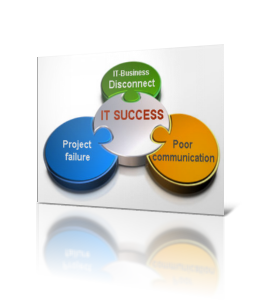
One last piece of information. In my career, I have worked with and observed hundreds of IT organizations and thousands of IT managers. In my opinion, there are three key reasons an IT organization fails, , , I call it the Triple Threat to IT Success. Take a look at a 20 Minute IT Manager session I developed on this topic and pay particular attention to slide 17. If you hear these things from your senior managers, you have a disconnect. Review the 20MITM session online at:  http://www.20minuteitmanager.com/sessions/072202TRIPLETHREAT/

Summary
We see IT managers struggle to transition from the technical expert to a business manager all the time, , , it’s a truly difficult transition. Much of it is caused by our desire to focus on technology (we like it) and also our reluctance to let go and depend on others to do the job. You see, , , no one can do the work as well as we can do it or want it to be done so we tend to do things ourselves. Some call it being control oriented, , , I prefer to think of it as, “we like things done ‘our way’.”

Unless you are able to raise your perspective and back away from the technical detail, it is a recipe that will surely limit your career opportunities.

10 Tips to IT manager success

Do senior managers run and hide when they see you coming down the hallway, , , or are they eager to hear what you have to say because they know it’s going to be valuable?

Which type of IT manager are you?

Here are what I consider to be the key components that lead to IT success and can help you gain respect throughout your company!

1.  Understand business needs and issues
You can’t succeed unless you know what to work on and the answer to this lies in understanding the business needs and issues of your client. This is the first part of an IT discovery process.

2.  Understand your IT capabilities and capacity
Managing client expectations requires you to know what your IT team can do and how much you can do. This is the 2nd part of an IT assessment discovery process.

3.  Create a vision
It’s important for people to know where you are headed. Once you complete an IT assessment, you can develop an IT strategy and gain agreement and commitment from your senior management team. This will insure you are in sync with company needs, , , a critical piece.

4.  Establish credibility
Doing what you say you will do not only creates credibility, , , it also creates trust from all around you. The key to doing this is to deliver projects successfully, , , on time, , , within budget, , , and that meet your client’s needs.

5.  Deliver business value
Every project you undertake should  deliver some type of business value, , , if not, you should reconsider whether it is an appropriate project to spend money and effort on. CLICK HERE to learn more about business value.

6.  Communicate in business terms, not technology acronyms
When you talk in technology terms, your clients do not hear you. They literally turn you off and begin wondering how long this conversation will last. Learn to communicate in business value and financial terms and they will not only hear you, , , they will understand what you say.

7.  Over deliver
Position your team to deliver more than expected. To do this, your commitments must be conservative with room to spare. No one gets upset when you complete work faster than expected or less expensive than forecast. See what happens when you don’t achieve what you outline.

8.  Track and communicate IT performance
Clients won’t know how your team is performing unless you share the news. Use a Project Initiatives Portfolio to track how good you are in delivering projects successfully. LEARN MORE

9. Give your team credit for success and take blame for failure
Your employees will literally walk through fire for you when you give them credit for IT successes and take the hit for failures. Coach employees one-on-one for improvements needed but take responsibility as the manager for the problem. Not only will your people respond to this, , , so will your clients.

10.  Over communicate during a crisis
Something will break sooner or later. When it does, over communicate the status of the situation and keep your clients out of the dark. If they don’t know, , , they think you are not working on their issue aggressively enough.

Summary
There are many things an IT manager must do to succeed. Executing  this list of ten tips will help you gain tremendous respect within your company.

Managing client expectations

A big key to IT success is the ability to manage your client’s expectations. In my last post, I talked about the “client is always right”. I’ve encountered many situations where the client was not factually correct, , , but their expectation was exactly what it should be given the situation.

Let me give you a perfect example. In one company I joined as their new CIO several client managers told me during my initial assessment that I should fire one of the IT employees in my organization.

Not one, not two, , , but three managers told me this. When you get this many, there is an issue to be sure. My job is to determine what reality is and take appropriate action. In such a case, there will be one of two issues to exist:

  1. The employee is not performing.
  2. The client’s expectations are incorrect.

What I discovered in this case was a bit of both. The employee was not performing to the level needed, , , but it was because there was considerable more demand than staff to provide such support. The employee in question had a good attitude and tried to do the job well but there wasn’t enough capacity to get it all done, , , we needed 3 or 4 more people to do what was necessary in this support situation.

In this case, it was not an employee problem, , , it was a management problem because we weren’t managing the client’s expectations about what to expect from their IT organization. Now, the client was correct about support not being sufficient for them to do their job, but they were incorrect in what the problem really was, , , and especially wrong about what the solution should be.

Once I fixed the staffing deficiency problem, no one felt that I should fire this employee, , , in fact, they thought the employee’s morale had improved immensely. That’s really funny because the employee always had a good attitude, , , just could not possibly get all the work done to support the client. I didn’t do anything but fix the real issue, , , insufficient capacity to support the business.

Learn to be conservative
To manage client expectations, you must be conservative. What I mean is you need to set expectations that position you to over deliver. That means telling clients you will complete a project in 6 weeks when you think you will be able to do it in 4 weeks, , , and telling your client the cost of a project is $120,000 when you think you should be able to complete it for $100k to $110k.

There is what I call a Law of IT principle in that, “IT projects always take longer and cost more to complete than you think they will.”

If you are not conservative when you commit to do things for your client, it’s going to be rough going for you and your team. Teach your employees how to be appropriately conservative when they commit to do things for others.

Another example – programming productivity
There are approximately 160 work hours in a typical month. I know from experience you should get 110 to 120 hours or more a month of productive programming time on average from a programmer over the course of a year. Some months will be much less due to vacation, training, meetings, etc. and some months will be a lot more, , , but over time you should average around 120 hours of code produced a month by every programmer on your team.

When setting your client’s expectations, tell them you can produce 100 hours per month per programmer. If you have 5 programmers working on the same application, that means you position your client for your team to produce on average 500 hours of code each month when you expect to be able to produce 550 to 600 hours a month.

By doing this, you position your team to over achieve.

Another simple rule
No one gets upset if you complete a job faster than you say you will or less expensive than you say it will cost, , , but someone always gets concerned if you are late or over budget.

Learn to be conservative every time you tell someone you plan to do something for them and teach your staff to do the same, , , it is going to help you deliver what you say you will do, when you say it will be completed, , , and within the budget you submit.

This makes you a reliable manager and that’s something everyone wants from you.

Your client is always right

Before you think I’ve lost it completely, , , let me explain.

In an IT organization, we are there to support the technology needs of people who need technology to do their jobs. In most situations, technology is not the company’s core competency. It is banking services, manufacturing widgets, selling food, clothes, or books, , , or doing something to sell products and services they provide. It is rarely developing technology.

Our IT clients are primarily two groups of people in your company:

  1. Senior managers
  2. Department managers and their employees

If your clients think you do a good job, , , great. However, if they think you are doing a poor job in supporting their business, , , guess what, , , you are.

STOP RIGHT HERE

Let me clarify just a bit.

You might actually be doing a super job with the technology. In fact, you could be the best technical organization around, , , the VERY BEST !

However, if the client thinks you are doing a lousy job in supporting them, something is askew. It could be that you are simply not managing their expectations very well. If that’s the case, then there is a problem.

Delivering technology services well is not just about doing a good “technical” job. You must also manage the client so they agree you are delivering support successfully. The flip side of this is that you could be doing a mediocre job technically, but if your client thinks you are doing a great job in supporting their business, , , guess what , , , you are.

Now, I know what the technical purists are going to say, , , something like, “Mike, that’s crazy. You should know that unless the technical part is handled well, there is no way to be successful in supporting technology.”

All I can tell you is that I’ve seen many outstanding technical organizations get low marks from their clients because they aren’t managing the client’s expectations well. They may be superior technicians but they are respected less because the client’s expectations are out of whack.

Something to think about!