Project success is the path to IT credibility

arrowsupDelivering projects successfully creates IT credibility. Project failure causes you and your IT organization to lose credibility.

You must establish credibility to achieve IT success!

So, if project success is so critical to your success, what do you need to insure project success?

Well, it’s a little more than simply delivering a project successfully, , , there are other things to consider.

There are three key components to get the credibility you need. I’ll outline them for you in this article and we will follow-up with articles that dive into each to give you the substance you need.

3 Key components in managing projects successfully

First, you must be able to build an appropriate project schedule and manage a project to deliver it on time, within budget and meet your client’s expectations. To do this, you need a project management methodology and a few simple tools.

There are dozens of project management methodologies and thousands of tools and templates, even PM certifications to help you schedule and manage projects.

I use a simple spreadsheet to develop most of my project schedules unless a company requires me to use something like Microsoft Project. The tools are not nearly as important as how you go about the process of managing projects. I’ll show you my process in the next ITLever post.

Second, you need to communicate the status of active projects. At any given time, your IT organization will have several projects underway. Your ability to communicate the status and key issues associated with each project will help you deliver projects successfully as well as contribute to your credibility.

blindfoldedRecently, I provided management consulting services for an organization. When I got there they were in the midst of running many projects. I could tell there were a lot of projects underway or in the stages of getting started, , , but there was nothing in place so we could see what was going on. In fact, we couldn’t tell how many projects we had.

It’s sort of like driving blindfolded!

Understanding the importance of communicating project status effectively, I quickly developed a simple monthly report that showed the status and key issues of each project.

I’ll give you all the details in a future post in this PM series.

Third, you need to demonstrate your organization’s project success rate and the benefits derived from your efforts.

This is key. Your clients (senior managers, department managers and their employees) have short term memory, , , or no memory at all. They quickly forget what you and the IT organization have done for them.

You must keep a positive message of “IT value” in front of your clients. Otherwise, they don’t know what you are accomplishing for them or they quickly forget.

Again, I use a simple spreadsheet to track IT projects and to show the track record of our project success. In this simple tool, you will show how effective you are in delivering projects on time, within budget, and meeting client expectations, , , plus the benefits that were achieved.

I’ll talk more on this in the 3rd post to follow this one.

Summary
There will be three posts written this week that explains each of these three important components of gaining IT credibility with project success. In the posts, I’ll explain what you need to do and provide tools or templates to help you make it happen.

The additional articles follow this post or can be located at the links below:
Project success is path to IT credibility – Step 1
Project success is path to IT credibility – Step 2
Project success is path to IT credibility – Step 3

it project management ebookMore details of the entire project management process and customizable tools I use are available in my book, IT Project Management: a practical approach

10 Types of IT Managers

I’ve been fortunate to work with hundreds of IT and operational managers around the world, and I have observed many types so thought I would have a little fun and share my version of the typical groups managers fall into.

bully manager 21.  The Bully – This manager operates through intimidation. Bully managers have to have things “their way” and will push people around to get what they want and don’t really care if they hurt anyone who gets in their way.

manager_invisible man2.  Invisible Man (or Woman) – Invisible managers are no where to be found because they seem to never really be “on the job”. You wonder what these managers do with their time because they don’t get much accomplished. Department managers and users rarely hear from them and neither do their own people.

manager_micromanager3.  Mother Hen – These managers are often thought of as “micro managers”. They hover over you like a “mother hen” to be sure you do things exactly the way they think things should be done. They simply can’t let go of the detail. Mother Hens have good intentions but they limit the capabilities of their people.

manager_cheerleader4.  Cheerleader – Great motivators fall into this group. They tend to be upbeat and are always promoting the good things about their team and individuals on the team. Cheerleader managers know how to bring fun into their environment and consistently get things accomplished by providing positive reinforcement to everyone around them.

manager_chicken little5.  Chicken Little – “The sky is falling, , , the sky is falling!!” You guessed it, these managers make much to do about nothing it seems. Every issue is blown out of proportion and they are “nervous willies”. When a problem arises they tend to add gasoline to the flame instead of settling things down and working through a logical resolution to the problem.

manager_supermanager6.  SUPER MANager – We all want to be the super manager, , , faster than a speeding bullet, stronger than a locomotive and able to leap tall buildings. Super managers are on top of things, lead by example, and develop strong teams of people who are capable of running on their own because super managers are confident in themselves and seek to make everyone successful.

manager_coach7.  Coach – We all need to be a coach to be effective IT managers. A good coach puts solid processes in place and teaches his people the fundamentals to succeed in their positions. Great coaches know that when everyone plays their position well and does their job that’s assigned to them, the team will win.

pass the blame8.  Transparent Manager – This is a manager who takes credit for anything good the team does and passes the blame for everything that’s not good. This is counter to what a manager should do which is, “give credit to others for success and take responsibility for failure”. Transparent managers have very little respect.

manager_reluctant manager9.  The Reluctant Manager – Some become managers because a management position opens up and they are one of the senior people on the team. They are asked if they want the job and the answer is quite often, “Yes.” The reality is that they don’t really want to be the manager but they decide to accept the position to support the team or because they fear declining it will damage their career.

manager_closed door10.  Closed Door Manager – These managers are too busy working on things to be available. You know where they are because they are always sitting in their office (usually with the door shut) so they can focus on their current project. Closed Door Managers tend to lack effective communication skills because they are very shy and introverted.

Do you see yourself in one or more of these manager types?

Do you run across other types in your company?

Take the poll below and let us know which type(s) you think most IT managers fall into or add to “Other” if you think of another type.

Learning who you are and how you operate as a manager is important because the more you understand yourself and what it takes to succeed as a manager the more success you and your team will achieve.

Do you have an Escalation Plan?

escalation planWhat does your IT organization do when a mission critical event takes place in your company?

Does the appropriate IT support component spring into action to minimize the risk imposed by the problem, , , or have you even sat down to think about and determine what these issues are and what you should do if they occur?

Sadly, many IT organizations wait until a major problem occurs before thinking about it. Unfortunately, this is a terrible time to start analyzing what you would do in the event of a major problem.

Major issues can occur in any industry, , , some things are unique to a particular business or industry. Here are some situations to think about:

  • Server or network failure
  • Remote office loses connectivity
  • Data interface between applications or outside entities goes down
  • Anything that endangers patient care in a hospital
  • Anything that puts employee safety at risk
  • Issues that can cause financial risk to the company
  • Things that significantly jeopardize client satisfaction

fireman1It’s important for your IT support team to respond quickly when major problems occur like the examples above. To do this, you need some type of high alert process that causes your team to take action when key events happen.

It will be much more effective when your employees know what causes an escalation event. what their action steps need to be, and have the knowledge and tools to be able to troubleshoot and resolve the problem, , , even who the escalation owner will be to manage and close out the response activities.

You want escalation to take place automatically so think about these things now. Trying to figure it all out when you have a problem is not a good time to start.

Dealing with possible employee misconduct

ripped offI received a question from one of my followers this morning about how to handle an employee’s possible misconduct:

Question: Recently one of my assistant managers decided to delete emails from a couple of business users email accounts. What would be the appropriate course of action to take? I would investigate then fire this person. However, I know if I kept him, he would probably be more loyal in the future, , ,even grateful? 
Need some advice.

My response: 
Hello,
Thank you for your message. Here are some things to consider:

First, IT employees deleting any emails of others (especially our clients) should be prohibited unless you make a corporate decision to purge email from time to time, , , such as all email older than 2 years, etc. as decided by a senior management committee that represents users, senior management and IT.

Second, you probably want to find out why the employee deleted the email messages. It could be he thought this was not only appropriate but needed for a valid reason. He may even have deleted the messages as a request of the client. There could be many valid reasons, , , you need to understand the reasoning behind it.

Third, unless the act was for something illegal or unethical, I would never fire the employee for a first offense. Even then, you may not want to take such harsh action if you think the employee was possibly not aware his action was improper. However, depending upon the circumstances surrounding the email deletions, I would certainly coach and council the employee and make it clear this type of act will have serious consequences in the future, , , and be sure to spell out what those consequences are.

Quite often, an employee isn’t completely aware that his actions are improper, especially if a client has requested it. The key here is to get underneath the issue to determine why email messages were deleted and take appropriate action based upon what you learn.

Hope this helps,
Mike

Summary
There are a few issues that would warrant terminating an emp0loyee on the first offense, but they are few and far between from my experience. I try to always give the person the benefit of the doubt when facing questionable situations, , , whether it is an employee, a client, or a senior manager I work for.

People make mistakes, , , all of us do. It’s important that a company develops managers who are supportive and help minimize these type of mistakes. More importantly though it’s important for the company to have a culture where people aren’t threatened every time they make a mistake and see management focused to support them and help them succeed.

Management is about coaching, , , it requires continuous coaching and reinforcement to get the results you want as well as the behavior you expect from your team.

What would you do in this case? I’m interested in your perspective and thoughts! You can add a Reply in the box below.

Mike Sisco’s Top 15 IT Manager Tools

When the Editors of Toolkit Café asked me to provide a list of the Top Ten IT manager tools every IT manager should have, three things happened:

First, I never had really thought about “must have tools” for every IT manager. I had always just focused on individual tools or my entire IT Manager ToolKit.

Second, if we really mean “every IT manager should have them”, then we should create an opportunity so every IT manager can access them, , , so we have, , , read on.

Third, when I tried to identify a Top 10 List, I couldn’t narrow it down to just 10. There are 15 IT manager tools in my IT Manager ToolKit that every IT manager needs and should have.

Let’s start with the list and follow with a short description of each tool and my reasons as to why you need it.

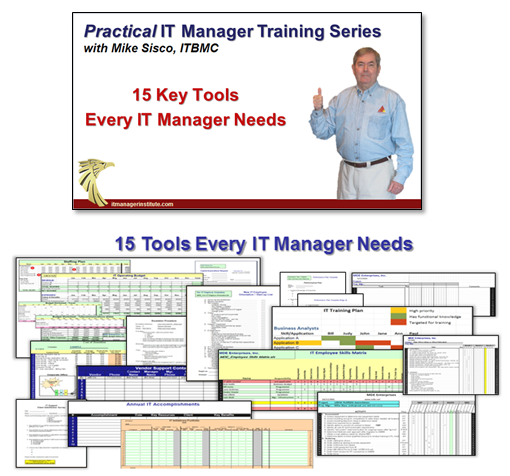
15 Tools Every IT Manager NEEDS

15Tools_all1. IT Employee Skills Matrix
2. IT Training Plan
3. New Employee Orientation Checklist
4. Performance Plan Template
5. Project Schedule Template
6. IT Systems Conversion Project Schedule
7. Move/Relocation Checklist
8. IT Initiatives Portfolio
9. Vendor Support Contacts
10. Escalation procedure
11. Annual IT Accomplishments
12. Client Rescue Guide
13. Cost of Downtime
14. Budget templates
15. IT Support Survey

Every tool can be customized to fit your specific needs and each tool includes instructions to help you use it.

DOWNLOAD MY TOP 15 TOOLS FOR FREE!

Read on for a Description of Each Tool

IT Staff Skills Matrix1. IT Employee Skills Matrix

One of the first things you want to do in an IT organization is to conduct an IT assessment. A key component of this discovery process is to determine the capability and capacity of your IT staff.  In other words, what can you do and how much can you do in terms of providing IT support.

This simple tool helps you quantify the skills you have and quickly identify the skill gaps that exist so you can prioritize training and education for your team. You can modify it to assess any level of skill you want; use it to quantify both technical and non-technical skills. Learn more.

IT Training Plan - General2. IT Training Plan

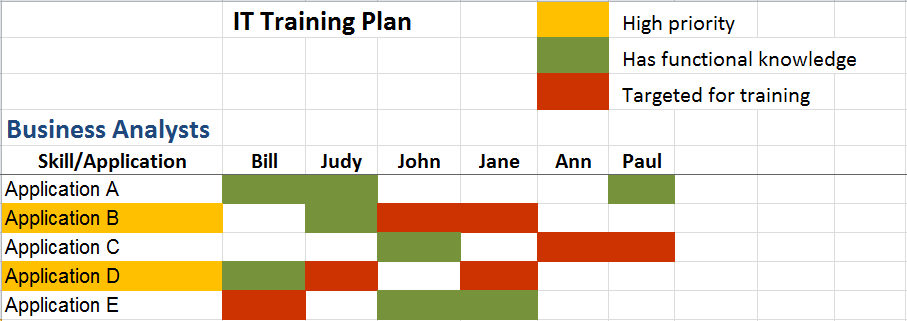
Training and education is one of the top motivators for IT employees. It always ranks in the Top 3 reasons employees stay with their company so it’s important to have a strong focus on employee development.

Eliminate knowledge silos and develop depth in your organization with a focused employee training plan when you quantify and prioritize training with this tool.
Learn more
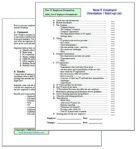
Tool_New IT Employee Orientation3. New Employee Orientation Checklist

It’s important to help a new employee get started so he or she can become productive quickly. It also has morale implications with your IT team as well as with your new employee that you may not realize.

Use this checklist or modify as needed to show new employees you are organized and help them become part of the team quickly. Learn more
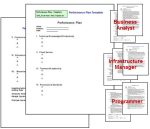
Performance Plan4. Performance Plan Template

(with examples)

IT employees have a strong need to know what it takes to be successful and they want to know if they are. Employee performance planning and review time is some of the highest quality time you have with your employees.

Included are three sample performance plans for a Programmer, Business Analyst and Infrastructure Manager. Learn more
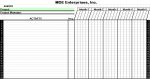
Project Schedule template5. Project Schedule Template

The key to gaining IT credibility is delivering projects successfully. You need project schedules to help you manage the project team and complete the tasks on time.

I’ve used this template hundreds of times to manage very large projects. You don’t have to be a PMP to deliver projects successfully, but you do need structure and some simple tools. Learn more

projectplan6. IT Systems Conversion Project Schedule

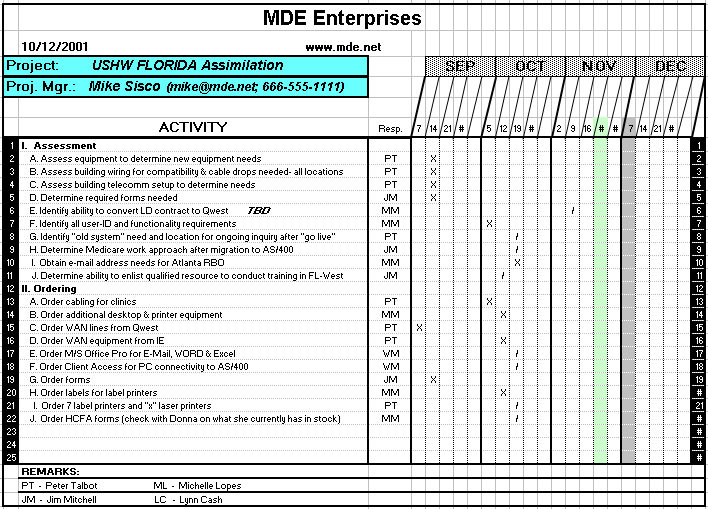
Sooner or later you are going to convert one of your systems to a new platform. This project schedule template provides a generic list of tasks you can use to get started quickly.

In addition, an actual sample system conversion project schedule is included that will provide additional insight into project management. Learn more
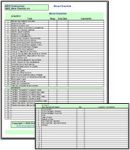
Move Checklist7. Move/Relocation Checklist

There is going to be a time when a department of your company needs to relocate. I’ve been in situations where it seemed like someone was moving every week. Nothing hurts IT credibility more than when these relocations go poorly.

Prepare with a move/relocation checklist that helps you support your client by ensuring future relocations go smoothly. Learn more

IT Initiatives Portfolio8. IT Initiatives Portfolio

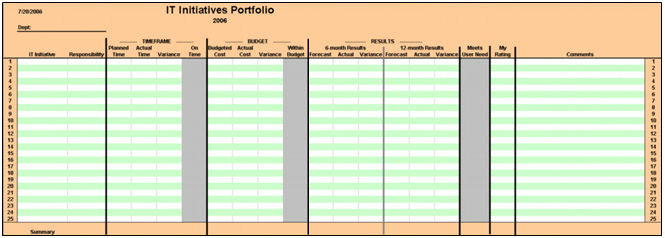
This little tool is so simple yet powerful. A couple of pages will show everyone how effective your IT organization delivers projects. Summarizes exactly what you need to know in regards to your project initiatives:
• On time
• Within budget
• Results achieved
• Meets client needs
• Successful (Yes or No)
Learn more
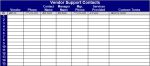
Vendor Contact List9. Vendor Support Contacts

When you need vendor support you often need it fast. Keep your vendor contact information close by and make it available to your Help Desk and all your IT managers.  You’re going to need it. Learn more

escalation procedure - loss of connectivity10. Escalation procedure

There are events that take place when you need to escalate IT support to a higher level such as a remote office losing connectivity, a data interface goes down, or a server crash.

Developing practical escalation procedures puts you ahead of the game when these problems occur and positions your organization to be highly responsive.
Learn more

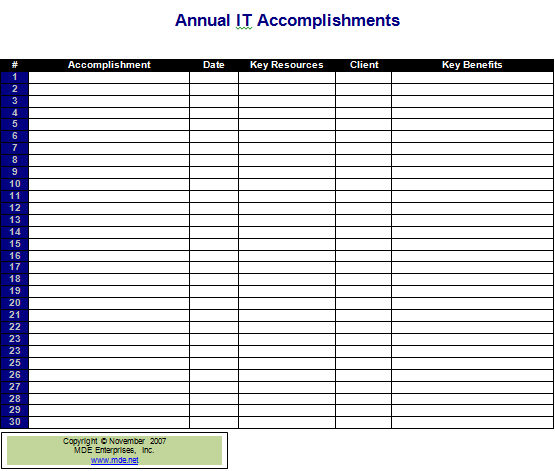
Annual IT Accomplishments11. Annual IT Accomplishments

No one knows what the IT organization is accomplishing if you don’t tell them. I was shocked when assembling data for an annual IT Kickoff. We had accomplished so much more than I realized.

Right then I knew that if I had forgotten as the manager, then my clients and senior managers wouldn’t remember either. From that point I began tracking our accomplishments so we could communicate them with all groups in the company. Learn more

Client Rescue Guide12. Client Rescue Guide

Early in my career an unhappy client intimidated me. Maybe that’s happened to you. Over the years I learned that a “problem client” is simply an opportunity in disguise.

Identify the client’s issues and address them and you have a partner instead of a headache. This template walks you through a process to do just that. Learn more

costofdowntime13. Cost of Downtime

Senior managers don’t understand technology nor want to, but you have to gain their approval to fund many technical projects that are necessary for the company.

This can be especially difficult when trying to discuss infrastructure projects, , , executives don’t get “routers and switches”. A tool that can help you is to educate them on the “cost of downtime”.

This practical tool will help you quantify the downtime implications in lost productivity for any technology in your company, even down to a single PC or printer. Learn more

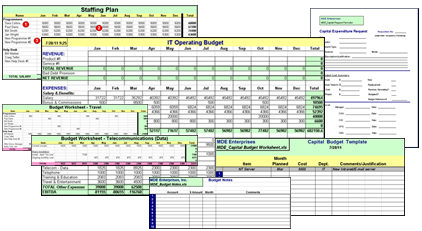
Budget Templates14. Budget templates

Developing an IT budget should be fairly quick work, but it is a long and tiring process for many IT managers. It was for me too until I developed a few templates to help me in the process.

This tool is actually several templates and can help streamline your IT operational and capital budgeting effort. Learn more

IT Support Survey15. IT Support Survey

At the end of the day, your client’s perspective of how well your IT organization is performing is your measurement of success. You need to be aware of how they feel about IT performance.

To do this, I use a simple survey like this tool but I don’t send it out and expect to get them completed and returned. Instead, I interview my clients and get much more information.

Use this survey form or modify it to determine client perspectives on:
• IT responsiveness
• IT focus
• IT quality
• IT professionalism
Learn more

SUMMARY
The tools and templates above have helped me significantly, and I hope you receive value in using them.

DOWNLOAD MY TOP 15 TOOLS FOR FREE!
when you subscribe to
ToolKit Cafe

There are over 100 tools and templates in the IT Manager ToolKit. To learn more  click here.

IT Manager Institute #56 – Dubai, UAE

ITManagerInstitute56_Dubai-10
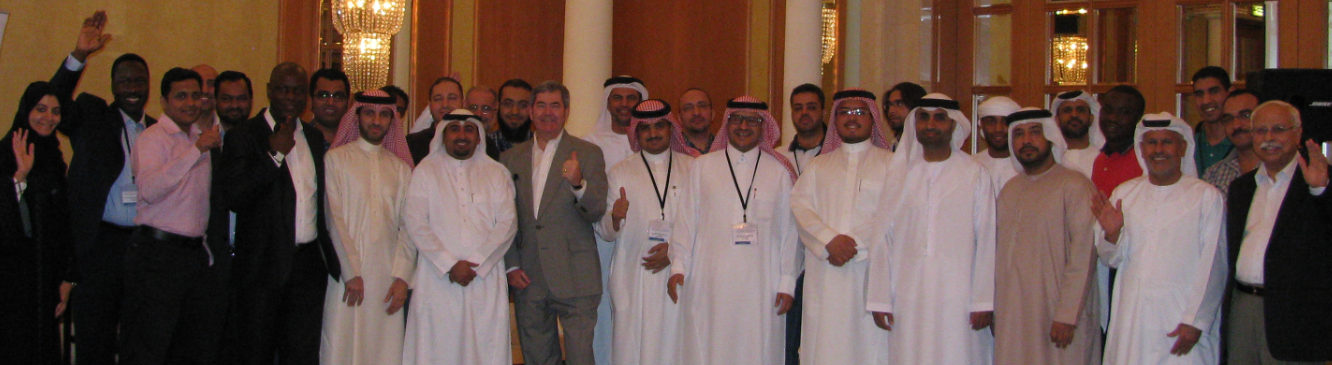
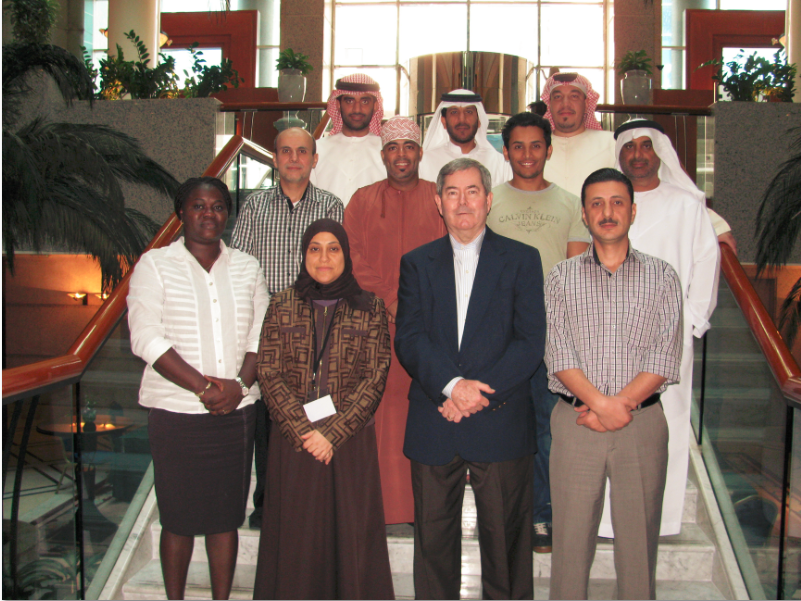
Last week’s program in Dubai was a huge success with 31 managers from 6 countries attending our 56th IT Manager Institute. I’m the ugly guy in the middle in the gray suit.

This was a super group of IT managers and executives and I enjoyed every minute with them.

21 SecretsOn the first day of class at 9:00am Dubai time, I launched a new book to my Practical IT Manager Newsletter list.  21 Secrets Every IT Manager Should MUST Know has been in development for a couple of years and it was nice to launch it during my largest class to date. Each student received a free copy. Learn more

21 Secrets Every IT Manager MUST Know

21 Secrets Every IT Manager Must KnowLast week at our 56th IT Manager Institute in Dubai I announced my new book.

21 Secrets Every IT Manager Should MUST Know

Secret #8, Teamwork is not automatic in IT was posted the other day that will give you a glimpse into the book.

————-

IT managers tend to discount or pay little attention to these “secrets”, , , something that can create real challenges for you and your IT organization.

21 Secrets has been in development for some time. I wanted to write this one because there are many issues that can hinder your IT success, , , even undermine your credibility. Becoming aware of these “land mines” can make a positive difference in your success.

You may purchase the book at http://itmanagerstore.com/books/21-secrets-every-it-manager-must-know/.

Headed to Dubai for IT Manager Institute #56

IT Manager Institute eagle coinI leave for Dubai tomorrow to deliver my 56th IT Manager Institute next week. It will be the 8th time to deliver the program in Dubai, , , one of my favorite places to go.

UPDATE
This class will be held in 3 days rather than 5. The biggest challenge for many to attend the program is being able to break away from the office for a whole week or more depending upon travel requirements.

I have delivered the program in 3 days a couple of times before – for the City of Anchorage, Alaska and for 17 IT managers in the Province of Saskatchewan, Canada.

So, I decided to streamline the program to make it available in 3 days for a large group.  This is the 4th time to refresh the program since delivering the first IT Manager Institute in 2003.

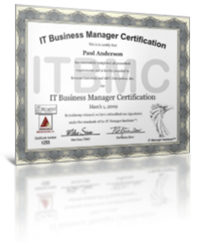
itbmc_1The IT Manager Institute program is better than ever with everything you need to manage your IT organization effectively and to obtain ITBMC (IT Business Manager Certification) status. The new program even has a few extra gifts for students not available in earlier classes.

I will also launch my new book next week during the class. Read my next post to learn about the new book.

As you may know, my company mission is, “helping IT managers of the world achieve more™ success”. The Institute is the most effective way to develop critical IT management skills that help you succeed.

Every IT manager should have access to the IT Manager Institute program and BONUS materials we give students who attend. Still, there are many who cannot attend the class due to cost or travel challenges, , , or they simply “can’t afford the time” to be away from the office.

This is why the IT Manager Institute Self Study was developed. It’s identical to the classroom version, even down to the BONUS IT Manager Institute flash drive contents and ITBMC exam. The great news is that you can attend the class from your home or office, , , at less cost, no travel, and at your own pace.

Learn more at http://itmanagerinstitute.com/training/self-study-program

Hundreds of IT managers have attained ITBMC status through the self study and now use our practical IT manager tools and templates to help them achieve more success.

The 3-day classroom pilot we are delivering in Dubai next week looks like it’s making a difference, , , it is lining up to be the biggest Institute class to date. Look for my post next week with photos of the class.

Below are photos from our last two classes in Dubai – October 2012 and February 2013.

IT Manager Institute - Dubai Feb 2013IT Manager Institute #54 – Dubai, UAE – February 2013

IT Manager Institute - DubaiIT Manager Institute #53 – Dubai, UAE – October 2012

I can hardly wait to meet the managers in next week’s Dubai Institute and expect it will be a great class.

Teamwork is not automatic in IT

21 SecretsThis is an excerpt from my new book, 21 Secrets Every IT Manager MUST Know

SECRET #8 – Teamwork must be developed

It goes without saying that you need strong teamwork to become a successful IT organization, but did you know teamwork is not a natural thing for IT employees?

Probably not, so let me explain.

teamwork1You see, over 90% of us in IT have two personality traits that actually work against teamwork to an extent.

First, almost all of us are technically oriented (a good thing), independent, goal oriented, and self-starters.

Most of these traits are good, especially as technicians or technology experts. However, this independent trait can be a challenge when it comes to working well with others.

In addition, over 90% (virtually everyone in IT) are high detail, , , also a good thing, , , you would think. For the most part, it is good, but one of the aspects of a high detail person is that they “like to do things their way”.

Let me get to the essence of what I’m driving toward. Technology attracts a certain type of individual and people with consistent personality traits. These traits summed up would describe an IT individual as someone who:

  • Likes to work independently and on his own
  • Wants to be precise and do things his way
  • Doesn’t like to communicate outside of his inner circle

The bottom line, , ,

teamwork is not a natural or easy thing for IT employees

High detail people can dig their heels in and become stubborn about how things are done. IT people are smart and they have strong opinions about things, , , it can be a real challenge to build teamwork for an inexperienced IT manager.

Don’t get me wrong here, , , IT people are conscientious and want to do a good job, but most want to do it a certain way, , , and that would be, , , their way.

What this means for an IT manager is that you have to build teamwork in your organization, , , that’s right, it is up to you to make it happen because it’s not going to happen automatically.

The good news is that building teamwork and camaraderie is the most fun aspect of being an IT manager, , , at least, I think it is.

I used to coach my teams a lot about, “We will succeed as a team; if the team fails none of us will be successful.”

The key is to create focus and coach your employees on working together positively.

Focus is provided by creating an IT strategy, running projects like projects, and delivering solid employee performance plans and reviews. When you deliver these, you always want to reinforce teamwork and the positive benefits of working together as a team.

Another opportunity to reinforce teamwork is when you have staff meetings. I like to hold them at least once a month and in every meeting there is something to reinforce the importance of teamwork.

Example
I joined a company to run their IT operation of some 35 employees. They lived in two different cities and it was obvious there were teamwork issues with the groups.

Shortly after joining the company I held an IT Kickoff Meeting to bring them all together and to refocus everyone to our company’s mission and the IT strategy I built to support this mission. The meeting had a key theme – TEAMWORK.

To have some fun, we divided the groups into three teams (Managers, City#1, & City#2) and created a competition among them to stress the importance of teamwork. Each team had to do a short skit (a play of sorts) that emphasized the teamwork message. Our management team presented a message of,

canoe row together“Put your oars in the water and row together, and we will be successful.”

The bottom line here is that teamwork occurs when managers cause it to happen, , , it doesn’t happen all on its own.

Reward desired behavior as well as successes

blue ribbonIt’s important to reward people for the successes achieved in your organization, but it’s also important to reward the behavior you want from the team.

You see, what gets rewarded gets emulated by others who see these things being recognized and rewarded.

Want your people to follow-up better? Find a way to recognize a positive action of one of your people in this area and reward them for it. Make an example of it.

Need people to ask for help when they run into challenges with one of their project tasks? Show the project team it is an example of strength when someone asks for help early enough so we can do something and avoid putting the project at risk, , , reward someone for asking for help.

There are hundreds of things you can do to reward the behavior you want in your organization. The key is you need to stop and think about the behavior you need on the team to mold your people into a highly effective IT support organization.

Are any behavior traits coming to mind that you want to reinforce with your team?

Think about the following list, , , just a small portion of behavior traits to consider:

  • Follow-up
  • Strong communication
  • Punctuality
  • “Going the extra mile” for a client
  • Helping a teammate
  • Being organized
  • Asking for help
  • Making good recommendations
  • Doing something to prevent support problems
  • Escalating a problem issue
  • Over communicating when needed
  • High work quality or high productivity
  • Positive handling of a client issue
  • Positive recognition of a fellow employee
  • Proactively working on a critical project task

Recognition needs to be for more than just for completing projects successfully. You want to encourage your team to be professional in how they go about their work as well.

An organization’s professionalism and client service reputation is built on not only what you accomplish but also how you go about it, , , i.e. the behavior of your team.

An IT organization’s reputation is solid only if the manager chooses to pay attention to it.

If not, your reputation will evolve based upon what’s going on and how your people handle the support business. Take charge of the situation by encouraging best practice behavior, , , you do this by recognizing and rewarding the desired behavior you want.

It’s difficult to force people to do things, but they will follow examples of positive behavior when they see it recognized and rewarded by their manager.